 Μake us preferred on Google
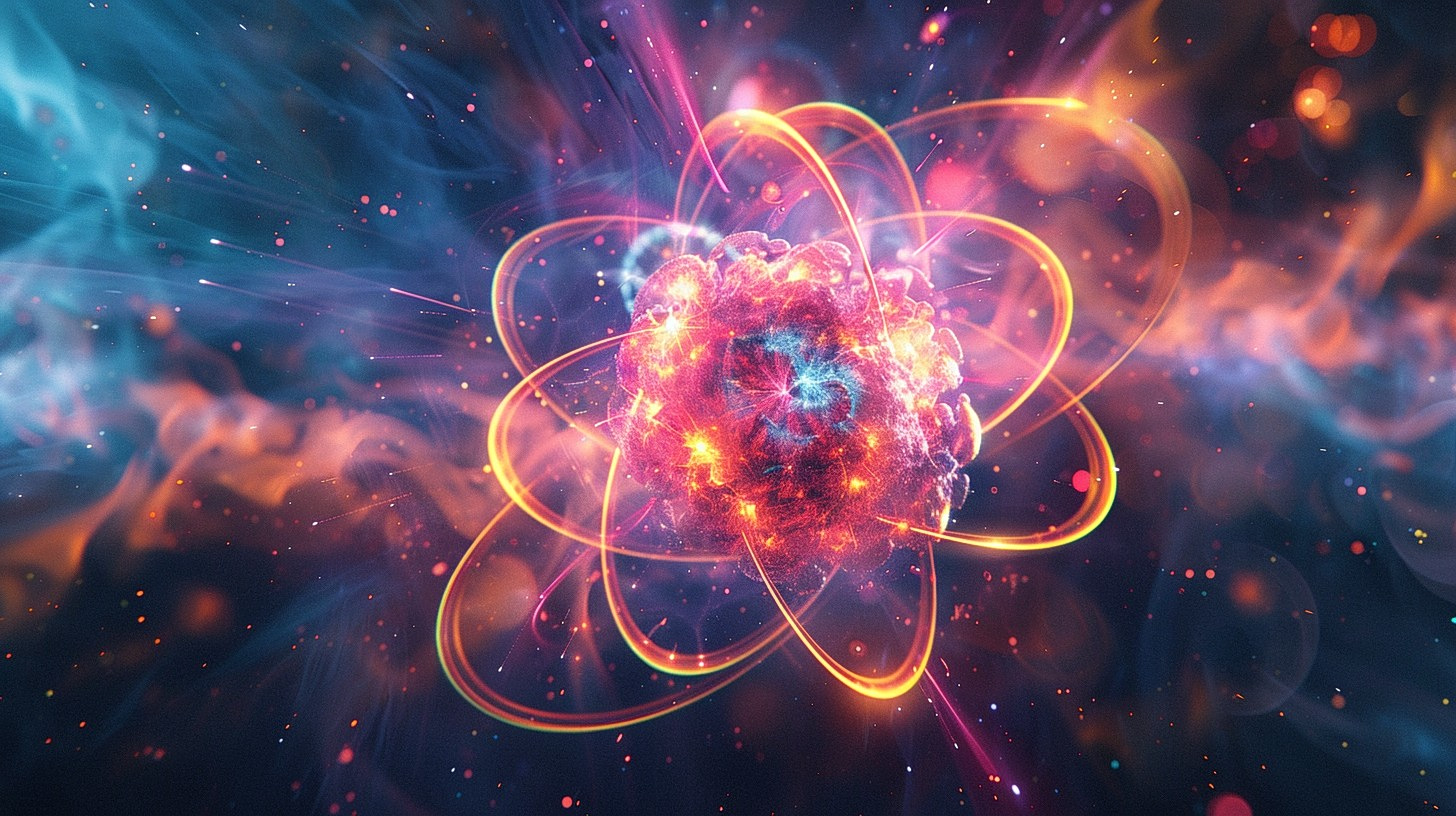
 After more than half a century of searching, physicists believe they’ve confirmed a strange new form of matter, one that oddly consists of particles with no mass at all.
These elusive “glueballs,” whose existence is predicted by the Standard Model of particle physics, consist almost entirely of gluons.
Just as photons carry the electromagnetic force, gluons carry the strong nuclear force, which holds quarks, the fundamental particles that make up protons and neutrons, in place inside atomic nuclei.
An international research collaboration running the Beijing Spectrometer III (BESIII) announced that a particle first discovered in 2011, known as X(2370), has now been shown by new measurements to consist mainly of glueball matter.
The findings, presented this month at the International Conference on High Energy Physics in Australia, don’t prove beyond doubt that glueballs were detected, but physicist Ulrich Egede of Monash University in Melbourne, who wasn’t involved in the experiments, told Nature they’re fairly convincing. Colin Morningstar of Carnegie Mellon University called it an experimental triumph in comments to Science.
The research collaboration compared the properties of X(2370) against a range of theoretical models and concluded that no other explanation fits the data collected.
If confirmed, the discovery of glueballs would offer direct evidence that gluons interact with themselves, a key prediction of quantum chromodynamics, the Standard Model theory describing quarks and gluons.
Observing glueballs could also improve our understanding of where mass comes from. Protons are made of quarks, but the combined mass of those quarks is less than the mass of the proton itself. That means the mass of the atomic nucleus must come from interactions between gluons.