What happens to territory coveted by the Kremlin but not seized by Russia during the war is a major sticking point in any peace deal
Brussels sanctions Moscow within hours yet avoids calling Ankara what it is—a state occupying EU soil. If Europe cannot protect its own, its sovereignty is an illusion
The Finnish expert on Russia, Arkady Moshes, on how Finland’s perception of Moscow has transformed — and why Europe can no longer afford complacency on defence
In an exclusive interview with To Vima, Helga Kalm discusses Europe’s readiness to face Russian hybrid threats, the future of EU–Russia relations, and why Europe must take greater responsibility for its own defense—regardless of who occupies the White House.
The Greek government plans a decade-long military modernization worth €25 billion, aiming to strengthen its armed forces and revive its domestic defense industry
Mitsotakis stated that the SAFE funding will offer new opportunities for investment, production partnerships, and job creation, while increasing domestic added value and national autonomy
The development allows for a specified increase in defense spending without risking an excessive deficit procedure
ETUC, striving to balance political neutrality with social advocacy, acknowledges the legitimacy of common security needs but insists that defense should not come at the cost of citizens’ livelihoods.
Erdogan also reiterated that Turkey’s current arsenal, including the Russian-made S-400 missile defense system acquired in 2020, is insufficient for the nation’s long-term security needs
With the 5% target now formalized, NATO enters a new era of strategic investment, aiming to reinforce deterrence, defend critical infrastructure, and respond to evolving threats
Unlike many NATO members that have ramped up defense budgets in response to Russian aggression, Greece’s military focus is largely shaped by its longstanding tensions with neighboring Turkey — also a NATO member
Mitsotakis' comments come at a time when NATO is urging members to accelerate defense investment in response to evolving threats, including Russian aggression and rising geopolitical instability
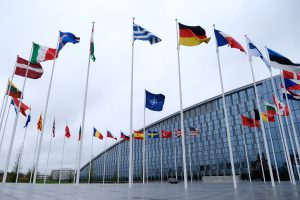
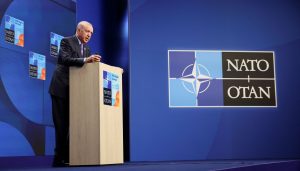
NATO leaders are set to debate landmark 5% GDP defence spending goal at June summit in The Hague on June 24-25
Greece remains one of the European Union’s top defense spenders, allocating 3.08% of its GDP to military expenditures in 2024 — far surpassing NATO’s 2% guideline.
The purchase of the French-built Exocet missiles is widely interpreted as Athens' first tangible response to discussions around Ankara's interest in procuring MBDA’s Meteor air-to-air missiles.
Eurostat announces latest figures, for 2023, with Greece in fourth place
Germany’s €1 trillion spending plan alarms EU partners, who fear unfair competition from Berlin’s subsidies to strategic industries and defense.
The whole package aims to raise €800 billion through loans and debt to help EU countries buy defense equipment, prioritizing products made in the bloc Arms manufacturers from the U.S. and U.K. are set to be largely excluded from new European Union defense procurement loans unless their countries sign defense and security agreements with the […]
The ZEW Indicator of Economic Sentiment jumped to 51.6 in March
While no final agreements will be made today, the ministers are expected to refine their proposals in the coming months, with key decisions scheduled for June