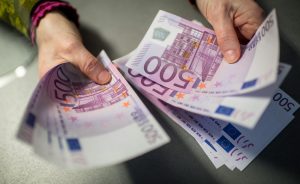
The proposed scheme would match eligible family contributions with state funding, offer tax breaks and invest savings until children turn 18, with annual private contributions capped at €10,000 per account
Household expenditure grew faster than disposable income in 2025, pushing the savings rate further into negative territory. Eurostat figures also show Greece recorded one of the EU's steepest declines in household income in early 2026
There is much to welcome in a government shaping policy with an eye towards the prospects of future generations of Greeks; the ambition deserves serious consideration, but the proposal rests on assumptions worth more scrutiny than its expected returns
The Greek government has announced a new matched-savings scheme under which a family that contributes regularly could build an investment account worth more than €60,000 by the time a child turns 18. But can a scheme that rewards parents’ ability to save deliver opportunities to those who need it most?
Bank deposits are increasing in Greece, but most households remain under pressure from the cost of living, with savings rates falling and the majority saying they are barely making ends meet
Board games and LEGO are once again becoming part of our daily lives. How financial hardship, excessive screen time, and a longing to return to simpler times are keeping Greeks indoors
Most Greeks lack the financial capacity to save for retirement, exposing a growing gap between future needs and current preparedness.
Greece remains among the five European countries with the lowest financial literacy levels, according to the 2023 Eurobarometer.
A couple with children experience negative savings, averaging -€2,159 annually.
According to ELSTAT, overall gross savings in the economy increased to €21.8 billion in 2022 from €16.5 billion in 2021, primarily driven by businesses and the general government, while households showed a decrease in savings by -2.6% of GDP.