 Μake us preferred on Google
 Athens is still the only major city in Europe not cashing in on the increasing number of tourist arrivals, Athens Mayor Haris Doukas said during the opening of the 11th edition of This is Athens – Agora, taking place on Monday and Tuesday at the Hotel Grande Bretagne Hotel in the Greek capital.
The annual event, aimed at promoting Athens as a leading tourist destination, is one of the city’s most important B2B tourism gatherings, bringing together tourism stakeholders, buyers, and local enterprises to strengthen the capital’s international tourism profile.
Organized by the Athens Convention and Visitors Bureau (ACVB) in collaboration with the European Tourism Association (ETOA), this year’s This is Athens – Agora is hosting 62 buyers from the United States, Europe, Canada, and India, alongside 80 Athens tourism enterprises and an estimated 1,500 B2B meetings.
Positioning Athens on the Global Tourism Map
Speaking during a panel discussion and press conference on Monday, Doukas said the event is one of several tools developed in recent years to better prepare Athens for growing tourism demand.
“The idea,” said Doukas, “is to work together to create the tourism we want in Athens, and this includes addressing issues like oversaturation before they become a problem.”
He added that city plans include infrastructure improvements, tighter regulation of short-term rentals, and even discussions around a possible cap on hotel rooms.
“We’re not Barcelona yet,” he said, “but we do need to pay attention now before the city’s carrying capacity is exceeded.”
Doukas noted that the municipality has collected significant tourism data in recent years through its services, but there are still limited tools available to and the finances to turn this information into effective policy.
Athens Gets Only a Tiny Share of Tourism Revenue
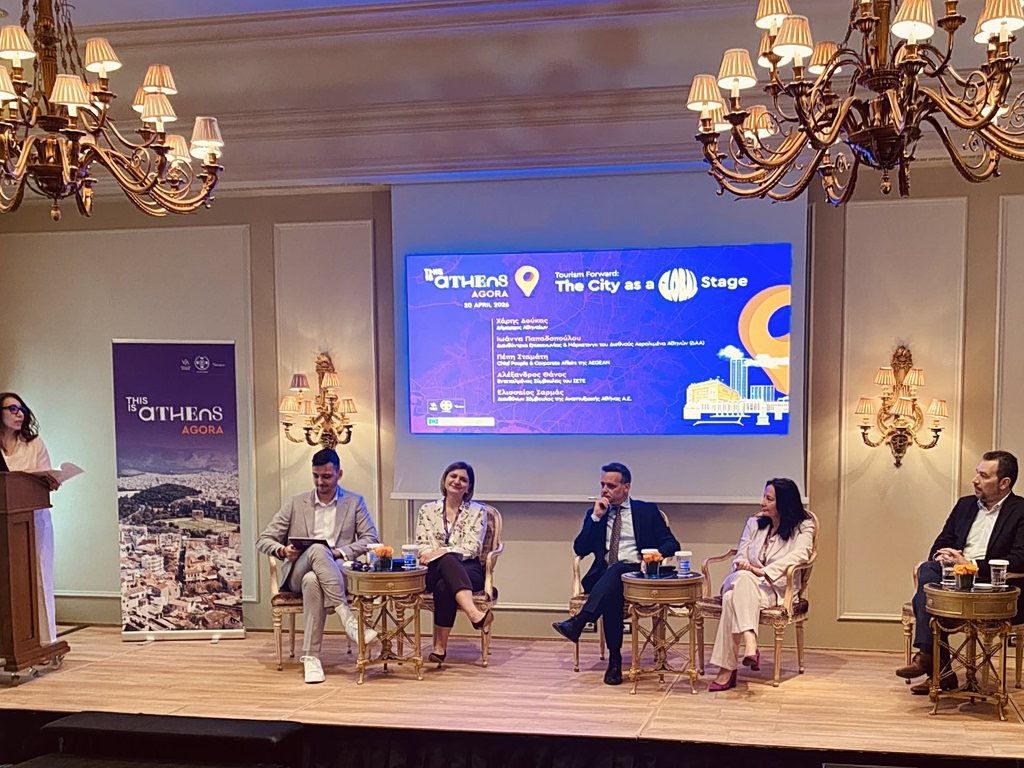
Tourism stakeholders and Athens Mayor Haris Doukas during a press conference for the 11th edition of ‘This is Athens – Agora’ taking place in the Greek capital this week. Photo: Maria Paravantes
The mayor reiterated that while Athens is one of Greece’s fastest-growing destinations, the city receives only a very small share of tourism-generated income.
In 2023, Doukas publicly stated that Athens collected just 42 cents per visitor, compared to approximately 6 to 10 euros per visitor in Barcelona; a gap he described as unsustainable.
Although Athens has gone from stopover to a popular city destination, attracting around 8 million tourists a year, the municipality sees little direct benefit. Value Added Tax (24 percent) goes to the Greek state, while hotel taxes are largely national or regional. Airport fees, cruise revenues, and most short-term rental taxes also flow upward to central government or remain tied to property taxation.
What the city actually receives consists mainly of small accommodation surcharges, limited local business taxes that are not tourism-specific, and indirect fees such as permits and minor charges.
This comes despite tourism receipts in the wider Attica region reaching approximately 4.74 billion euros in 2024, while Greece’s total tourism revenue reached around 23.6 billion euros in 2025.
Doukas said that while this tax model may have worked when fewer visitors stayed in the Greek capital, it no longer reflects today’s reality. “A city of roughly 700,000 residents now welcomes more than 7 million visitors a year,” he said, warning that municipal services and infrastructure are under increasing strain.
Airport Expansion Reflects Rising Demand
Ioanna Papadopoulou, Director of Communications and Marketing at Athens International Airport (AIA), said the capital’s tourism growth has gone hand in hand with the AIA’s rapid expansion.
She announced that 1.3 billion euros is being invested in upgrade and expansion projects at Greece’s largest airport, aimed at increasing space by 68 percent, improving the visitor experience, and raising annual passenger capacity to 40 million by 2032.
Papadopoulou stressed that demand for Athens remains strong and resilient despite broader economic uncertainty, particularly due to the war in Iran.
Tourism Success Cannot Be Taken for Granted
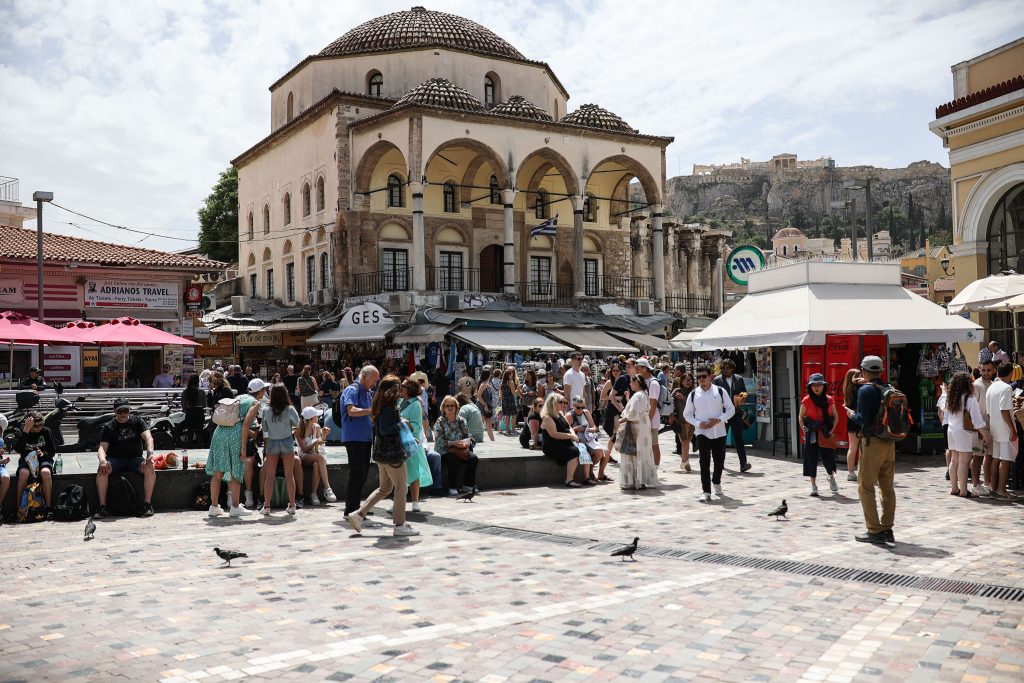
Speaking during the event, Alexandros Thanos, Executive Director of the Greek Tourism Confederation (SETE), also underlined the need to redefine Athens’ tourism model
“Athens has gone from struggling to build a tourism brand a decade ago,” he said, “to becoming a fully established destination, thanks largely to strong public-private partnerships.”
However, he warned that in a period marked by inflation, geopolitical instability, and market volatility, Athens’ tourism success should not be taken for granted. Thanos emphasized the importance of ensuring that a greater share of tourism-generated revenue returns to the city to fund tourism-related projects, upgrades, and long-term competitiveness.
He added that while Europeans are expected to continue traveling, data shows they are likely to spend less and may not necessarily choose Athens.
Panel discussions at This is Athens – Agora focused on infrastructure improvements, the city’s experience in organizing major international events, the partnerships needed to host them, the role of creators and local communities in shaping Athens’ identity, the future of the meetings and events (MICE) industry, and the importance of collaboration, inclusion, and sustainability in tourism.
Participants will also experience Athens firsthand through fam trips designed to showcase the city’s authentic character. Activities include an interactive treasure hunt in the National Garden, a guided tour of the Maria Callas Museum and Plaka, and a traditional Greek dance lesson, all aimed at presenting a deeper, more local side of the Greek capital.