 Μake us preferred on Google
 One of the most breathtaking yet perilous driving routes in Greece lies on the island of Crete, one hidden in the rugged landscape of western Chania (Hania) prefecture. The provincial road that links the village of Kallikratis with Kapsodassos on the Kallikratis Plateau offers a journey of striking contrasts, where the sea seems to fall away and the clouds feel within reach.
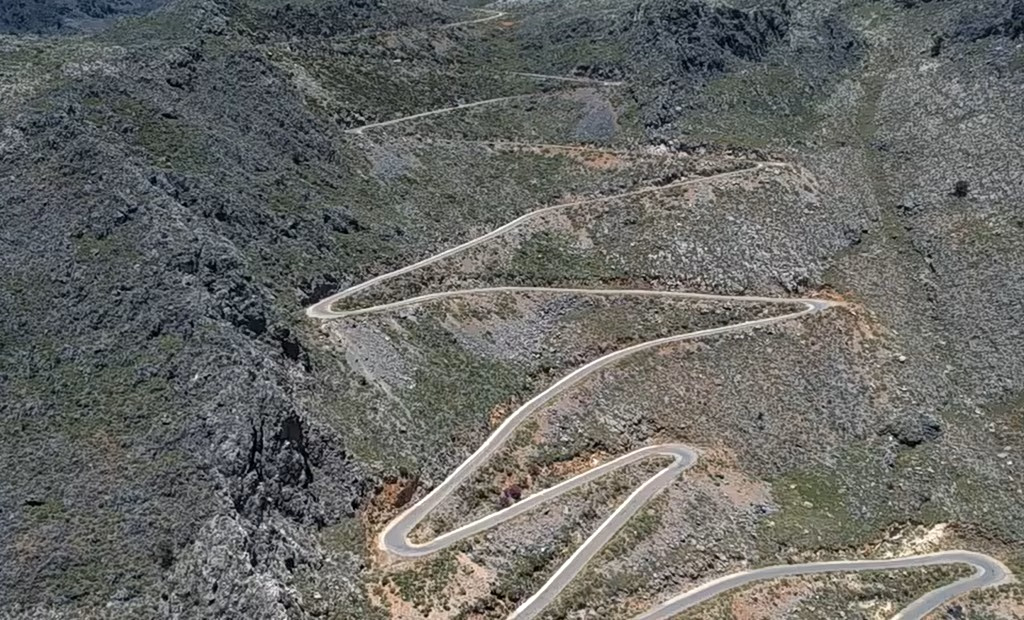
Stretching a mere 11 kilometers, the road climbs roughly 800 meters in elevation, transforming the scenery from coastal views to high-altitude remoteness. Along the way, drivers must navigate 27 tight, demanding hairpin bends, a sequence that has earned the route a reputation as one of the most technically challenging drives in the country.
The ascent is gradual but relentless. With every turn, the horizon widens, revealing sweeping vistas of the southern Cretan coast and, on clear days, dozens of miles south into the Libyan Sea.
What sets this road apart is not only its dramatic geography but also its stark exposure. There are no guardrails, no emergency escape lanes, but only narrow asphalt carved into steep mountainsides, with sheer drops on one side and jagged rock faces on the other.
The Kallikratis area lies near the historic region of Sfakia, long known for its wild terrain and resistance to outside control throughout Cretan history. Like the more famous Samaria Gorge, the region attracts visitors seeking raw, untamed landscapes rather than polished tourist routes.
While Crete has several dramatic mountain passes, the Kallikratis road remains relatively lesser-known internationally—partly due to its difficulty and isolation. Locals and experienced drivers, however, regard it as a hidden gem: a route where natural beauty and danger exist in equal measure.