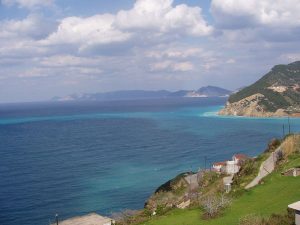
An unusual sight has been drawing attention in recent days in the Tyria area of Preveza, in northwest Greece, where free-roaming horses from the wider Lakka Souli region have descended into the lowlands toward the main road in search of food.
The horses are primarily found in the mountainous and remote Kranea area, although they also roam around other nearby villages. In recent days, however, several herds have ventured closer to inhabited areas and the main road, where residents have spotted them.
According to local accounts, the horse population has grown substantially in recent years, with the animals now divided into several herds that roam across the wider area.
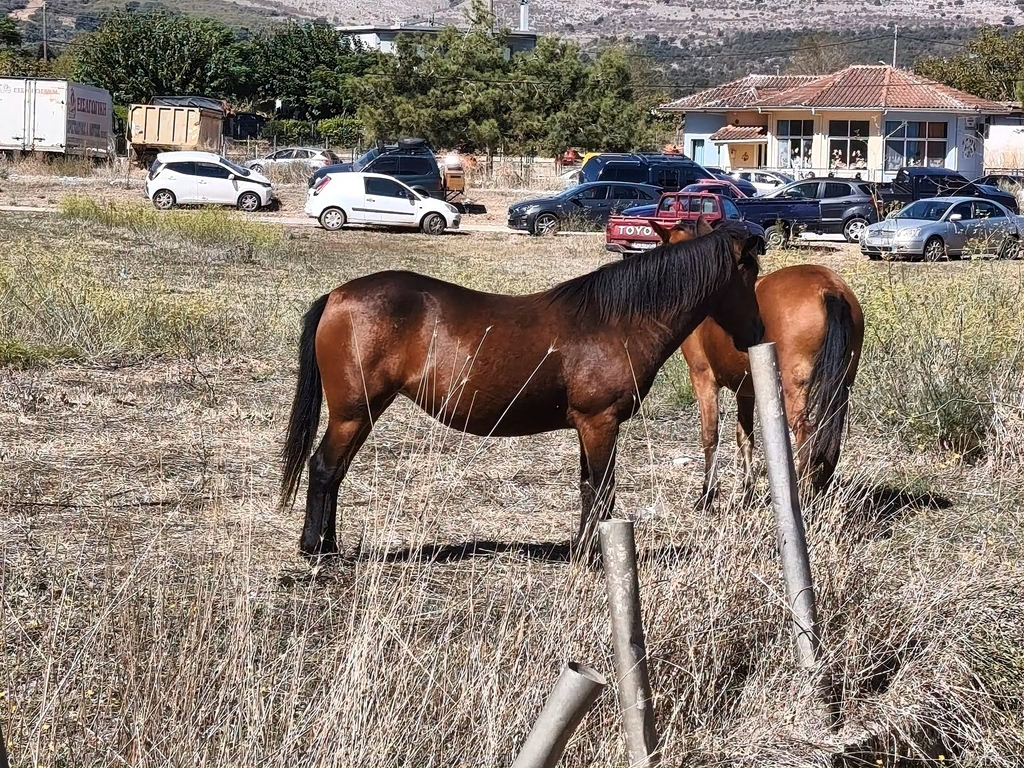
Despite their appearance as “wild” horses, the animals are not a native wild species. They are believed to be descendants of horses abandoned or released by their owners in the 1970s and 1980s, as the mechanization of agriculture sharply reduced the need for equine power in farm work.
Over the decades, the animals adapted to the local environment, reproduced and established free-roaming populations, becoming a distinctive feature of the region’s landscape and biodiversity.
Their growing presence, however, has also raised questions over how the herds should be managed, particularly as the animals increasingly approach roads and residential areas.
The most immediate concern is road safety. Horses entering the roadway pose a potentially serious hazard to both the animals and motorists, particularly on roads where drivers may encounter a herd with little warning.