 Μake us preferred on Google
Crete sits at the crossroads of the Aegean, North Africa and the Middle East. Its location, combined with its military infrastructure, makes it a key point for projecting power and supporting operations in the Eastern Mediterranean.
Several developments highlight its weight in regional geopolitical rivalries:
- The recent undersea surveys around and east of the island.
- New energy interconnections.
- The ongoing disputes between Greece and Turkey over maritime boundaries, especially since 2020.
This role becomes even more important given the stronger US military presence in Greece and the country’s upgraded place in US and NATO defense planning. It is no coincidence that in March 2025, National Defense Minister Nikos Dendias described Crete as the point where the North-South and East-West axes meet, stressing its geopolitical and energy importance.
This shift affects the balance of power from Southeast Europe to the Eastern Mediterranean, feeding Ankara’s suspicions. Former Republican People’s Party (CHP) leader Kemal Kılıçdaroğlu, for example, has spoken of a possible Greek-Turkish conflict and voiced irritation at the US presence in Alexandroupolis. Behind such reactions lies Turkey’s concern over the changing strategic balance and a possible limit on its regional influence.
US Investment
Alexandroupolis and Souda therefore serve complementary axes. Alexandroupolis makes it easier to move forces to the Balkans and NATO’s eastern flank without passing through the Turkish Straits.
Souda, currently in the spotlight, sits where routes from Suez to the Middle East, North Africa and the central Mediterranean converge. Supporting warships at Souda and aircraft at the 115th Combat Wing allows operations from the Eastern Mediterranean to the Red Sea.
Souda’s strategic importance is also reflected in the investments being made at the US facilities there:
- April 2025: a new $5.2 million logistics support center at Marathi was handed over.
- June 2025: the $2.1 million renovation of a US Navy supply facility (Building 87) was completed.
- August 2026: construction began on the Joint Mobility Processing Center, with a budget of $43.2 million and completion due in April 2028.
The Joint Mobility Processing Center will include passenger services, air cargo handling and transport support facilities, boosting the ability to move personnel and supplies quickly.
Able To Host Aircraft Carriers
The base’s ability to support aircraft carriers is especially important. It provides maintenance, technical inspections, repairs and resupply, even during periods of heavy operational activity.
Souda Bay is a permanent support station for the US fleet in the Mediterranean. It is also one of the few facilities in the world that can host and support Gerald R. Ford-class aircraft carriers. Souda is described as the only such facility in the Mediterranean and one of just three in the world, along with Yokosuka in Japan and Guam, that can dock these carriers and provide support services at the same time.
The Crete Naval Base, on the opposite side of the bay, supports Hellenic Navy units, such as the FDI frigate “Kimon” last September.
The 115th Combat Wing, home to F-16 Vipers, hosts US Air Force and NATO aircraft. Along with the Mildenhall and Waddington bases in Britain, it is one of only three facilities in Europe that provide full logistics support for RC-135 Rivet Joint reconnaissance aircraft.
The Kyriamadi Forward Naval Base at Cape Sideros completes the military setup. It can resupply and support small warships and helicopters.
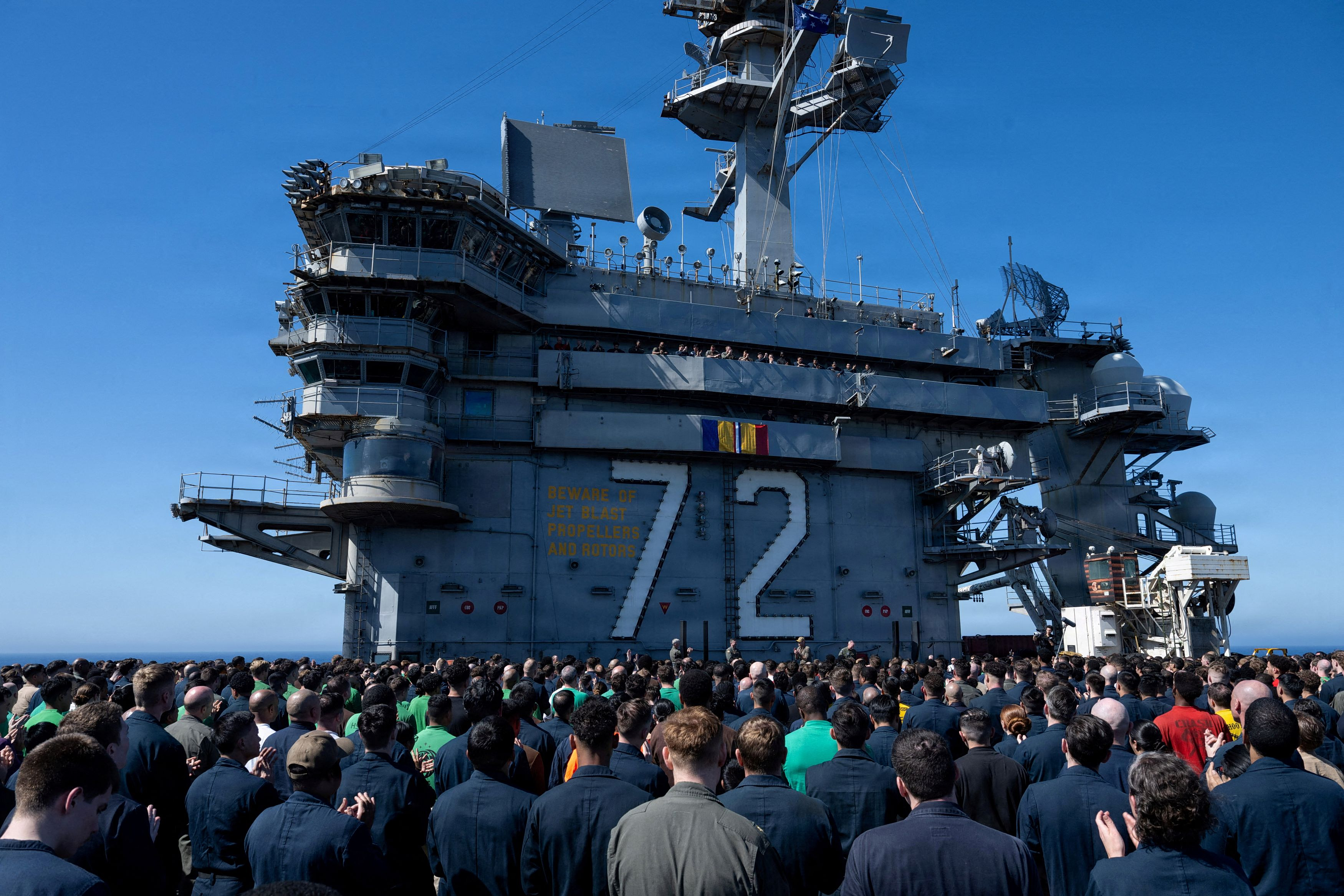
US Defense Secretary Pete Hegseth visits the aircraft carrier USS Abraham Lincoln, returning from its deployment from the Iran war, in waters off San Diego, California, US October 7, 2026. US Air Force Staff Sgt. Madelyn Keech/Handout via REUTERS THIS IMAGE HAS BEEN SUPPLIED BY A THIRD PARTY/File Photo
The Energy Dimension
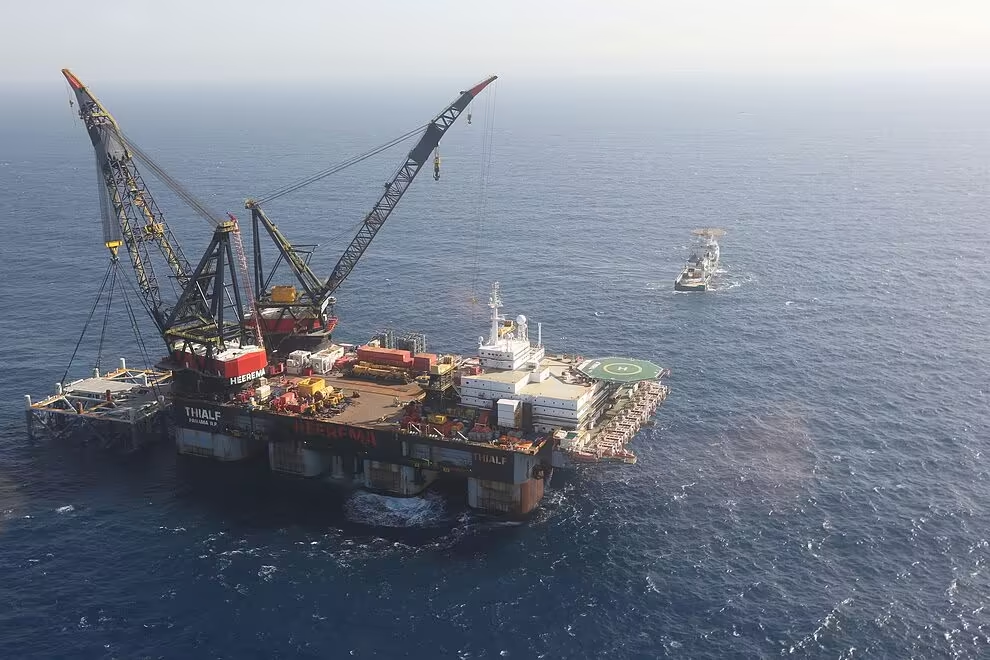
The energy dimension adds significantly to Crete’s strategic role. The recent restart of surveys for the Great Sea Interconnector (GSI), starting from Heraklion, has brought Turkey’s illegal claims to areas under Greek jurisdiction, even near Crete, back into focus.
French involvement, through Nexans and the investment firm Meridiam, gives the project a European dimension. It makes Crete the starting point of critical infrastructure that links the European Union’s energy security with the geopolitical balance in the Eastern Mediterranean.
At the same time, the Greek government’s agreements with the Chevron-HELLENiQ ENERGY consortium for four offshore concessions add hydrocarbons to Crete’s strategic role.
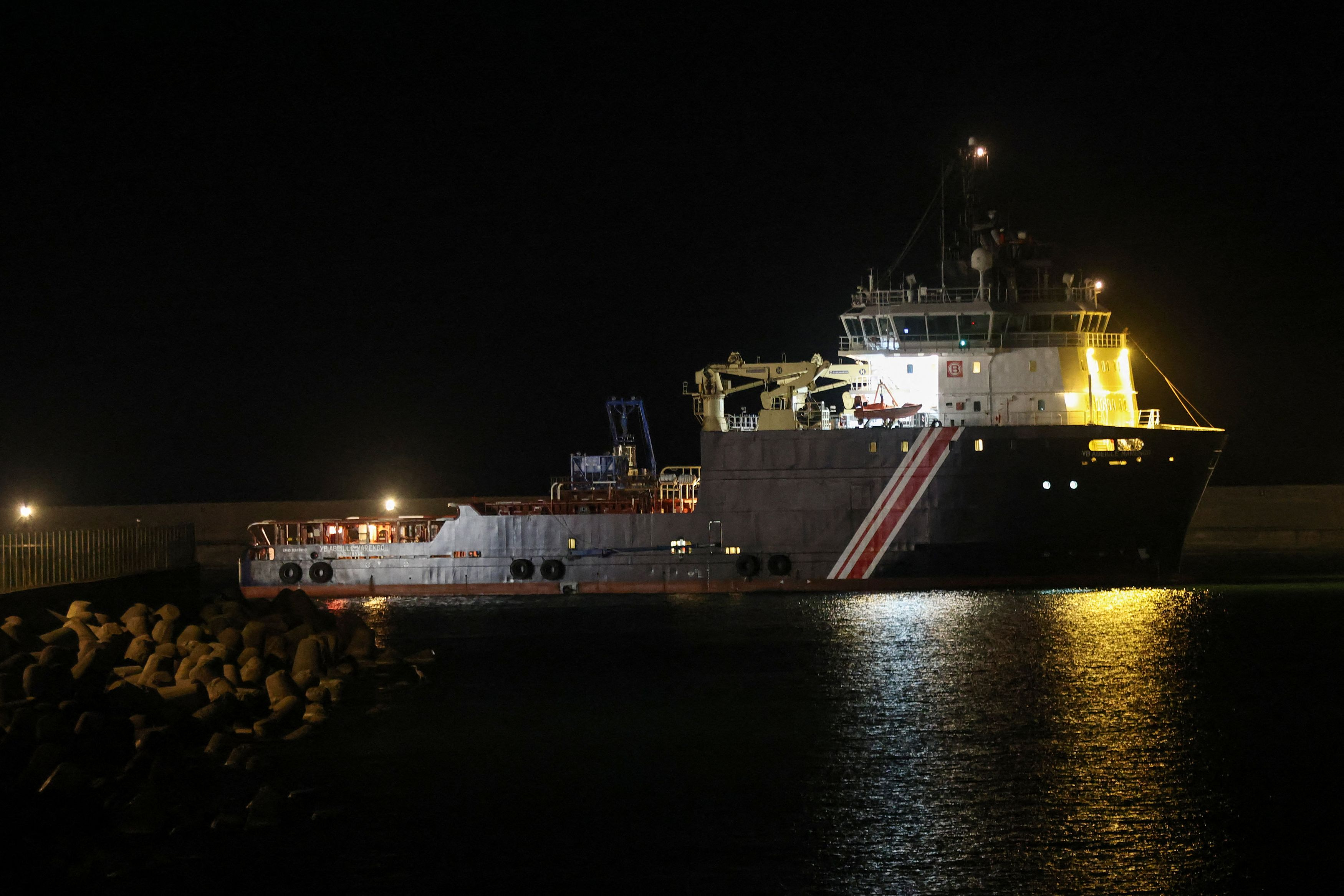
A few days ago, the consortium applied for a NAVTEX and an exemption from the Hellenic Coast Guard to carry out seismic surveys in the “A2” and “South of Peloponnese” blocks, near Crete. The vessels “Ramform Tethys,” “Thor Freyja” and “EDT Niovi” are taking part.
The aim is to map the seabed and identify possible targets for future drilling. Similar surveys are planned in the “South of Crete 1” and “South of Crete 2” concessions, in sea areas that border the line drawn by the illegal Turkey-Libya memorandum.
Questions Of Jurisdiction
For Athens, Crete is now a reference point both for projecting military power in the Eastern Mediterranean and for carrying out energy and maritime policy. The progress of the hydrocarbon surveys, the course of the GSI and decisions on maritime boundaries are expected to shape the island’s role over the coming years.
Crete is at the center of the Greek-Turkish dispute over maritime jurisdiction. Ankara puts forward positions on boundaries that would limit the effect of Greek islands.
Athens cites Article 121 of the 1982 United Nations Convention on the Law of the Sea. It recognizes islands’ rights to a territorial sea, a continental shelf and an Exclusive Economic Zone (EEZ), just like mainland territory, subject to the exceptions it sets out. Athens also cites the partial EEZ delimitation agreement it signed with Egypt in 2020.
In this environment, the possibility of extending Greece’s territorial waters to 12 nautical miles south and west of Crete is back on the agenda. Foreign Minister Giorgos Gerapetritis said last October that Greece will exercise this right at a time and in a way of its own choosing.
Crete is therefore at the center of three parallel developments:
- The strengthening of the US military presence.
- The development of new energy interconnections.
- The assertion of rights in sea areas of growing economic and geopolitical interest.
Its location, between the Aegean, Cyprus, Libya and the sea routes leading to the Suez Canal, gives the island a strategic role that goes beyond Greek defense planning.