 Μake us preferred on Google
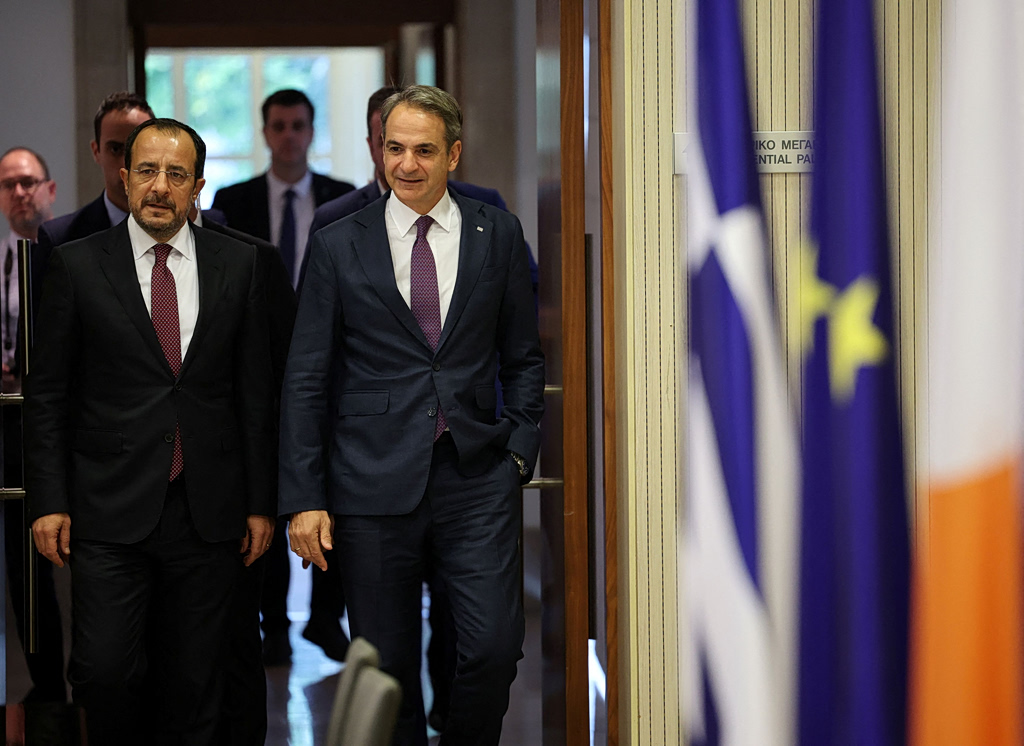
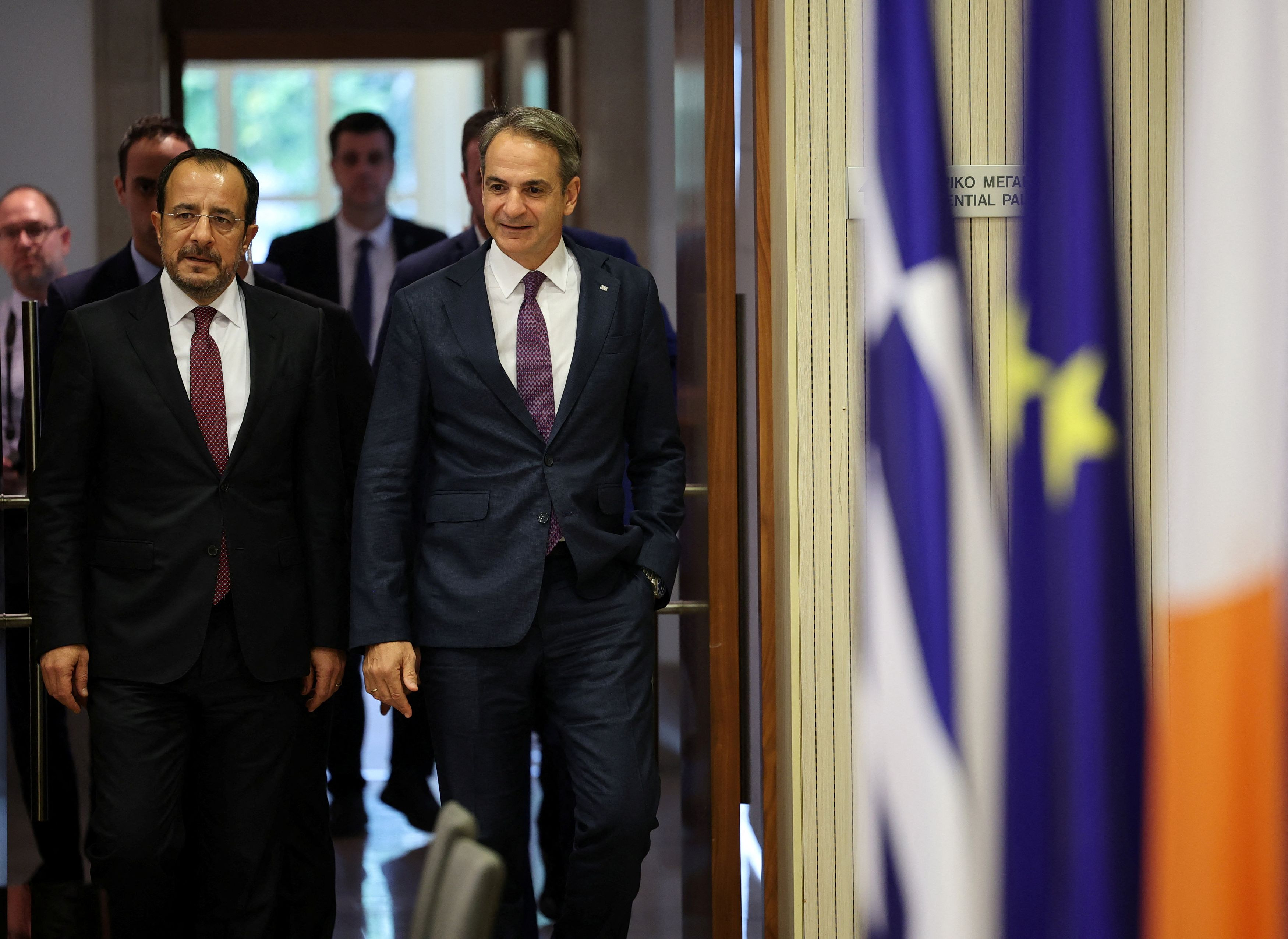
Nikos Christodoulides made his first public comment on the cable since the surveys restarted only last Wednesday, standing next to Kyriakos Mitsotakis, and it was rather lukewarm. The president of the Republic of Cyprus spoke of “progress” and “coordination” with the Greek prime minister and the French president, while also highlighting the European dimension of the Great Sea Interconnector (GSI).
Meridiam now holds a majority stake, and the long-sought formula for a political understanding between Athens and Ankara has been reached. Even so, Nicosia’s caution toward the project is still obvious.
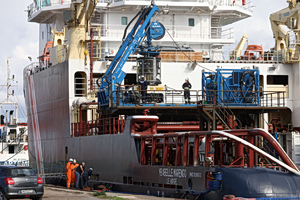
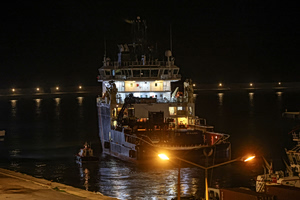
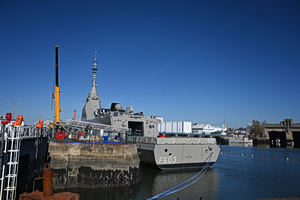
According to the first reading, passed on by sources at the Presidential Palace, “the tone is being kept low because, for Nicosia, the hard part will come when the ‘Abeille Marengo’ approaches the Cypriot Exclusive Economic Zone. We must not get in Ankara’s sights in advance. On the contrary, if possible, anything to do with the GSI had better happen under the radar of publicity.”
Cyprus has indeed always been the weak link against Turkey in the Eastern Mediterranean. Since the Republic of Cyprus has no way of providing military protection for the French ship, the absolute priority is to complete the surveys without surprises, meaning without Turkish interference.
Beyond the “geopolitical risk” that Nicosia has cited from the start, and with good reason, there still seem to be second thoughts on the island about both the project’s financial viability and its cost-benefit balance for Cypriot consumers. At the same time, nothing suggests that the “powerful interests in Cyprus’s energy market,” which Greek government ministers have repeatedly mentioned, have gone away.
Last fall, the two sides came close to an unprecedented rupture. Athens was convinced that the Cypriot authorities were putting obstacles in the way of the GSI. Nicosia, for its part, worried that Greece was unwilling, or unable, to guarantee that the surveys would be completed safely.
That leads to the second reading: the project is really only now beginning, because its difficulties are not only about Turkish revisionism. As an informed source in Cyprus confirms, “those working to prevent the completion of the GSI are building on real geopolitical fears, but their goal is to keep Cyprus’s energy oligopoly undisturbed.”
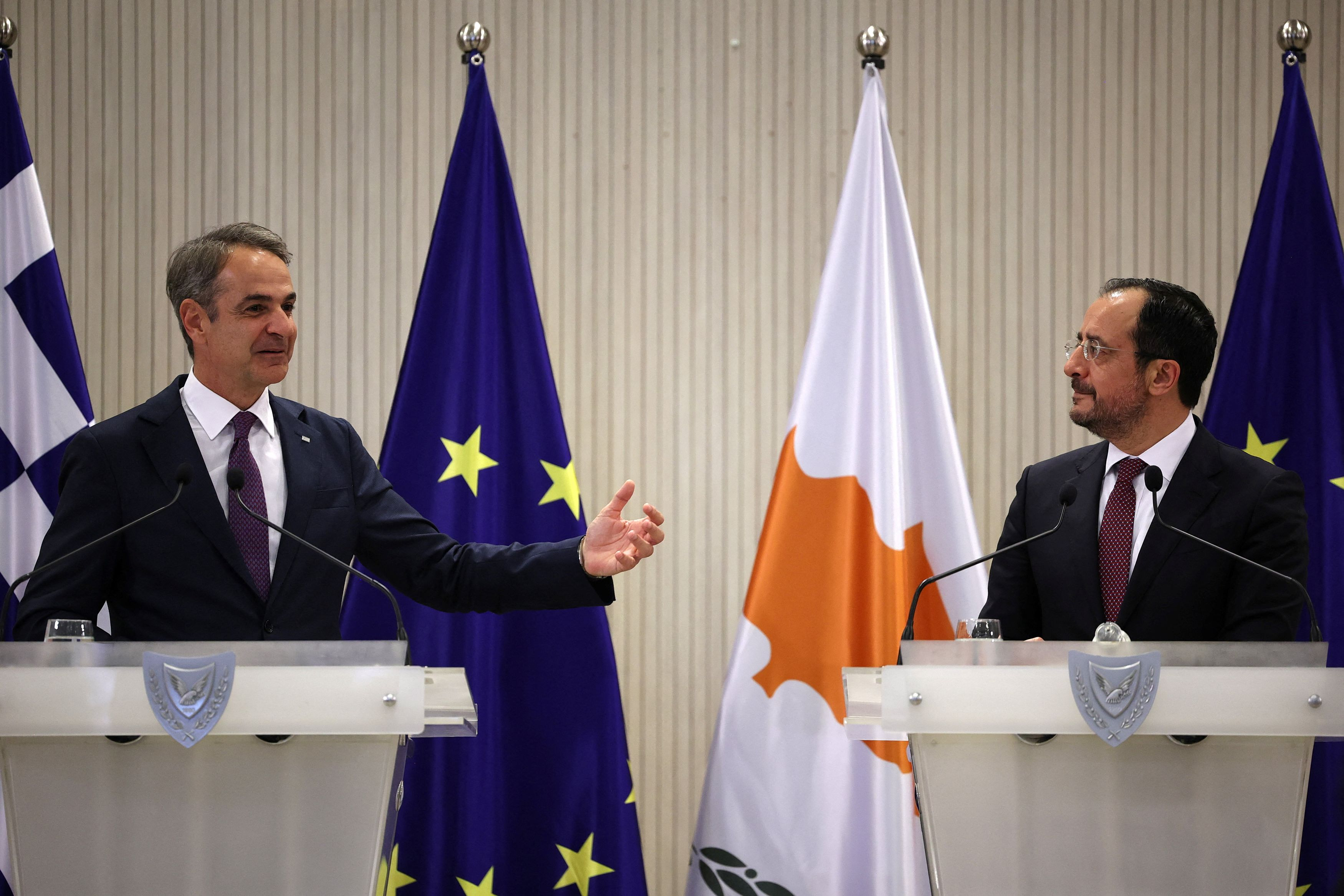
Cyprus President Nikos Christodoulides and Greek Prime Minister Kyriakos Mitsotakis attend a press conference at the Presidential Palace in Nicosia, Cyprus November 18, 2026. REUTERS/Yiannis Kourtoglou
Geopolitics And Economics
One government official has full knowledge of the long negotiations that eventually brought the French investment firm into the project and sent the “Abeille Marengo” out into international waters. In this official’s view, “there is no longer any room for the GSI to be ‘torpedoed’ from within.”
According to another line of information from the Cypriot capital, President Macron’s guarantees that the surveys will continue unhindered, along with a positive nod from the Americans, are now playing a decisive role in easing Nicosia’s doubts.
Some of the “reefs” Kyriakos Mitsotakis mentioned during his visit to Cyprus may indeed have been cleared, but the Republic of Cyprus already faces new dilemmas.
As the Christodoulides government had pledged, the issuing of the Greek NAVTEX marked the start of the process to release and pay the €25 million installment to IPTO, Greece’s power grid operator, by the end of the year. This means Cypriot consumers’ energy bills will carry the related charge in November and December, although the state will subsidize it.
However, since the GSI is a private company, the state subsidy could be considered an unfair competitive practice. It should therefore be seen as almost inevitable that the private companies that dominate the Cypriot electricity market will go to court, both at home and at the European level.
So, beyond the consumer backlash, and to keep the issue from dragging on in the courts, the Cypriot government needs to reach a political understanding with the island’s energy companies. These companies, in turn, have every reason to worry about a foreign competitor entering the market. As one Cypriot market executive points out, “lower electricity prices could lead to less investment and lower turnover, an outcome none of the existing energy providers want.”
It should be noted, however, that according to scientific assessments recently commissioned from American firms, it is doubtful whether the GSI’s entry into the market will lower electricity prices.
Supporters of the project on the island stress that the main point is not lower consumer costs. They argue that what matters is “ending Cyprus’s energy isolation, and at a time when Turkey is trying to dominate the Eastern Mediterranean.”
By this reasoning, the geopolitical benefit far outweighs the economic one. The same is true for Greece. On the one hand, it has no national commercial benefit from the GSI. On the other, it failed to show its flag and its power in the region, at least in the way it would have wanted. Even so, for the first time, it is making a practical contribution to bringing the Republic of Cyprus into an energy project under construction.
The Cost
Despite the “progress,” Nicosia is waiting for the European Investment Bank’s techno-economic study to establish whether the GSI is viable.
The project’s original cost estimate was €1.9 billion, of which €657 million will be paid by the EU. The figure has since risen. It may not exceed €3 billion, as Cypriot Finance Minister Makis Keravnos, an opponent of the project, had predicted, but it is certainly close to €2.5 billion.
Meridiam will clearly look for investors to cover part of the extra cost. Christodoulides, however, would not want any further burden on the Cypriot budget, and therefore on Cypriot consumers. This is all the more true since he faces the 2028 presidential election, amid mismanagement scandals involving other energy projects, such as the Vasilikos LNG terminal.
“The Presidential Palace wants neither a clash with Turkey to ‘erupt’ in the Cypriot EEZ nor to pay for a project that may never be completed,” sources in Nicosia note.
Keravnos Holds The Keys
Keravnos, in any case, holds the “keys” to the budget. Payment of the €25 million depends on his signature. That sum is seen as the “key” that will open the way to the project’s overall financing and to the completion of Meridiam’s purchase of 66% of the GSI.
The Cypriot finance minister is in an informal feud with IPTO. However, government officials in Nicosia point out that he had expressed reservations about the project even before Athens became involved.
Today, Keravnos accuses IPTO’s management of haste and mishandling. The two sides also share another major dispute: about €250 million that, according to IPTO, has already been spent on the project’s execution costs. Of this, Nicosia recognizes only €82 million, which has also not been paid.
The Israeli Factor
Finally, it remains unclear whether, and how, Israel will ultimately take part in the GSI. Besides the rapid political developments at home, Tel Aviv considers the section of the project linking Kofinou to the Israeli coast to be overpriced.
According to cross-checked information, the budget for the Cyprus-Israel section is almost equal to that for the Greece-Cyprus section. However, the actual size of the two sections is very different. The Cyprus-Israel distance is 310 kilometers, with a maximum sea depth of 1.5 kilometers. The Greece-Cyprus distance is 898 kilometers, with a depth of 3 kilometers.