 Μake us preferred on Google
At about 19.8 kilometers (12.3 miles), it was the biggest of the great Alpine tunnels when it opened to traffic in 1906. It remained the world’s longest railway tunnel for decades, until it was overcome by Seikan Tunnel’s 53,9 kilometers in 1988.
An Ancient Route
The Simplon Pass had been an important trade route between northern and southern Europe since the 13th century. In the early 19th century, Napoleon I improved it by building a road over the pass.
Engineers had already pushed shorter tunnels through the Alps, such as the Mont Cenis (or Fréjus) and the St. Gotthard. The Simplon was far more ambitious. In the 1890s it was taken on by Alfred Brandt, an experienced mining and tunneling expert from the Hamburg firm Brandt & Brandau, who had invented an efficient rock drill.
A New Way To Dig
The tunnel ran so deep that at one point it lay more than 1.6 kilometers (1 mile) below the peak of Monte Leone, on the Swiss-Italian border. The great depth brought extreme heat, so Brandt came up with a new tunneling method.
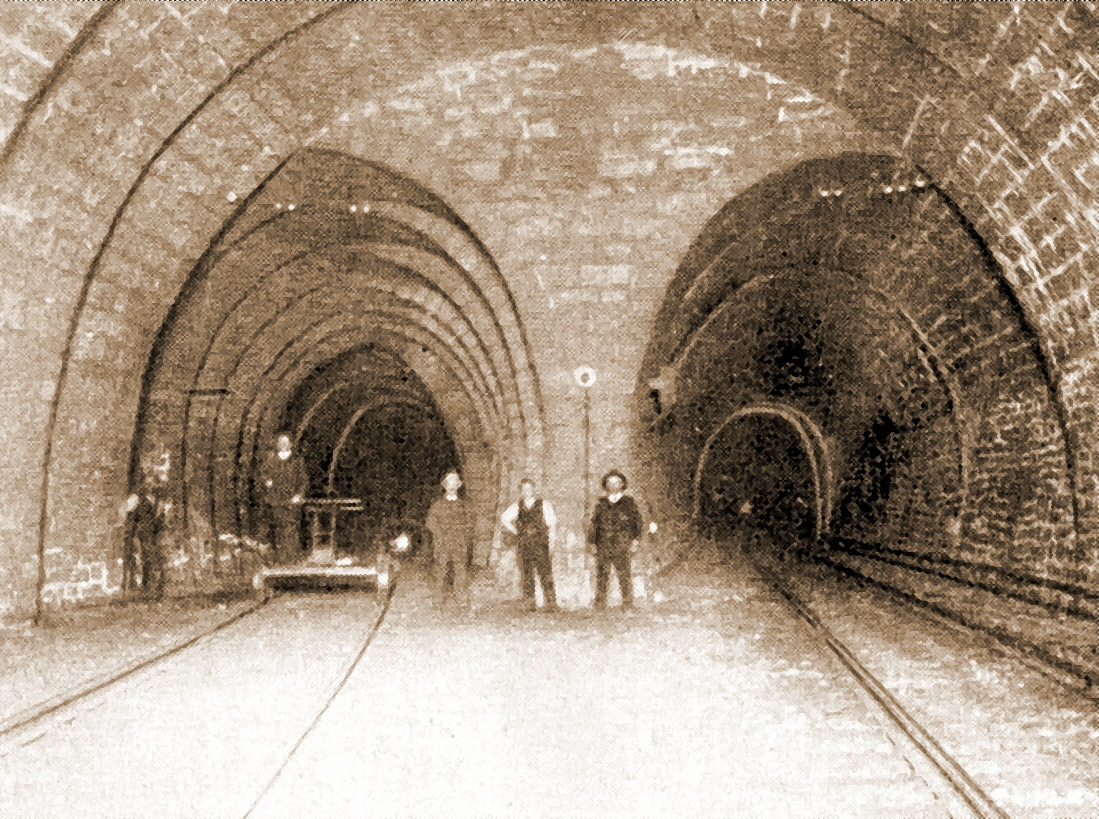
Instead of one double-track tunnel, he planned two parallel single-track galleries about 17 meters (55 feet) apart. This allowed two pilot tunnels to be dug at the same time. Cross passages between them provided ventilation and a loop for the work trains.
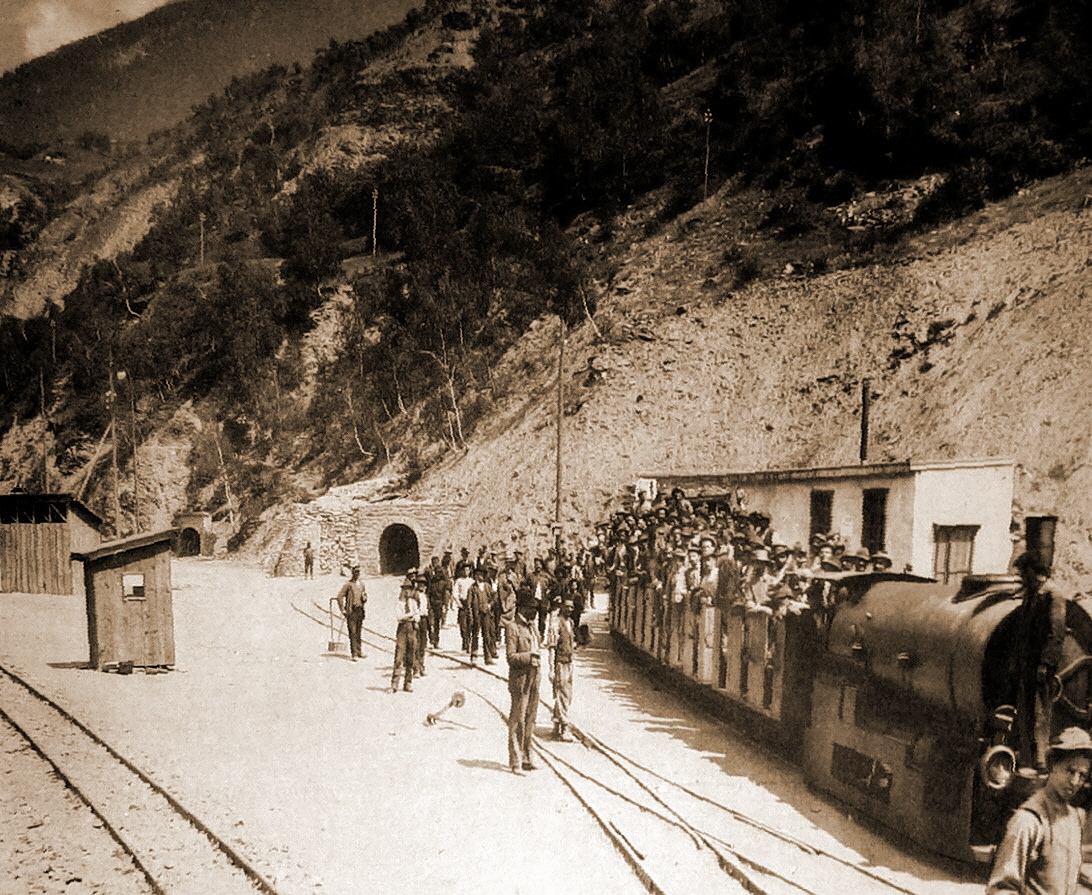
Work started at both ends at once. Over seven years, up to 4,000 workers were employed at Brig and up to 10,000 at Iselle.
Heat, Water And Rock
The crews faced enormous problems. Even the surveying instruments were thrown off by the gravitational pull of the mountains. Water burst in at rates of up to 49,270 liters (13,000 gallons) a minute.
In one stretch, crumbling rock riddled with springs could be crossed only by an extreme measure. The builders lined the tunnel with 74 steel frames, each 50 centimeters (20 inches) thick, in place of the usual timber supports.
The heat was just as punishing. Temperatures reached up to 56 °C, and there was enormous rock pressure. Pieces of blasted rock were too hot to touch. At one point the Swiss crews had to stop and seal their gallery with iron doors. visitossola
Brandt did not live to see the work finished. He died in 1899, only a year after construction began.
The Breakthrough
The two sides finally met in February 1905. At 7 a.m. on February 24, 1905, a heavy charge was exploded in the roof of the Italian heading, which blew a hole into the floor of the Swiss gallery and released the trapped hot water.
The Guardian, then the Manchester Guardian, reported the next day that the tunnel had been pierced at 7:20 that morning. It described an event that the Swiss nation had awaited “so long and so impatiently.” In a telegram, the city of Lausanne told Milan that “through the rocks of the Alps Switzerland and Italy join hands.” The Italian and Swiss flags flew over the tunnel entrance, and the town of Iselle celebrated.
A dedication service followed in April 1905, held inside the tunnel by Swiss and Italian bishops. The President of the Swiss Confederation and Italian dignitaries attended. The bishops prayed that the tunnel would become a bond of friendship between the two nations. The party then went through to the Italian side, where they were greeted by a band, a 101-gun salute and a banquet.
The Opening
The first train ran through the tunnel in January 1906. The Guardian reported that it entered from the north at 8:56 a.m. and came out at 9:53 a.m. to cheers and gun salutes. The Italian king Victor Emmanuel III and Swiss Confederation President Ludwig Forrer opened the tunnel at Brig on May 19, 1906.
The new route became the classic way from Milan to Lausanne, Paris, Calais and London. It also carried the Simplon Orient Express between London and Istanbul. At a height of only about 700 meters above sea level, the Simplon Tunnel was also the lowest direct Alpine crossing for 110 years, until the Gotthard Base Tunnel opened in 2016.
The Human Cost
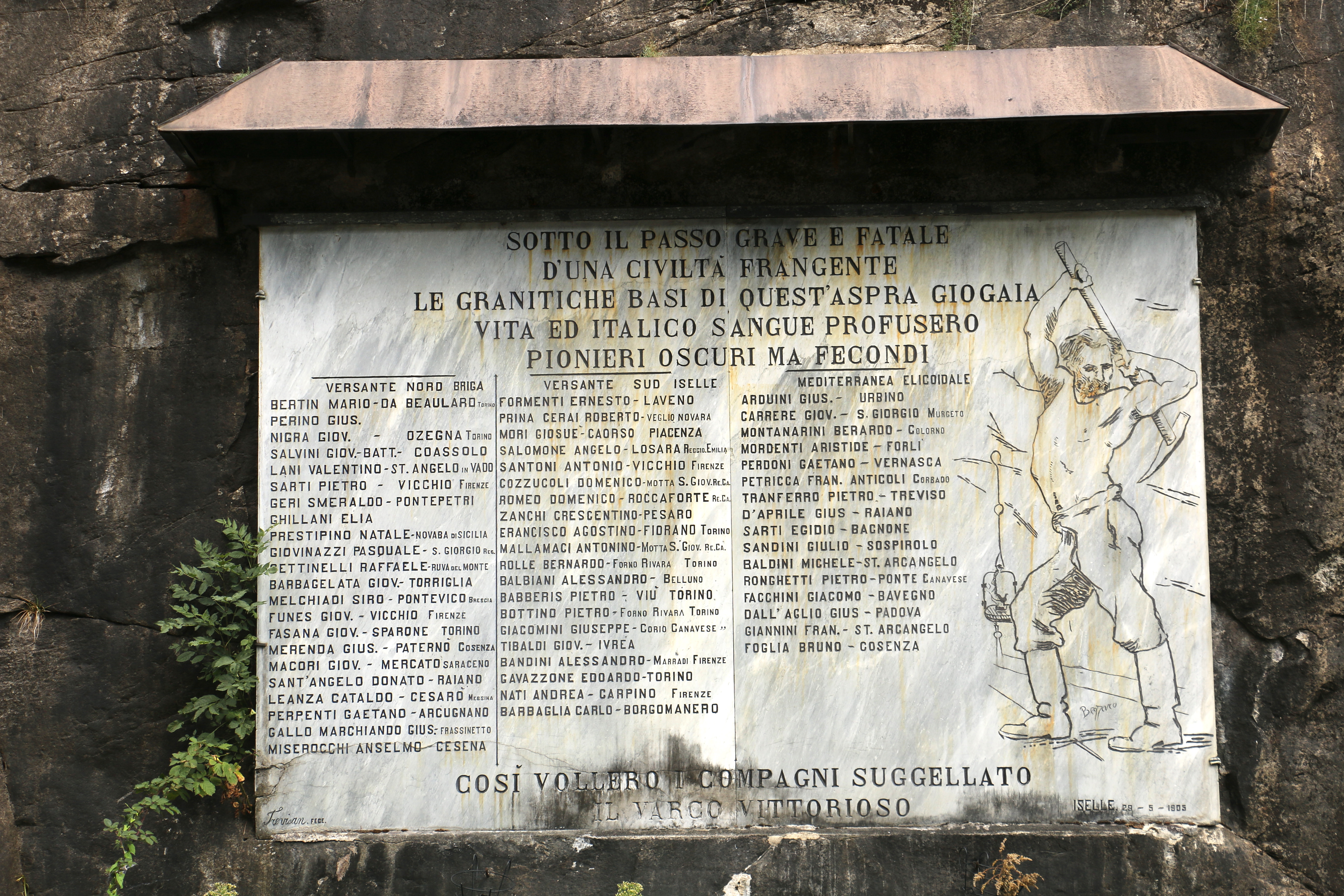
Workers for the tunnel were mostly Italian and faced very poor working conditions. 67 of them were killed in accidents, and many died later of diseases. During the work there were strikes, which led to the intervention of vigilantes and the Swiss army. A monument to the workers who died was put up next to the Iselle di Trasquera railway station on May 29, 1905.
The Second Tube
The second gallery took much longer. Several problems, including the outbreak of World War I, delayed it. The second tube, known as Simplon II, was built between 1912 and 1921 and opened to traffic in 1922.
Today the tunnel is still in use. A car-carrying shuttle runs between Brig and Iselle di Trasquera, offering a 20-minute train journey as an alternative to driving over the Simplon Pass. wikiwand