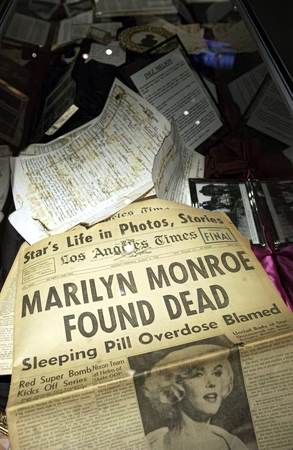
On Aug. 5, 1962, Marilyn Monroe was found dead at her home in Los Angeles. She was just 36 years old.
News of her death sent shockwaves around the world.
The glamour, the camera flashes and the famous smile had suddenly disappeared, leaving behind an ending filled with unanswered questions. The life of the woman who had become Hollywood’s ultimate icon had come to an abrupt end. Yet her death also marked the beginning of a mystery that continues to surround her name more than six decades later, fueling myths, speculation and competing theories.
The Mystery Surrounding Her Death
“Various theories have been put forward about the death of the greatest myth in cinema history—from murder to suicide, which was the official conclusion,” biographer Donald Spoto wrote.
Monroe’s death was officially ruled a probable suicide caused by an overdose of barbiturates. Spoto, however, rejected both the suicide theory and the murder theories.
According to the evidence cited by the biographer, toxicology tests detected traces of two substances in Monroe’s blood: chloral hydrate and Nembutal.
The combination of those drugs was considered the cause of death. Up to that point, Spoto’s findings largely aligned with the official investigation. The key difference was whether Monroe had knowingly taken the fatal dose.
A Death Surrounded by Questions
Spoto argued that Monroe did not intentionally end her life. Instead, he attributed her death to what he described as the “irresponsibility” of two people closest to her: her psychoanalyst Ralph Greenson and her housekeeper Eunice Murray.
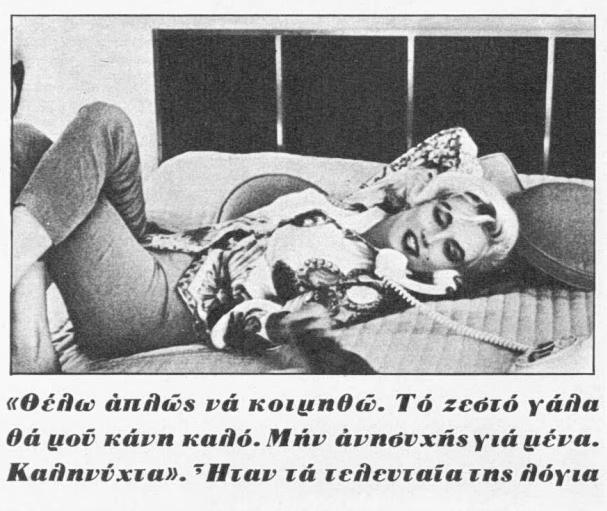
“In the days leading up to the fatal incident, both of them placed more pressure on the actress than ever before. Dr. Greenson had treated Marilyn for years with Nembutal to calm her, and several weeks before her death he attempted to wean her off the drug by prescribing chloral hydrate.
“He knew the combination of the two substances was fatal. Marilyn, however, did not. On the day she died, she had taken doses of Nembutal throughout the day without her psychoanalyst’s knowledge. Late that night, he instructed Eunice Murray to give her an injection of chloral hydrate to help her sleep.
“That is why the medical examiners found a high concentration of Nembutal in her liver but no drug residue in her stomach.
“When John Huston learned of Marilyn’s death, he said: ‘Hollywood didn’t kill Marilyn. The ones who killed her were those damned doctors.'”
Despite the biographer’s conclusions, the questions surrounding Monroe’s death have never been fully resolved. It remains linked to conflicting accounts, conspiracy theories and speculation fueled by her fame, her relationships and her place at the center of Hollywood’s star system.
Behind the mysterious death and carefully crafted public image, however, was a life marked by hardship long before the world knew her as Marilyn Monroe.
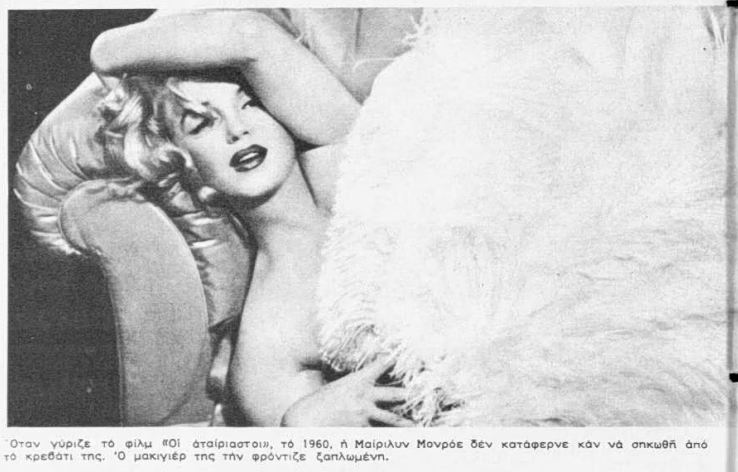
Before Marilyn: The Life of Norma Jeane
Norma Jeane Mortenson was born in Los Angeles on June 1, 1926. Her father’s identity remained uncertain for years, while her relationship with her mother, Gladys Baker, was unstable from the beginning.
Years later, Monroe described the pain of that rejection.
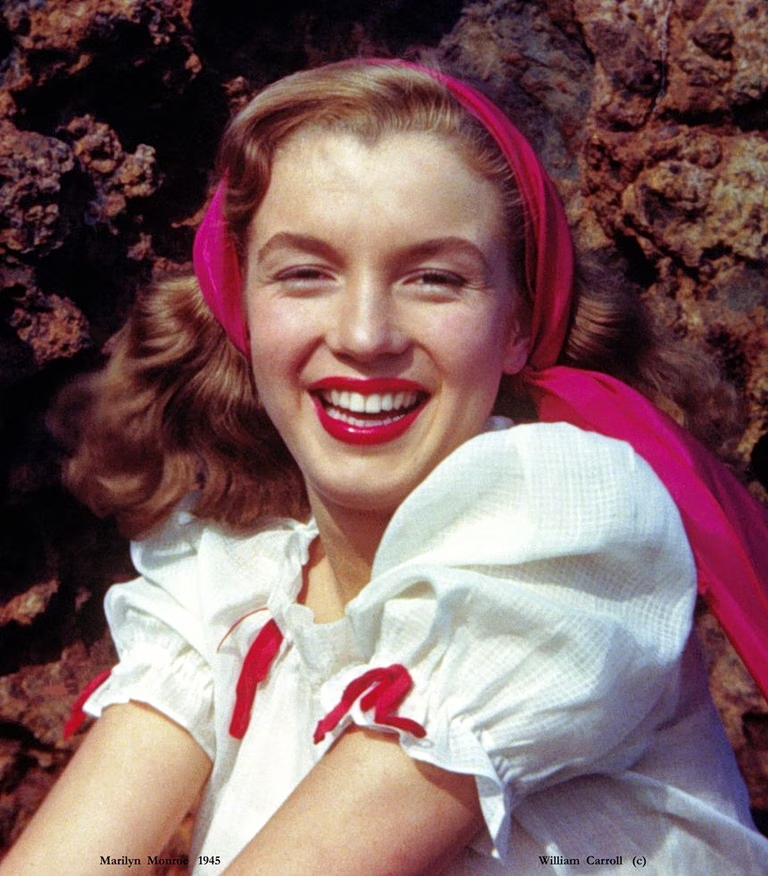
“The truth is that my mother didn’t love me. I came into her life by accident, and I must have been nothing more than an obstacle to her.”
Just six weeks after she was born, her mother placed her with a foster family. Norma Jeane spent her early childhood away from her mother, seeing her only occasionally.
“To me she was simply a red-haired woman, and I couldn’t understand that she was really my mother,” she later recalled.
Her childhood was defined by constant moves between foster homes and periods in an orphanage. Her mother was eventually admitted to a psychiatric institution, and Norma Jeane grew up without the stable family life she longed for.
“We never had a stable relationship, and I never had anything that resembled a real home,” she said of her mother.
In 1936 she entered the Los Angeles Orphans Home. Movies became one of the few ways she could escape reality. Yet even in an environment where she appeared to be a healthy and well-adjusted child, inspectors noted her insecurity and anxiety.
“Even then, I wasn’t happy,” she later admitted.
From “Little Mouse” to Center of Attention
As a teenager, Norma Jeane was shy and reserved.
“The boys used to call me ‘Little Mouse’ because I was so quiet,” she once said.
As she grew older, however, she began to realize the effect of her appearance. Her classmates started noticing her, and, as she later recalled, the world suddenly seemed much friendlier.
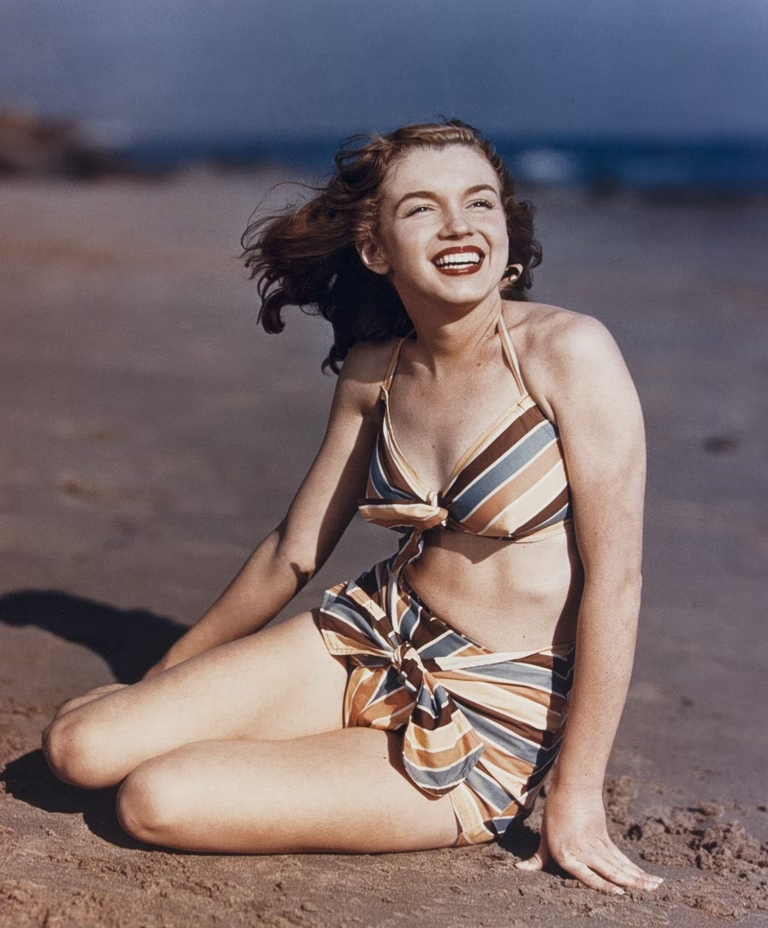
That transformation did not erase her insecurities or provide the family she had always wanted. At just 16, she married James Dougherty, largely to avoid returning to the orphanage.
“I had no other choice… There isn’t much to say about that marriage. It was like an unfulfilled dream,” she later revealed.
The marriage lasted about four years. By then, however, the opportunity that would change her life forever had already arrived.
The First Encounter With the Camera
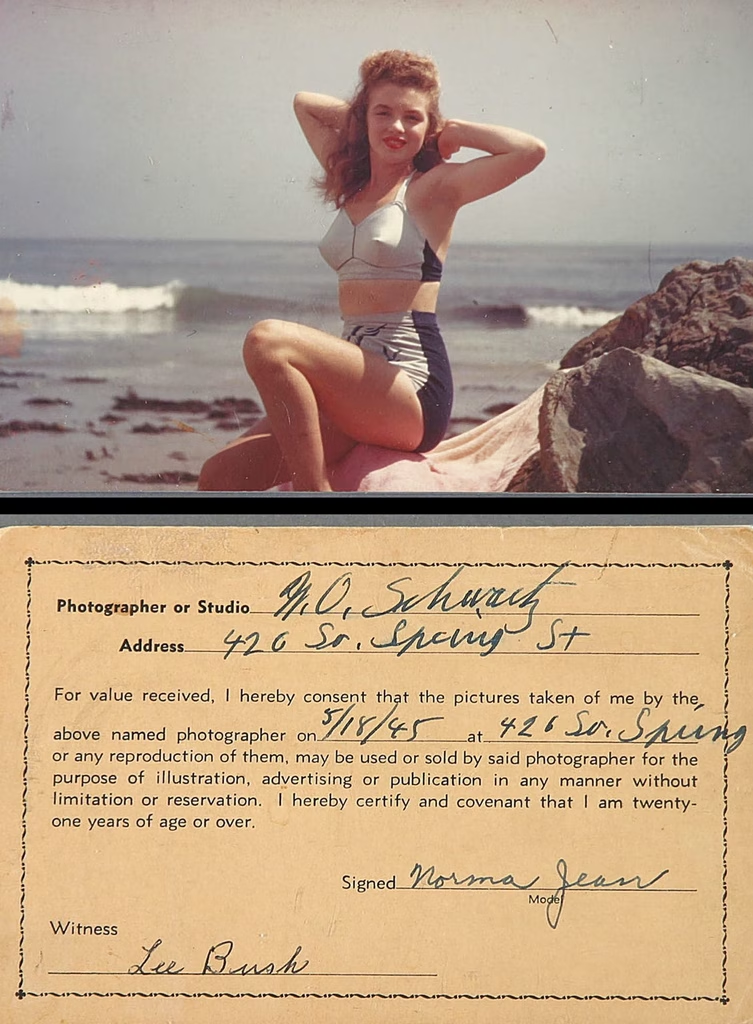
In 1945, while working at the Radioplane Company, Norma Jeane was photographed by military photographer David Conover. He immediately recognized how photogenic she was and encouraged her to pursue modeling.
Within months, she had become well known among photographers in Los Angeles.
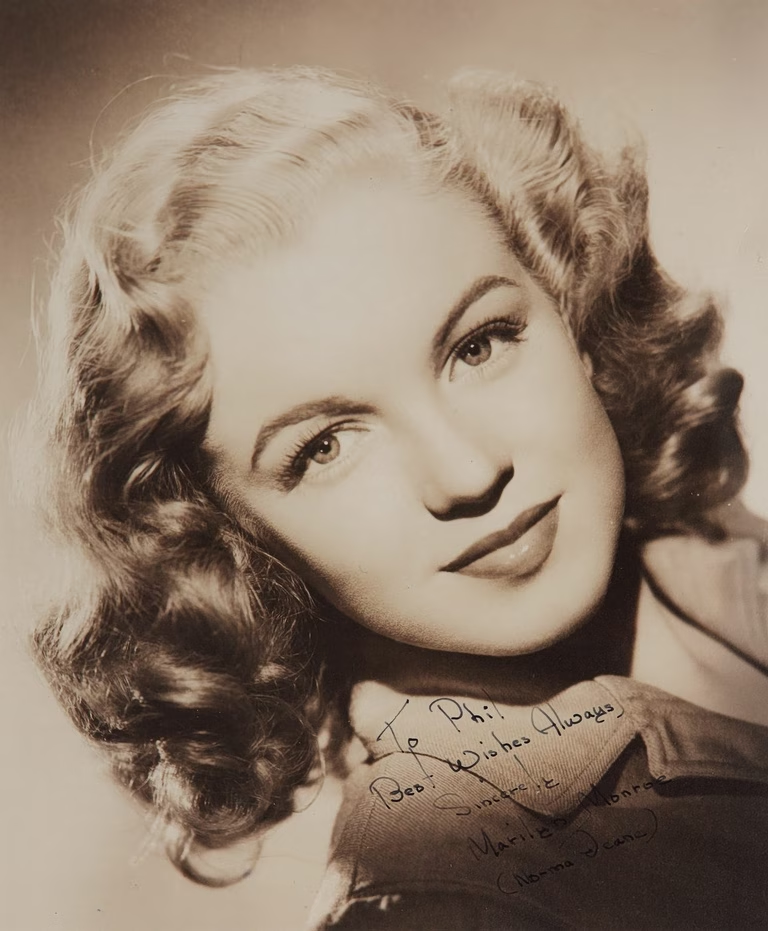
“It was as if she flirted with the camera and connected with thousands of secret admirers,” Spoto wrote.
Her image soon appeared in magazines, while she worked tirelessly to turn her natural photogenic qualities into a professional career. According to the director of the modeling agency she joined, “More than anything else, she wanted to become somebody.”
The next stop was Hollywood.
“From Now On, I’ll Be Marilyn”
In the summer of 1946, 20th Century Fox invited Norma Jeane Dougherty for a screen test. Casting executive Ben Lyon believed she needed a name that sounded more memorable and more suited to the movies.
She chose Monroe, her mother’s maiden name. For her first name, Lyon drew inspiration from Marilyn Miller, the celebrated musical star of the 1920s.
“Mm… I’ve got it. You’ll be Marilyn Monroe,” he told her.
Norma Jeane hesitated. The name felt artificial.
But she was determined not to let the opportunity pass.
“All right. I suppose it’s obvious that from now on I’ll be Marilyn Monroe,” she replied.
With those words, one of the most recognizable names of the 20th century was born.
Behind that name, however, remained Norma Jeane—the girl who moved from one home to another, who spent her life searching for a family, and who, as the original To Vima feature observed, spent her years “searching for her true self.”