 Μake us preferred on Google
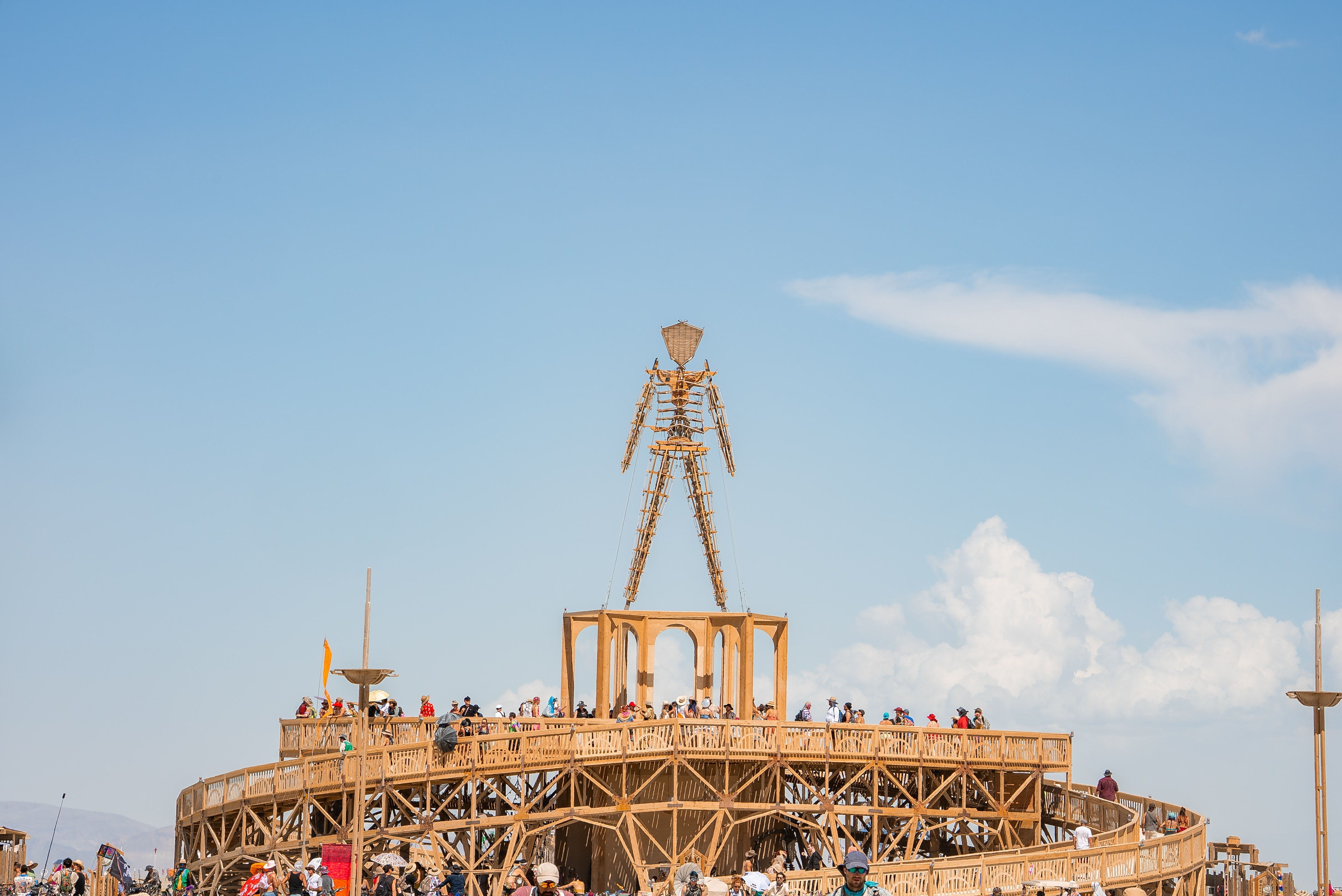
 For decades, Burning Man has cultivated the myth of a temporary society born in the middle of the desert, free from the conventions of everyday life, commercialization, and the usual social hierarchies. Every year, tens of thousands of people arrive in Nevada’s Black Rock Desert to build Black Rock City, a city that exists for a few days and is then supposed to vanish without a trace.
Behind this image of self-organization, however, lies a far less visible labor system. Writing in Jacobin, Keith A. Spencer describes how hundreds of seasonal workers and volunteers arrive in the desert long before visitors and stay on for weeks after the festival ends, building and then dismantling the infrastructure that makes Burning Man possible.
The debate has resurfaced with the release of HBO’s documentary series “The Man Will Burn,” directed by Jehane Noujaim and Vikram Gandhi. Filmed over five years, the documentary promises a behind the scenes look at the event. Jacobin points out, though, that largely missing from this picture are the very people who do much of the manual and technical work.
A City That Doesn’t Build Itself
Black Rock City is often presented as the creation of its own participants. Burning Man’s official philosophy insists there are “no spectators” and that everyone in the city contributes to building it.
The reality is more complicated.
Jacob, one of the workers who spoke with Spencer, works for the Department of Public Works, the team behind the basic operations of the temporary city. The job covers electrical installations, construction, urban planning, logistics, waste management, and putting up signage and fencing.
He started as a volunteer and says it took roughly 1,000 hours of unpaid work before he moved into a paid position. Workers who spoke with Jacobin estimate that around 800 people in total make up the crews behind the festival’s operations.
“The workforce is kind of invisible,” Jacob notes. Most visitors, he says, watch the empty desert transform into a city without knowing how much organized labor goes into it beforehand.
And the work doesn’t end when the fires go out and the visitors leave. Restoring the playa to its original condition can continue into mid October.
Ten Weeks Under the Nevada Sun
Conditions are demanding. Seasonal workers’ contracts typically run about ten weeks, with at least 40 hours of work per week.
In summer, temperatures in the Black Rock Desert often top 32 degrees Celsius, while the area’s alkaline dust takes a toll on skin, eyes, and mucous membranes.
Zoe, who has worked on the crews for six years, describes the physical toll as cumulative: it affects sleep, skin, and hair, and she also reports problems such as infections and damage to hair follicles.
On top of that come the risks from heavy machinery and high voltage electrical installations.
Electrician Maeve O’Donnell recalls starting at Burning Man in 2019 earning 10 dollars an hour, at a time when unionized film or stage work could pay around 40 dollars.
Three workers told Jacobin that typical pay runs between 10 and 20 dollars an hour. Many also receive no housing and have to buy a tent or rent an RV with their own money.
For a worker who might earn around 4,000 dollars for the whole summer, that cost is far from negligible.
View this post on Instagram
Why They Keep Coming Back
Despite the low pay and tough conditions, many workers return every year.
The reason, according to their accounts, is community.
Burning Man forges strong bonds among the people who work to make it happen, a sense of family and of belonging to something they see as special.
But that’s exactly where Jacob spots a familiar contradiction: in many industries, love of the work is used as an argument to justify the absence of decent wages.
The debate over labor relations at Burning Man isn’t new. Seasonal worker Ricardo Romero had previously tried to open a conversation about forming a union. When he wasn’t rehired afterward, he filed a complaint with the National Labor Relations Board. The case ended with a formal apology and a settlement offer from the organization, though the Burning Man Project had denied that his non-rehiring was connected to his union activity.
The Pandemic Clash
“The Man Will Burn” also frames the decision to cancel the 2021 festival as a clash between CEO Marian Goodell and Kimbal Musk, Elon Musk’s brother and a board member.
According to workers who spoke with Jacobin, though, the reality was more complicated. Workers, volunteers, and members of the international community had voiced strong objections to holding the festival amid the pandemic, with some even discussing refusing to work.
Before Burning Man’s return in 2022, more than forty seasonal workers, according to testimony cited by Spencer, signed a letter calling for systematic Covid testing and stricter protective measures.
This side of the story, Jacobin argues, is largely absent from the documentary.
View this post on Instagram
Cameras in a Space That Promised Privacy
There’s another contradiction. Burning Man has traditionally taken a strict stance against commercial photography and filming, in the name of both privacy and its “decommodification” principle.
Professional filmmakers need written permission from the Burning Man Project to do commercial shoots. For some workers, then, the presence of HBO’s cameras created a paradox.
Workers describe being filmed even during off-duty moments of relaxation, when some were naked, partially dressed, or under the influence of substances or alcohol. Martha, one of the workers who spoke with Jacobin, says these were people who never consented to having their personal time recorded.
“The Man Will Burn” isn’t short on powerful moments. Striking aerial shots of the desert, participants’ personal stories, and the portrait of this unusual community capture much of Burning Man’s appeal.
The core problem, according to Keith A. Spencer, lies elsewhere: the documentary looks at Burning Man mainly from the top down. It gives space to executives, board members, and wealthy attendees, while leaving almost out of frame the people who actually build the city.
In the third episode, Kimbal Musk states that “Burning Man needs wealth.” Jacobin turns that logic around: behind the billions, the art installations, and the desert’s dazzling spectacle lies something far more mundane, and far more necessary.
Source: HBO’s Burning Man Documentary Omits the Festival’s Workers by Keith A. Spencer