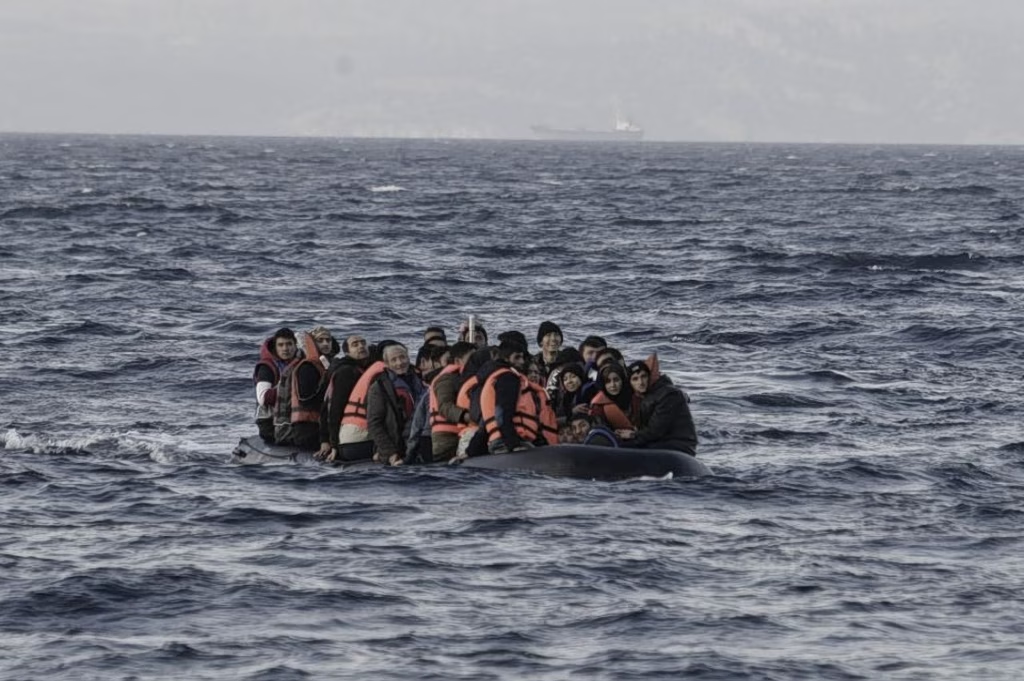
Spain’s migrant crisis in the North African enclave of Ceuta deepened on Friday as local authorities estimated around 60,000 people had crossed into the territory over the past few days, while the death toll rose to 34.
Ceuta regional leader Juan Jesús Vivas said the estimated number of arrivals now exceeds half the enclave’s population of about 85,000 people.
Migrants continued entering Ceuta on Friday despite efforts by Spain and Morocco to reinforce the border after the unprecedented surge.
Earlier, Spain’s Interior Ministry had estimated that around 49,000 migrants crossed into the enclave by sea and land within a 24-hour period, describing it as the country’s largest migration crisis since at least 2021.
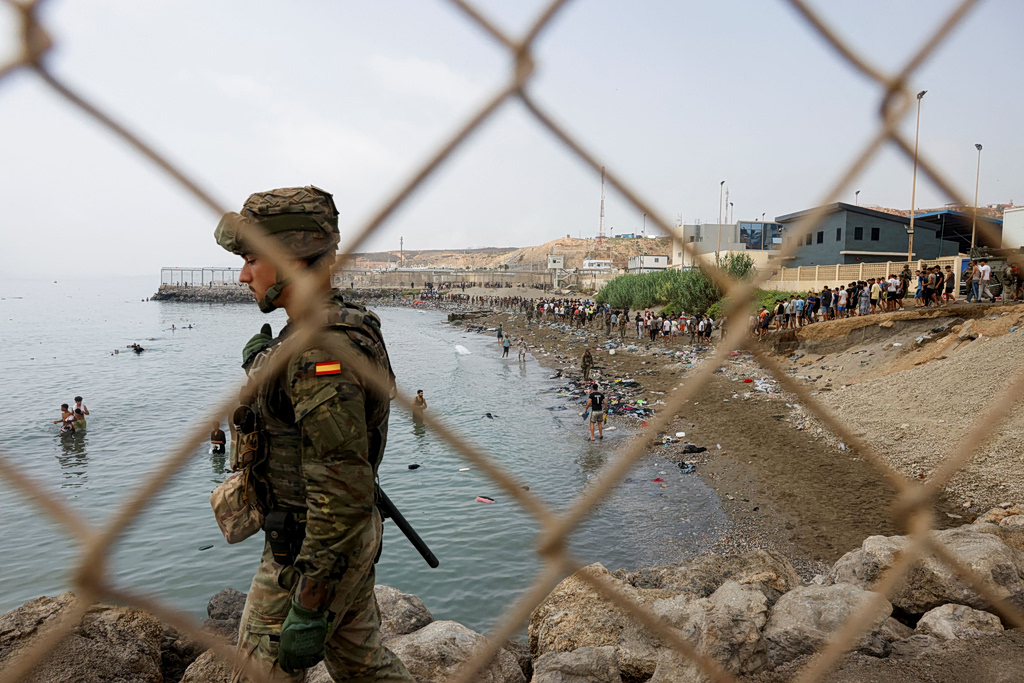
A member of the Spanish military keeps watch by a fence, as people waddle through water attempting to enter Spain, and in the background people who just entered Spain walk back to return to Morocco, amid mass crossings of migrants on foot and by sea from Morocco into Spanish territory, in Ceuta, Spain, July 31, 2026. REUTERS/Jon Nazca
Spanish authorities have said they will seek to return those who entered illegally as quickly as possible, despite a recent Supreme Court ruling restricting the use of special border procedures allowing immediate expulsions of migrants intercepted at sea.
Sánchez Pledges Swift Repatriations
Speaking in Ceuta on Friday, Prime Minister Pedro Sánchez called the situation “unexpected,” noting that illegal immigration had fallen by around 40% over the previous year before the sudden surge.
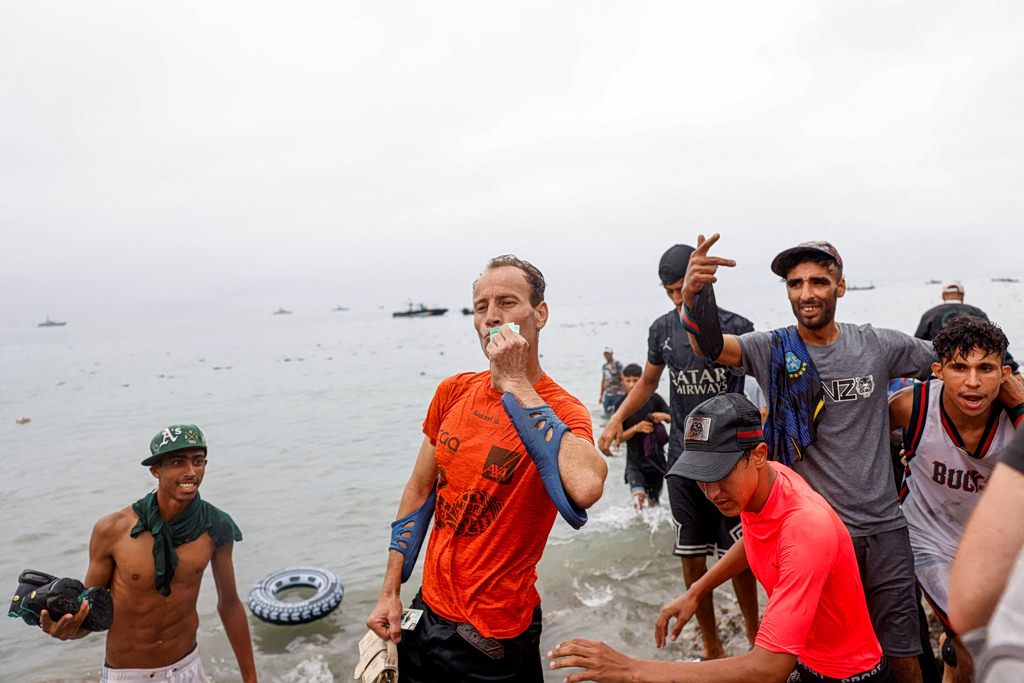
People enter Spain by sea, amid mass crossings of migrants from Morocco into Spanish territory, in Ceuta, Spain, July 31, 2026. REUTERS/Jon Nazca
“What happened yesterday breaks with a pattern we had seen consistently that was reducing illegal flows of migration,” Sánchez said.
He pledged that the government would defend the security of Ceuta “as if it were Madrid.”
Asked about returning migrants to Morocco, Sánchez said repatriations would begin “as soon as possible.”
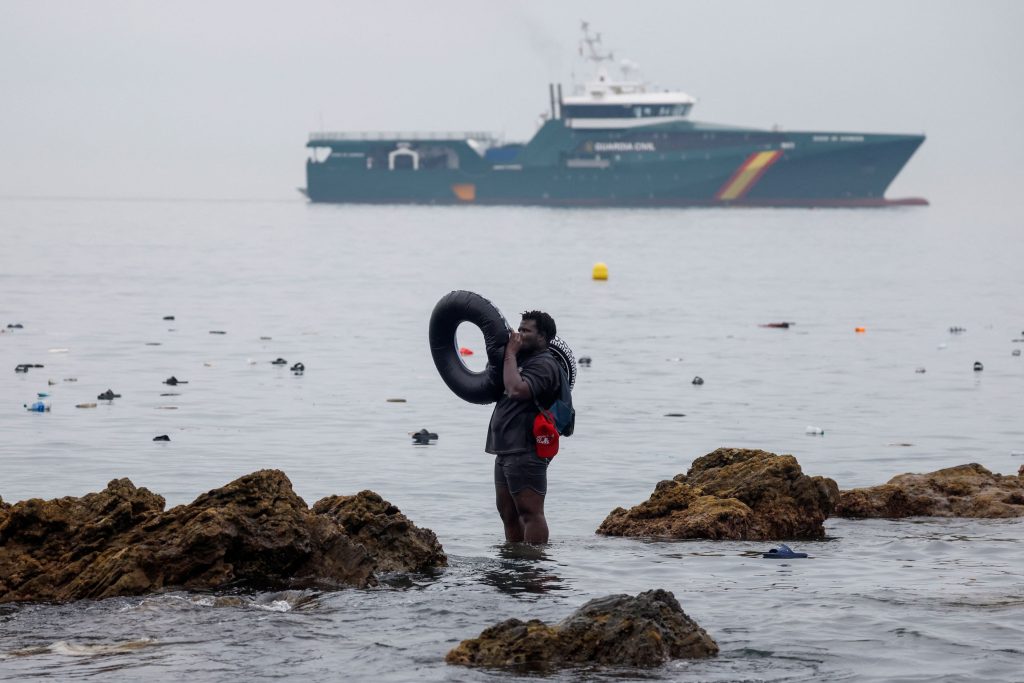
A man holds an inflatable ring, as he stands in the water, with the Spanish Guardia Civil (Civil Guard) in the background, amid mass crossings of migrants on foot and by sea from Morocco into Spanish territory, in Ceuta, Spain, July 31, 2026. REUTERS/Jon Nazca TPX IMAGES OF THE DAY
“We have spoken with Moroccan authorities. They are willing to cooperate to facilitate these repatriations of citizens to their country of origin,” he said.
Sánchez also stressed that reducing irregular migration requires cooperation with countries of origin and transit.
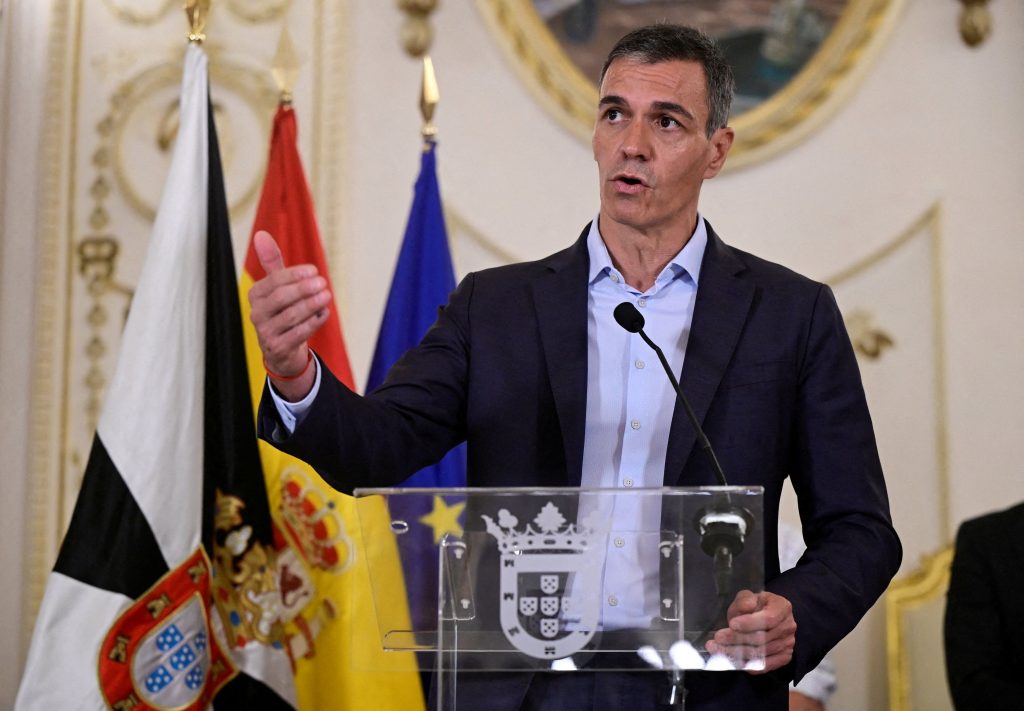
Spanish Prime Minister Pedro Sanchez makes declarations in Ceuta, Spain, amid mass crossings of migrants on foot and by sea from Morocco into Spanish territory, July 31, 2026. REUTERS/Fabian Bimmer TPX IMAGES OF THE DAY
Referring to the recent Supreme Court ruling, he said legal changes may be necessary to ensure repatriations at the border can be carried out “in the most efficient way possible.”
EU, Italy Respond to Crisis
The crisis has also triggered political tensions within the European Union.
European Commission President Ursula von der Leyen said the dangerous crossings “must stop immediately.” She said EU Commissioner for Internal Affairs and Migration Magnus Brunner was working closely with Spain, while Commissioner for the Mediterranean and Demography Dubravka Šuica was in contact with Moroccan authorities.
The images coming from Ceuta are unacceptable.
We cannot allow anyone to come to our Union without abiding by our rules.
Dangerous crossings must stop immediately. Smuggling networks must be dismantled. And returns must be swift, as our rules allow.
I tasked two Commissioners…
— Ursula von der Leyen (@vonderleyen) July 31, 2026
Italy has intensified its criticism of Spain’s handling of the crisis, threatening to seek Madrid’s suspension from the Schengen free-travel area until it regains control of its border.
Italian Prime Minister Giorgia Meloni argued that the scenes in Ceuta demonstrated that uncontrolled illegal immigration poses a threat to Europe’s security, while Foreign Minister Antonio Tajani backed calls for Spain’s suspension and linked the migration surge to Madrid’s recent decision to regularize more than 500,000 undocumented migrants.
Spain rejected the criticism, with Foreign Minister José Manuel Albares calling the Italian remarks “partisan demagoguery” and saying Madrid would summon the Italian ambassador.
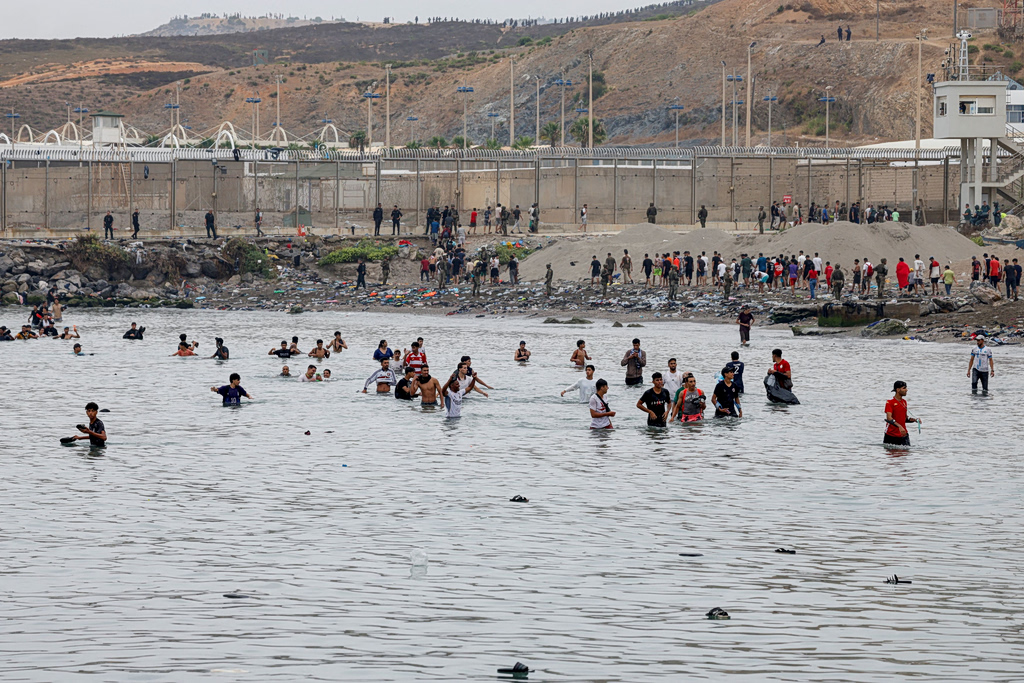
People waddle through water to enter Spain, and in the background people who just entered Spain return back to Morocco, amid mass crossings of migrants on foot and by sea from Morocco into Spanish territory, in Ceuta, Spain, July 31, 2026. REUTERS/Jon Nazca REFILE – CHANGES SLUG
Domestic political pressure has also intensified. Conservative People’s Party leader Alberto Núñez Feijóo described the situation as “desperate” and said Spain was facing “a national security crisis.”
Ceuta’s regional leader, Juan Jesús Vivas, had already urged the national government to declare a state of emergency over the mass arrivals, while Vox leader Santiago Abascal described the crossings as “an invasion” and blamed Sánchez’s government.