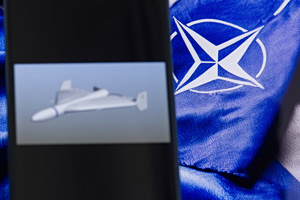
The CIA has alerted several European governments to a suspected Russian plan to launch small Gerbera drones from commercial ships in the Mediterranean, with Spain, France or Italy as possible targets, according to Spanish newspaper El Mundo.
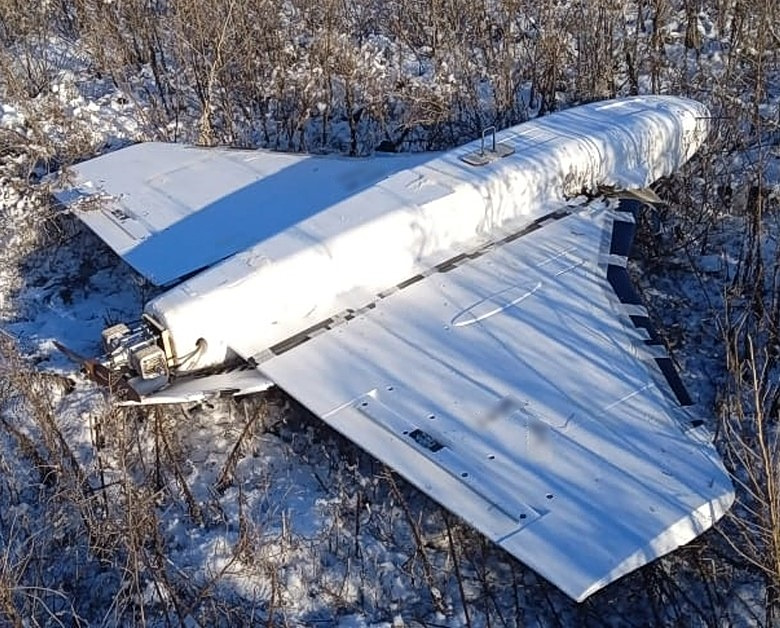
A Russian drone of the Gerbera model, downed in Ukraine (2025-01-05). Source: Wikimedia Commons
The story, written by former Russia correspondent Xavier Colás and published late Wednesday, relies on an anonymous source close to Lithuania’s Defense Ministry. It has not been independently verified.
The Attack Scenario
According to El Mundo, the drones would be hidden inside shipping containers aboard merchant vessels posing as ordinary commercial traffic. They would be catapulted from international waters and reach the coasts of the three countries within one to two hours. “They will use drones launched from the sea, hidden in containers; it is not difficult at all,” the Lithuanian source said. A single cargo ship could carry several of the drones, and launching them would be much simpler than launching larger Shahed or Geran models.
The Gerbera was reportedly chosen because it is small and easy to conceal. It measures about two meters long, has a wingspan of 2.5 meters, weighs up to 18 kilograms and flies at around 160 kilometers per hour, with a range of up to 600 kilometers depending on its load and conditions. Its warhead of four to five kilograms is not designed for mass destruction. Instead, it could start fires, damage exposed infrastructure, temporarily shut down an airport, or cause political and economic disruption while showing that Moscow can reach deep into Europe without crossing a land border.
How the Warning Emerged
El Mundo traces the alert to an unannounced visit to Moscow by CIA Director John Ratcliffe aboard a US military plane on August 25. Lithuania and other European countries were reportedly informed of the threat shortly afterward. A key CIA report was said to be circulating among European leaders by mid-September, around the time French President Emmanuel Macron convened his Defense Council on September 16 and, two days later, called all party leaders and 2027 presidential candidates to the Élysée Palace.
Italy Pushes Back
The Italian government says it has seen no sign of the alert. Defense Minister Guido Crosetto said the report “has not been confirmed in any way” and warned that in an already tense period, no one should be adding fuel to the fire. Sources speaking to Italian news agency ANSA said the US warning had not reached Italy through any intelligence, diplomatic or military channel.
Deputy Prime Minister Matteo Salvini, known for his openness toward Moscow, went further, calling it irresponsible to spread baseless reports of military threats and urging calm instead of alarmism.
Why Southern Europe
Analysts cited by El Mundo say Russia’s choice of targets would be driven by political weakness rather than geography. British expert Keir Giles, who specializes in Russian military strategy, said Moscow will seek out “the weakest point in Europe,” pointing to countries such as Spain that lack integrated air defense systems suited to this kind of threat. The argument echoes NATO Secretary General Mark Rutte’s earlier warning that a Russian missile would take only about ten minutes longer to reach Madrid than Warsaw.
All three countries also hold elections in 2027 and have political parties that could benefit from public fatigue over the war in Ukraine, a weakness the Kremlin could try to exploit with a cheap, high-impact operation.
For Spain, the timing is especially awkward. Prime Minister Pedro Sánchez’s government has resisted raising defense spending to NATO’s new target, straining relations with US President Donald Trump. Sánchez recently skipped Trump’s reception at the UN General Assembly in New York. The report highlights how little Spain has invested in air and missile defense just as concern over a direct threat grows.
A Wider Pattern of Escalation
Fears of Russian military action have risen across Europe this year amid sabotage and hybrid attacks widely blamed on Moscow. Russian drones have repeatedly violated airspace along NATO’s eastern flank, and allied fighter jets have shot some of them down. A year ago, 19 unarmed Russian drones entered Polish airspace in the largest such incursion so far, widely seen as a deliberate test of NATO’s response.
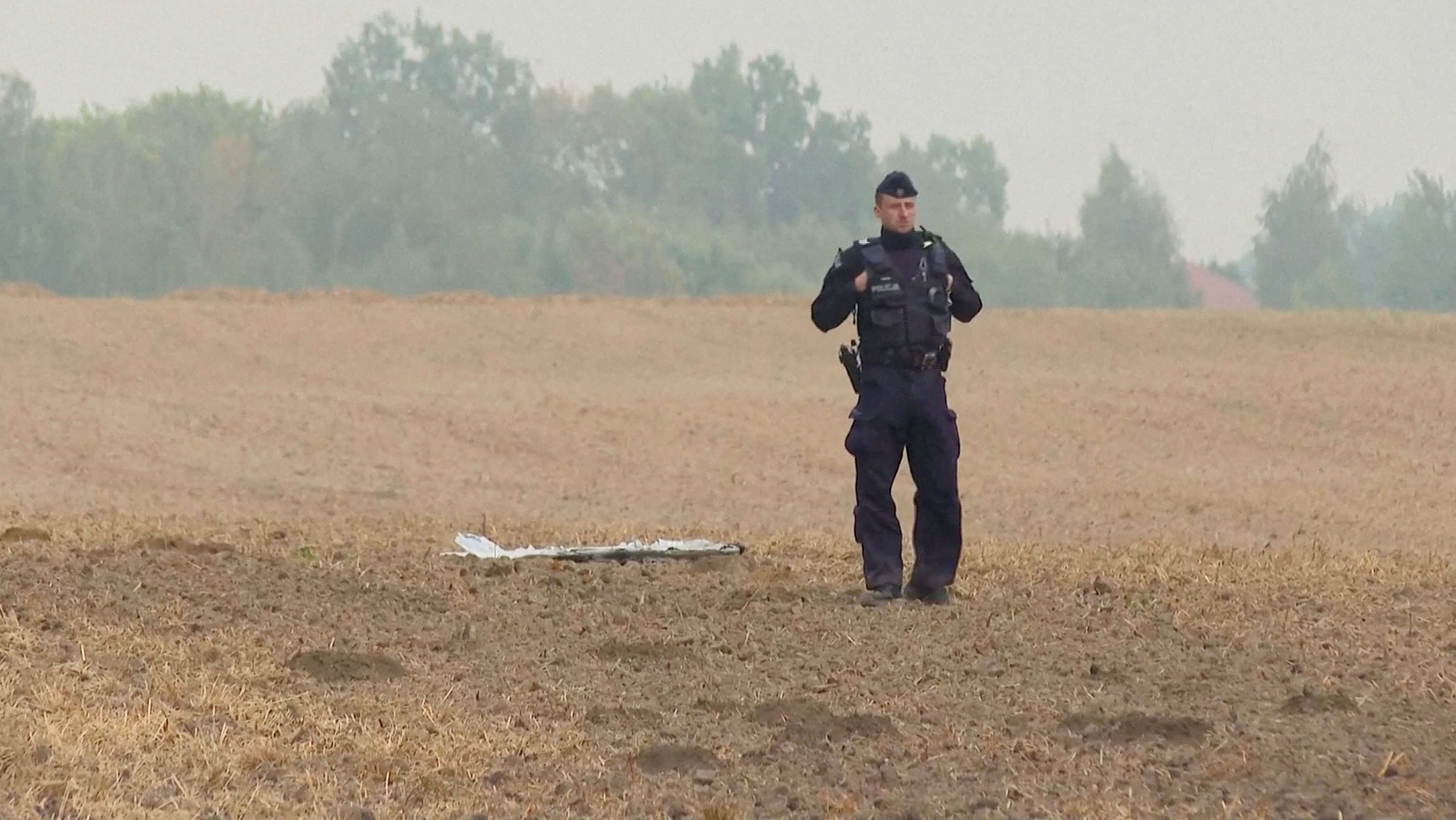
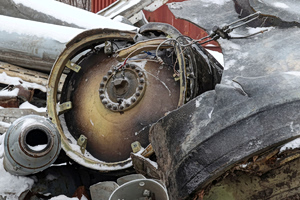
A Polish police officer stands near a unmanned aerial vehicle (UAV) fragment, after Russian drones violated Polish airspace during an attack on Ukraine and some were shot down by Poland, in Czesniki, Lublin Voivodeship, Poland, September 10, 2025 in this still image from video. Polsat News via REUTERS
European officials have long suspected Russia could launch drones from ships. Drone sightings along coastlines have sometimes coincided with the presence of vessels from Russia’s “shadow fleet.” In February, a Swedish Navy ship detected and jammed a drone taking off from a Russian intelligence vessel in the Öresund Strait while the French aircraft carrier Charles de Gaulle was visiting Sweden.
The threat escalated in early August, when an explosive-laden drone was found near a Ukrainian cargo plane and another aircraft collided with a drone in midair at Germany’s Leipzig airport, a major freight hub. After a month-long investigation, German authorities formally blamed Russia.
On September 19, the prominent pro-Russian Telegram channel Rybar posted a map suggesting Russia supply Algeria with Geran-5 drones to strike French aircraft factories, military bases, nuclear plants and petrochemical facilities, El Mundo reported.
Other governments are also sounding the alarm. Danish intelligence has assessed that Russia will step up hybrid attacks and that there is a low but growing risk of limited strikes on NATO countries, which Foreign Minister Lars Løkke Rasmussen called deeply worrying. On September 16, European Commission President Ursula von der Leyen proposed an Emergency Security Protocol, modeled on NATO’s emergency consultation system, to respond to external aggression.
Even Austria, which is neutral, landlocked and outside NATO, is preparing. Its military has launched a large counter-drone and air defense exercise involving 300 soldiers across several towns in eastern Austria, along with Mistral surface-to-air missiles, 35-millimeter cannons and electronic warfare systems.