 Μake us preferred on Google
Governments around Europe have been advising people to prepare kits with food, water, cash and other items that would allow them to withstand a temporary disruption in supply chains or some other natural or human-made emergency. The hacking of supermarket refrigeration systems is one very recent example of what can go wrong in our increasingly digitized economies and societies. Setting the temperature to 50o C or higher guarantees the destruction of the food items stored in those refrigerators and might even ignite fires that could eliminate entire stores and warehouses.
The way our economies and societies work is already being tested, as far as food security is concerned, by foodstuff and fertilizer supply problems because of the wars in Ukraine and the Middle East. The same wars are also affecting energy supplies, with European gas reserves at record lows at the very start of the winter season, while expanding AI data centres are competing with humans for energy and water. The cost of living has been rising sharply, even for citizens of the privileged West, while significant resources are being diverted to armaments, feeding the ongoing and potential future wars rather than people in need, increasing indebtedness and undermining social safety nets.
What more, the bosses of major AI-developing companies, like Anthropic and OpenAI, are warning about cataclysmic events that could be set in motion by rogue AI agents in the very near future. Already, AI has been causing disruptions by unexpectedly attacking “secure” online networks, and by discovering vulnerabilities that need to be patched up swiftly, before they are taken advantage of by foreign adversaries or criminals. Bomb threats on airlines and airports have become a daily occurrence, while mystery drones make routine appearances close to airport runways. As a consequence of all this, panic increases, social cohesion weakens, and human lives are further endangered.
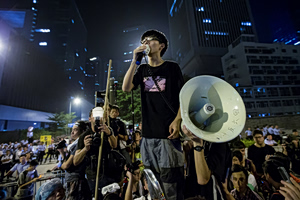
Governments are obviously aware of the multiplying and converging threats to their societies and economies. Beyond strongly recommending individual survival kits, though, they need to focus on resolving structural problems that have already manifested themselves, and on preventing even worse problems from arising. They are being reminded of that by citizens, who seem to be waking up. Civil unrest in many European countries – such as France, Spain, Italy, Belgium, Albania, Germany, and more – is fueled by the high cost of living, deteriorating infrastructure and public services, shortage of housing, excessive influence by corporate magnates, and widespread corruption, all of which undermine trust in government and democratic institutions.
It is not all doom and gloom. There is hope that things can change, as demonstrated by the students in Serbia, who dared to hold accountable an autocratic president and his corrupt associates, and won. More than an electoral success, the Student List victory introduced a novel approach to parliamentary democracy, with the student support base choosing professionals and public figures from around the country as candidates for parliament, rather than promoting themselves. The win of Lula in the second round of presidential elections in Brazil, and even the mid-term election results in the US, with the clear defeat of President Trump and his Republican Party, are additional signs of something moving in the right direction, finally. In the latter case, a clear majority of US citizens reacted to the shocking treatment of even long-established immigrants in the US, and the endless wars and their consequences, especially the attack on Iran and the subsequent closing of the Strait of Hormuz. Hopefully, their vote was also a condemnation of US appeasement of the Netanyahu government in Israel, whose Gaza genocide and the overall atrocious treatment of the Palestinian population has shocked the world but apparently not enough the US and most European governments so that they act to stop that. Thankfully, in Israel itself citizens came out in droves to give a clear parliamentary majority to those opposing the extreme Netanyahu policies.
Beyond elections, some promising news is even coming from Ukraine and Iran, with the necessity of negotiations for finding a peaceful settlement to the respective conflicts now becoming evident even to the protagonists and their supporters. All this would be easier to address if there were a functioning United Nations, as well as inclusive and objective regional cooperation mechanisms, notably in Europe and the broader Middle East. Hopefully, the world body will get its “mojo” back under its new Secretary-General, who should be selected before the end of this year, and the European Union will follow the example of some of its member states in talking to Russia on Ukraine and to Israel on Gaza / Palestine. The roles and possibly the memberships of organizations like the Organization for Security and Cooperation in Europe (OSCE) and the Gulf Cooperation Council (GCC) should be seriously reconsidered.
Having pushed and pulled as much as they can to get a more beneficial geopolitical and geoeconomic deal for themselves, powers like the US, Russia, China, the EU, Israel, Iran and other world stage protagonists, should realize that their win-lose games have since turned into lose-lose ones. In the process, these powers have increased the chances of a major confrontation with potentially worldwide destructive results. That could happen by (insane) design, by accident, or through possible provocations by rogue agents from the criminal, oligarchic, ultra-religious, AI or other obscure worlds, which host their own cataclysmic agendas. Returning to a live-and-let-live mentality, including an end to hostilities of all kinds – armed, cyber, financial, psychological – and focusing on the well-being and resilience of their respective populations, remains the best way for the leaders and peoples concerned to get a decent place in history books, and secure the peace, prosperity and resilience for themselves and the rest of the world, now and for the years to come.