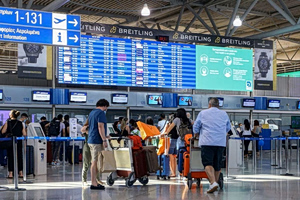
Just a few months ago, the Dubai economy was an undisputed success story of the post-oil Middle East. The tourism boom seemed unstoppable, with 2025 being the best year ever, with nearly 20 million international visitors, luxury hotels running at capacity, airports in constant expansion, and an economy determined to prove it could thrive beyond petroleum.
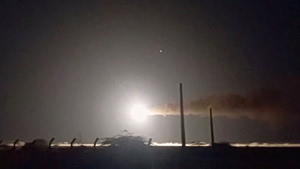
Today, the picture is unrecognizable. The war and escalating tensions between Iran, the United States, and Israel have sent shockwaves across the entire Gulf region, transforming Dubai from a global tourism icon into a market scrambling to contain its losses and stave off a deeper economic crisis.
The collapse has been dramatic. Within just a few weeks, fear of a broader Middle Eastern conflagration drove millions of travelers to cancel vacations, business trips, and transit connections through the UAE. The result was immediate: passenger traffic at Dubai’s airports cratered, hotel occupancy plummeted, and the entire chain of the tourism economy began to seize up.
The numbers tell the full story of the shock. In March 2026, passenger traffic at Dubai’s airports fell by more than 65% compared to the same period the previous year. Hotel occupancy rates, which had consistently exceeded 80% throughout 2025, dropped in some cases to below 30%.
Many hotels are now operating with barely any guests, while some tourist establishments have been forced to shut down temporarily or drastically scale back operations, an image that would have been unthinkable just a year ago, when Dubai was breaking one tourism record after another.
The damage goes well beyond hotels and airlines. The Dubai economy is built on a service economy that is currently under enormous strain. Restaurants, shopping malls, retail businesses, entertainment venues, and transportation companies are all watching their revenues collapse.
Losses are now estimated in the hundreds of millions of euros per day. Some projections put the daily damage at close to $500 million, a figure that lays bare just how vulnerable even a hyper-globalized economy can become when geopolitical stability evaporates overnight.
Dubai built its entire international identity on a sense of safety, luxury, and stability amid a turbulent region. But now geography is working against it. Travelers are treating the entire Gulf as a potential danger zone, regardless of the fact that the actual fighting is hundreds of miles away from the emirate.
The human cost: migrant workers pay the price
Even more serious are the social consequences of the crisis. Thousands of workers in the tourism and hospitality sectors are facing wage cuts, unpaid leave, and layoffs. The hardest hit are the migrant workers from India, Pakistan, Bangladesh, Nepal, and the Philippines who form the backbone of the UAE’s service economy.
In many hotels and restaurants, employees are continuing to work at wage reductions of up to 50%, while others have been sent back to their home countries without pay. There are also reports of workers being required to cover their own return airfare out of pocket.
The crisis is exposing the fragile social model on which Dubai’s spectacular growth was built. Behind the skyscrapers, the luxury resorts, and the imagery of extreme wealth lies a vast army of low-paid migrant workers who keep the city functioning every single day, and they are invariably the first to absorb the cost of any geopolitical crisis.
Emirates airline and the aviation hub at risk
The crisis is also hitting the aviation sector hard. The dramatic drop in flights is directly affecting carriers like Emirates, the airline that became a symbol of Dubai’s global ambition. Emirates had grown into one of the most important aviation hubs on the planet, connecting Europe, Asia, Africa, and the Americas through the Gulf. Now, cancellations, security fears, and flight restrictions are threatening that model at its core.
A region-wide reckoning
The fallout is being felt across the Gulf states. Tourism organizations and economic analysts estimate that the entire region could lose tens of billions of dollars in 2026 alone due to the collapse in travel and the pervasive uncertainty.
Dubai’s authorities are already fighting back. The government has announced financial support packages, international promotional campaigns, and efforts to rebuild traveler confidence. It is also working to keep as much aviation activity open as possible and to stem the wave of closures in the tourism sector.
But the fundamental problem remains: no advertising campaign can offset the fear of a wider war in the Middle East.
The current crisis illustrates in the starkest possible terms how tightly the global economy is now bound to geopolitical stability. Dubai set out to build a future beyond oil, one built on tourism, transportation, services, and international mobility. But the very region it calls home keeps reminding it that geography is unforgiving.
And for as long as the war continues, the Middle East’s most glamorous tourism brand risks becoming yet another casualty of regional instability.