 Μake us preferred on Google
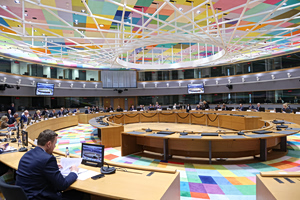
 The European Commission will examine the possibility of imposing an EU-wide tax on the windfall profits of energy companies, as member state governments look for ways to limit the cost of the new energy shock and protect households and businesses ahead of the winter.
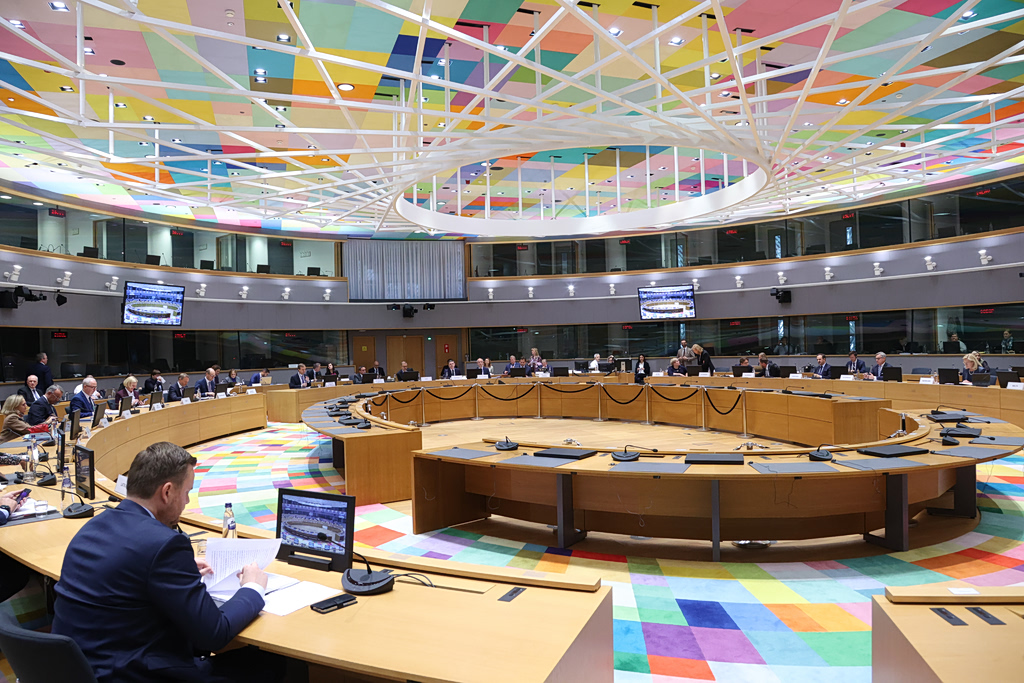
According to sources cited by Bloomberg, the Commission informed EU finance ministers on Friday that it will examine whether such a measure is feasible and what its financial impact could be. Revenue from a possible tax could be channeled into consumer support measures.
The discussion is especially important as energy prices remain high and the outlook for natural gas supply in Europe ahead of the winter has worsened.
Windfall profit taxation on the table
The Commission’s initiative follows pressure from several member states, with Germany among those calling for an EU-wide tax on the profits of energy companies to be considered.
In a letter sent earlier in the year, Germany, Portugal, Spain, Austria, Italy, and Poland had called on the EU to put forward a relevant proposal.
European Commissioner for Climate Wopke Hoekstra told reporters on his arrival at Friday’s meeting that the European Commission must examine “the full range of possible solutions.”
At the same time, he acknowledged that such a tax would not be a measure without complications, as several member states still oppose the idea.
“France is not opposed”
Meanwhile, German Finance Minister Lars Klingbeil said that France is not opposed to imposing a tax on the windfall profits of energy companies.
“We see how refineries and oil companies are benefiting from this crisis, while in the end consumers bear the burden,” he said, highlighting the political dimension of the debate.
The issue is expected to be at the center of discussions ahead of the summit of European leaders in Brussels next week, where lowering energy costs is expected to be one of the main priorities.
A difficult winter for natural gas
The debate over windfall profits is directly linked to growing concern about natural gas supply in Europe. New estimates point to a possible shortfall of up to 14 billion cubic meters of natural gas this winter, an amount equal to about 7% of total EU demand.
The scale of the problem grows as natural gas reserves have fallen to particularly low levels for this time of year. Storage facilities are just above 70%, the lowest level for this period since records began in 2011.
In the event of a particularly cold winter, Europe could need to cover a significant part of the gap through new imports of liquefied natural gas (LNG), at a time when available quantities on the international market are limited and prices are high.
The Russian LNG equation
Additional pressure comes from the upcoming EU ban on long-term contracts for Russian LNG, which is expected to take effect in January.
The loss of these quantities further limits the European market’s room to maneuver. In previous years, Russian natural gas had served as an important “cushion” for covering seasonal fluctuations in demand, especially during the winter months.
At the same time, natural gas demand in Europe has increased over the past two years, while imports have remained essentially flat. As a result, European countries depend more on the reserves they have built up before the start of winter.
More expensive LNG and greater pressure on consumers
The solution of increased LNG imports does not come without cost. Europe is turning more and more to the United States for liquefied natural gas supplies, but available U.S. production capacity is already close to its limits.
Importing the additional quantities needed to cover the energy gap could significantly raise costs for European consumers. At the same time, the effort to attract more LNG cargoes to the European market would intensify competition with other regions of the world, mainly Asia.
In this environment, taxing windfall profits also takes on a fiscal dimension. Governments are looking for additional resources for subsidies and support measures, without further burdening already strained public finances.
A difficult balance for Europe
The Commission must now weigh two conflicting needs: on the one hand, securing resources to protect consumers and, on the other, avoiding measures that could limit investment in the energy sector or create new market distortions.
The possibility of a single European tax would also need to go through the EU’s political and legal approval process, as governments do not share a common position on how to deal with energy windfall profits.
In any case, the debate is expected to intensify as winter approaches. The key question for European governments is now twofold: how to secure sufficient energy supplies and, at the same time, who will bear the cost of the new energy disruption.