 Μake us preferred on Google
 The future of Greek singer Anna Vissi’s live performances is facing uncertainty after composer Nikos Karvelas withdrew authorization for the public performance of his songs, escalating a dispute over the rights to music that has shaped the careers of both artists.
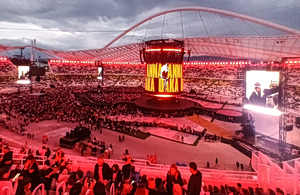
The disagreement emerged around Vissi’s recent concert at Athens’ Olympic Stadium (OAKA), which drew tens of thousands of spectators. Behind the successful performance, however, tensions between Karvelas and the concert’s production company, D&A Live Concerts, owned by shipowner Giannis Koustas, had become insurmountable.
According to statements by the composer, the disagreements involved both financial and artistic issues. Karvelas described the concert as a “pharaonic spectacle.”
The dispute has since raised questions about the ownership of musical works, the distinction between composers’ and performers’ rights, and whether Karvelas can prevent Vissi from singing songs he wrote for her.
Who owns the songs and who owns the performance?
Greek Law 2121/1993 on intellectual property distinguishes between copyright, which belongs to the creators of a work, and related rights, which protect performers and others involved in bringing that work to the public.
In this case, Karvelas is the composer and lyricist behind the songs in question. As their creator, he holds the exclusive rights to the musical works themselves.
Vissi, as their performer, holds related rights associated with her interpretations and performances, as well as the relevant rights connected to recordings.
The distinction is central to the dispute: a singer’s long-standing association with a song does not, by itself, transfer ownership of the underlying composition from its creator.
Why Karvelas’ withdrawal matters
Composers commonly entrust the management of their works to collective management organizations, which handle licensing, collect royalties and distribute payments to rights holders.
One such organization in Greece is autodia, which manages rights for creators and issues licenses for the public performance of their works at venues and concerts.
Karvelas has withdrawn the management of his rights for the public performance of his music from the organization, choosing instead to exercise those economic rights directly.
As a result, concerts and appearances at nightclubs can no longer include his songs without his direct written authorization, according to the legal framework cited in the report, including Law 4481/2017.
The move could affect Vissi’s future concerts and performances, particularly as substantial investment is being made by the Koustas couple to rebuild the Athinon Arena venue for upcoming live shows.
The dispute has also been intensified by strongly worded public statements from both sides, putting the artistic future of the former collaborators under pressure.
What happens if Vissi performs the songs without permission?
If Vissi performs Karvelas’ songs without his explicit authorization, the composer could seek legal remedies.
According to the report, he could ask a court to immediately prohibit a concert or performance, seek compensation for financial losses and moral harm, and pursue criminal penalties, since the unauthorized public performance of copyrighted works can constitute a criminal offense.
These potential consequences make the dispute particularly significant for any future live shows featuring songs written by Karvelas.
Could Vissi challenge a ban in court?
Vissi’s legal team has argued that Karvelas’ actions may amount to an abuse of rights.
Her lawyer, Michalis Dimitrakopoulos, said: “There cannot be a court ruling that prohibits her from performing them.”
He also argued that Vissi had given Karvelas’ songs “unique intangible added value” through her role as their ideal interpreter.
The dispute raises a broader legal question about how a creator’s exclusive rights should be weighed against a performer’s decades-long association with a repertoire. Karvelas has written hundreds of songs for Vissi, and their shared musical history has shaped how audiences identify the works with her voice.
If the two sides fail to reach a compromise, a court may ultimately have to weigh their competing arguments. For now, the dispute leaves questions about Vissi’s future performances unresolved.