 Μake us preferred on Google
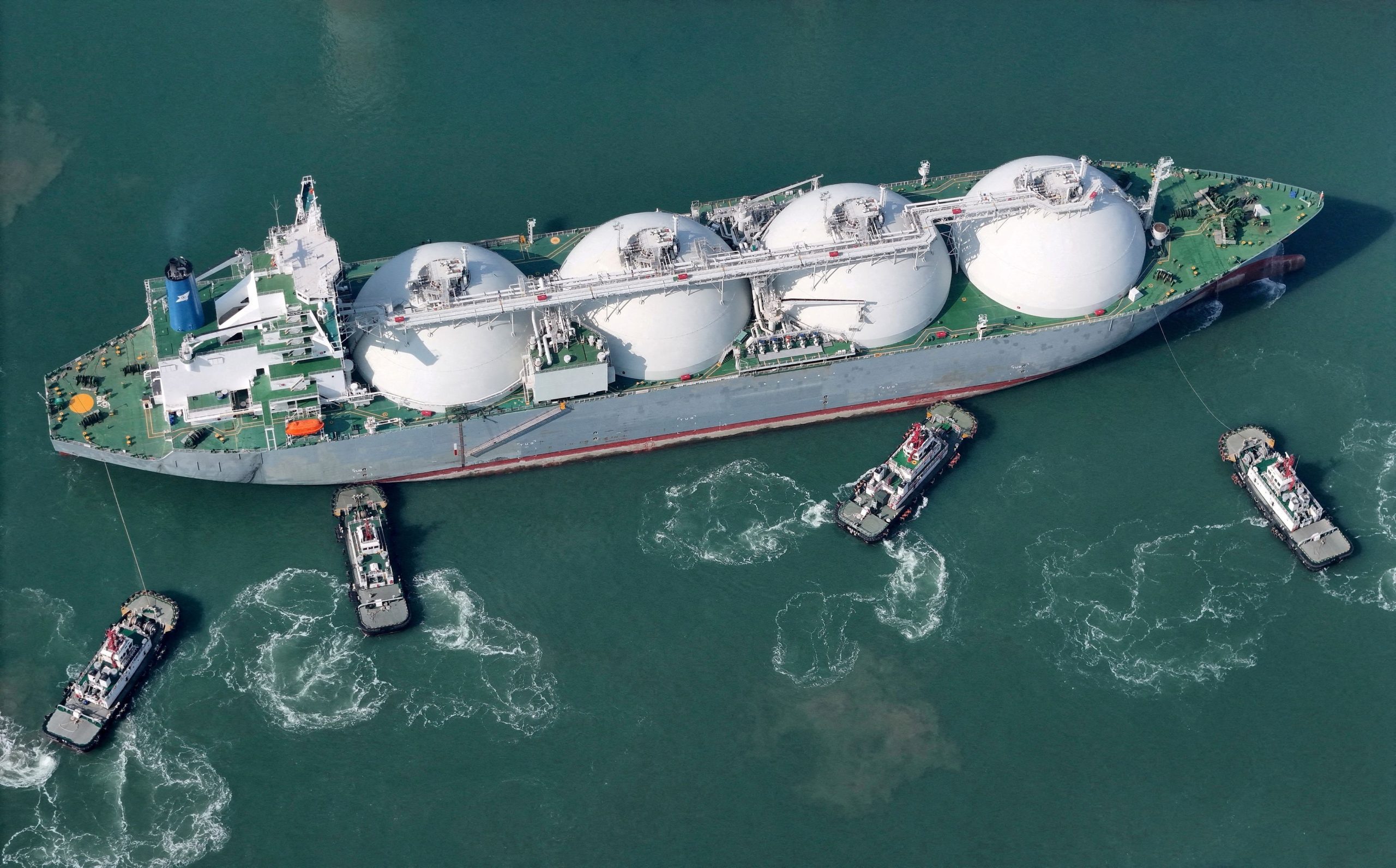
 The United States remained the largest supplier of liquefied natural gas (LNG) to Greece in the first half of 2026, delivering 12.67 terawatt-hours and covering about 70% of the LNG that arrived through the country’s main import terminal, according to DESFA, Greece’s National Gas System Operator.
Set against total gas imports of 43.07 terawatt-hours, American cargoes accounted for nearly a third of everything Greece brought in over the period.
The figures come as Greece has worked to establish itself as an energy hub for southeastern Europe and a gateway for supplying the Balkans and eastern Europe with gas. Total demand rose 15.06% to 43.09 terawatt-hours, from 37.45 a year earlier, DESFA said.
The clearest sign of that ambition was exports, which tripled year over year to 8.72 terawatt-hours from 2.86. DESFA said the jump confirms Greece’s growing role as a transit point for gas moving north. The country’s position gained further weight after auctions held July 6 for capacity on the Vertical Corridor, a route designed to carry gas from Greece toward the Balkans, eastern Europe and central Europe.
Where the gas comes in
Total imports reached 43.07 terawatt-hours, up 14.76% from the first half of 2025. The Revithoussa terminal, on an islet at Agia Triada off the coast near Athens, was the main point of entry, handling 43% of all imports. Volumes through the terminal climbed 27.12% year over year to 18.61 terawatt-hours.
The Sidirokastro entry point in northern Greece followed with 15.47 terawatt-hours, and Nea Mesimvria with 5.53. The floating storage and regasification unit at Alexandroupolis, known as Amfitriti, brought in 3.46 terawatt-hours, more than triple the volume a year earlier.
Who supplies the LNG
Within LNG, the U.S. led with 12.67 terawatt-hours, followed by Nigeria at 4.16. Smaller volumes came from Egypt at 0.51, Algeria at 0.49 and Mauritania at 0.35. Greece took in 24 LNG cargoes carrying 18.18 terawatt-hours, compared with 27 cargoes and 14.66 terawatt-hours a year earlier, meaning fewer shipments delivered more gas.
Domestic demand holds steady
Consumption inside Greece was essentially flat at 34.37 terawatt-hours, a 0.64% dip from 34.59 a year earlier. Power generation, still the largest use at 65% of the total, eased to 22.41 terawatt-hours from 23.25. Distribution networks rose to 8.08 terawatt-hours, or 24% of consumption, while industry and compressed natural gas climbed to 3.88 terawatt-hours, or 11%.
Small-scale LNG doubles
Small-scale supply expanded sharply. DESFA’s truck loading service filled 537 trucks in the first half, up from 273 a year earlier. The volume moved reached 24,641 cubic meters, roughly double the 12,284 cubic meters recorded in the same period of 2025, which DESFA said points to a fast-growing market for small-scale LNG.
Source: ot.gr