
 Μake us preferred on Google
 The European Commission announced on Friday, October 9, that it has selected 46 strategic raw material projects that will receive quicker permitting and assistance in seeking public and private financing. The move is part of the bloc’s push to diversify its supply chains and lessen its reliance on China.
Like other leading Western economies, the EU depends heavily on China for critical minerals and components, including batteries and rare earths, which are essential to the defense, aerospace, automotive, and renewable energy industries.
Over the past two years, Beijing has increasingly leveraged this dependence in trade matters. This has intensified EU efforts to secure supplies and to consider a shared stockpile of key raw materials.
Projects chosen last year have advanced slowly, and some have had difficulty making progress. The Commission stated that it has already mobilized over €2 billion ($2.24 billion) in public funds. However, developers cautioned in August that additional projects could collapse without immediate financial support.
The Commission expects that giving priority to these projects will help the EU reach the goals of its 2024 Critical Raw Materials Act. Under that law, the bloc aims to mine 10%, process 40%, and recycle 25% of its yearly needs by 2030.
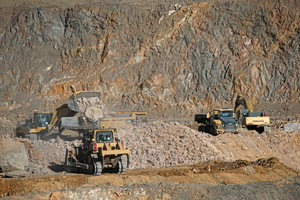
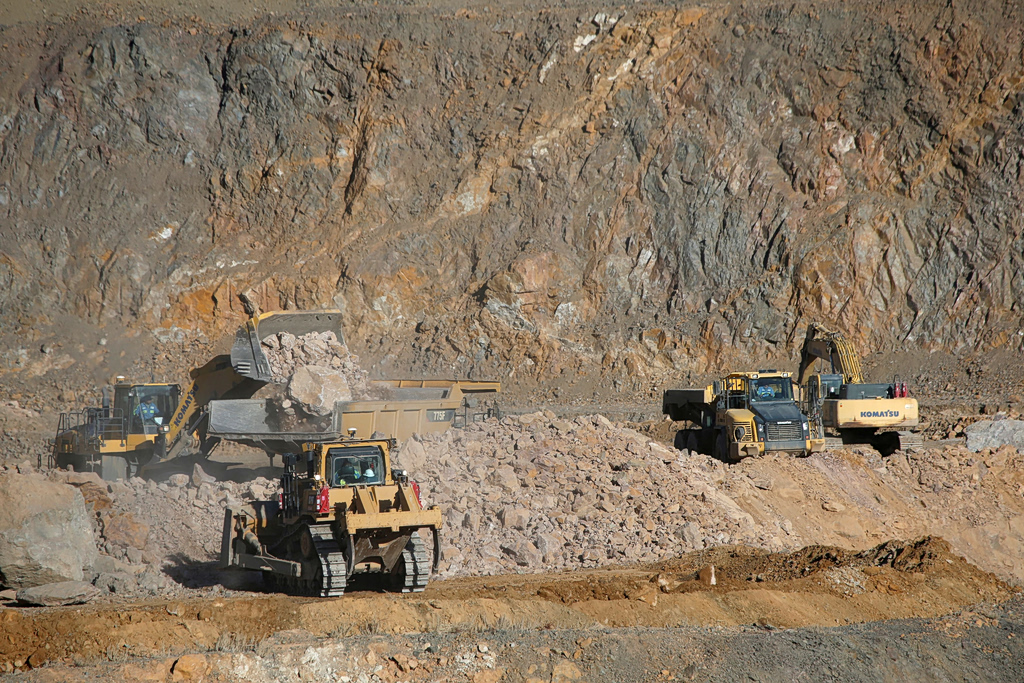
The newly selected projects are located in 16 EU member states and involve 15 of the 17 materials on the EU’s strategic raw materials list, among them copper, lithium, nickel, cobalt, manganese, graphite, rare earths, magnesium, and tungsten.
According to the Commission, the 46 projects will need an estimated €21.1 billion ($23.7 billion) in capital investment, drawn from both public and private sources.
Among the most prominent projects are Germany’s Zinnwald Lithium project, Greece’s Skouries mine, a planned aluminum smelter by Arctial in Finland, and the Viscaria copper project in Sweden. The list also includes projects supported by large European industrial companies such as Umicore, Aurubis, and Leonardo.
Being named a strategic project does not guarantee EU funding. Instead, the Commission said it helps these projects gain access to EU financing and links developers with potential lenders.
This latest round comes after 60 projects were announced last year, 13 of which were located outside the EU, in countries including Brazil, Greenland, and Kazakhstan.
($1 = 0.8918 euros)