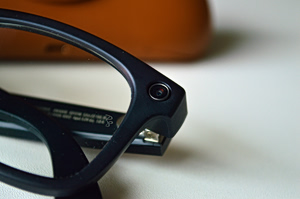
Central London’s bars, theaters and restaurants might not look like the site of a conflict, but many venue owners are locked in a genuine struggle over a new device some consider risky: smart glasses.
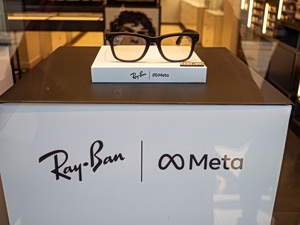
These glasses, which can capture photo, video and audio from the wearer’s point of view, are catching on fast. Eyewear giant EssilorLuxottica, Meta’s partner on the glasses, reported selling 7 million pairs of AI glasses in 2025. Meta is holding its Connect conference this week, where it’s expected to unveil new camera-free smart glasses, according to The Information, while Samsung and Google are set to launch jointly developed smart glasses of their own this fall.
As the technology spreads, so does the backlash. Social media clips appearing to show men filming women without their knowledge have raised serious questions about consent and whether current privacy laws can keep up with devices that let people record almost undetected.
Irina Raicu, who directs the internet ethics program at Santa Clara University’s Markkula Center for Applied Ethics, told CNN that the technology is eroding the basic ability to protect oneself just by staying alert to one’s surroundings, effectively undermining the whole concept of consent.
London, alongside New York and Australia, has become something of a test case for how businesses and the public are reacting to the trend. Several hospitality and entertainment venues have imposed restrictions or outright bans, and anti-smart glasses ads have started popping up at London bus stops, including one that mocks Kylie Jenner’s Meta glasses campaign by depicting her as a skeletal X-ray figure under the tagline “We’re Always Watching.” The mood mirrors a UK-wide rule introduced in August that bars smart glasses from courtrooms. Several Londoners told CNN the glasses make them uncomfortable in spaces where people expect some privacy, such as bars and restaurants.
“Turn the cameras off”
The pub chain Wetherspoons has banned customers from recording with the glasses. A student at a central London Wetherspoons named Zak told CNN he doesn’t want to be filmed just for having a few pints, noting he’d seen TikTok videos of people apparently filmed without their knowledge, and calling the idea of covering the recording light “ridiculous.” Another customer, Serena, said her main worry was being filmed without knowing where that footage might eventually surface. A Wetherspoons spokesperson summed up the chain’s stance to CNN as, essentially, “turn the cameras off.”
Meta says its glasses won’t record if the indicator light is covered, and in August the company updated the glasses to stop users from covering the light mid-recording, building on an earlier feature that detected tampering. Meta also said it has cracked down on social media videos showing people using the glasses to harass others. A Meta spokesperson told CNN that while some places reasonably shouldn’t be filmed at all, rules should be applied evenly, and pointed out that the glasses include a light that alerts others to recording, a feature most smartphones and cameras lack.
Google has faced this issue before, having tried to popularize smart glasses over a decade ago with the now-discontinued Google Glass, which triggered similar privacy backlash. Sameer Samat, Google’s president of the Android ecosystem, told CNN in August that the company isn’t surprised by the current pushback, and that details like how glasses signal they’re recording, and whether that signal can be bypassed, matter enormously. He said Google is factoring these concerns into its glasses development; like Meta’s, Samsung’s upcoming Google-powered glasses will include a tamper-resistant privacy light. Samsung and Google both declined to comment further to CNN.
According to Calli Shroeder, director of the AI and Human Rights program at the Electronic Privacy Information Center (EPIC), there’s no easy fix. Potential solutions, such as automatically blurring faces in recordings or requiring legal consent before footage can be uploaded, would be difficult to build and still wouldn’t eliminate the risks. One idea would have the glasses detect their location and automatically disable recording in sensitive spots like playgrounds or locker rooms, but that would require the glasses to sense their surroundings independently, which raises its own privacy concerns.
Beyond privacy
At London’s Piccadilly Theatre, staff and patrons say smart glasses threaten more than just privacy, they could also damage the experience of live theater and actors’ livelihoods. Bradley, a waiter and theater director, said part of what draws people to the theater is that the show remains a mystery until curtain-up, an element covert filming could destroy. He noted theater is a much more intimate medium than film or TV, and audiences value going in without spoilers or preconceived opinions. A spokesperson for ATG Entertainment, which runs several West End venues including the Piccadilly, told CNN that patrons caught wearing the glasses will be asked to remove them and delete any footage. Many UK cinemas have similarly banned smart glasses over piracy concerns, the UK Cinema Association said late last month.
Racing for the next big thing
Despite the friction, tech companies continue pouring money into wearables, betting that glasses capable of capturing and processing the world around the wearer could become the next major consumer tech platform. The devices let users play music, take calls and snap photos hands-free, and some companies see them as a future primary way to interact with AI assistants.
A Meta spokesperson told CNN the glasses help people stay present, whether listening to music, using live translation or making hands-free calls, and said they offer major accessibility benefits for visually impaired users, arguing that restricting their use would be a serious setback. Advocacy groups, including the UK’s Royal National Institute of Blind People (RNIB), have echoed that concern, warning that over-regulating smart eyewear could take away an important accessibility tool, since the technology can help with tasks like reading menus, street signs or describing surroundings.
Smart glasses shipments jumped 212% year-over-year in the first half of 2026, according to Counterpoint Research, with Meta commanding roughly 84% of the market. Shroeder said much of the current momentum stems from companies’ fear of falling behind in the race for new technology, adding that it’s easy for these firms to get caught in their own bubble.
Source: CNN