 Μake us preferred on Google
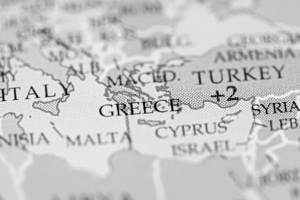
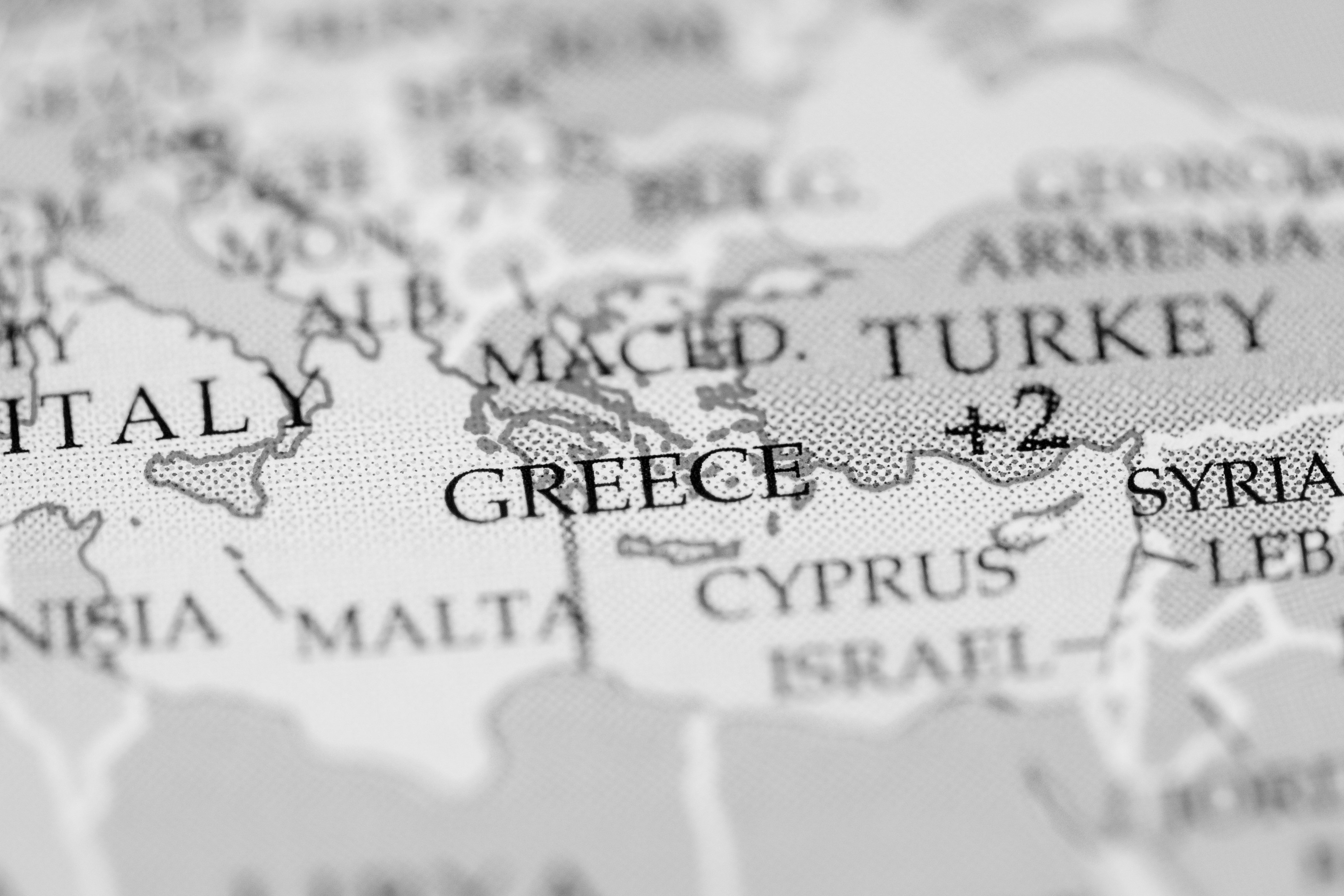
Greece and Turkey have issued competing maritime notices over the resumption of research for the Great Sea Interconnector (GSI), the planned electricity link between Greece and Cyprus, as Athens seeks to move the project forward without conceding a role to Ankara in authorizing activities in the Eastern Mediterranean.
Three months after French investment company Meridiam became the project’s majority shareholder, Greece issued a long-awaited NAVTEX, a maritime safety notice, allowing the French vessel Abeille Marengo to resume survey work. The decision followed extensive diplomatic discussions involving France, Greece and Turkey over the legal and diplomatic issues surrounding the project.
The Greek NAVTEX took effect Friday afternoon and remains valid until March 6, 2027. The French vessel is scheduled to operate beyond Greek territorial waters, beginning near the island of Kasos, where work by the Ievoli Relume was interrupted in July 2024 following Turkish intervention. The designated survey areas lie on Greece’s continental shelf and extend to the limits of Cyprus’ Exclusive Economic Zone (EEZ).
The Republic of Cyprus subsequently issued its own NAVTEX, with the French vessel expected to reach the area on November 19.
As anticipated, Turkey responded with a counter-NAVTEX, reiterating its longstanding objections. Ankara maintains that parts of the designated survey area fall within Turkey’s continental shelf, the boundaries of which it submitted to the United Nations in March 2020. It also described Greece’s notice as illegal and insisted that any activity in the area must be coordinated with Turkish authorities.
Turkey’s Foreign Ministry went further, characterizing the research as unauthorized and stating that the process for obtaining its consent had not yet been completed. The wording suggests that diplomatic discussions between France and Turkey may still be underway.
Athens insists Greece alone can authorize the work
Greece maintains that only its own authorities have the jurisdiction to authorize research activities in the designated areas.
Under the United Nations Convention on the Law of the Sea, requests for permission to lay a cable—and, by extension, conduct the necessary surveys—must be submitted to the coastal state whose continental shelf is involved. Athens argues that the areas designated for the GSI surveys lie on the Greek continental shelf and that no request for authorization has been submitted to Turkey.
Ankara, however, takes the opposite position, presenting itself as the competent coastal state and claiming sovereign rights over parts of the Eastern Mediterranean. Its stance also reflects a warning previously issued by Turkish President Recep Tayyip Erdogan that no energy project can be completed without Turkey’s permission or approval.
Although Greece says it has not requested Turkish authorization, the diplomatic discussions appear to have involved a form of written notification between the relevant authorities. France reportedly led difficult negotiations in an effort to find common ground between Athens and Ankara.
It remains unclear whether this arrangement will satisfy Turkey, which has continued to issue counter-NAVTEX notices and may seek to present the notification process as a form of authorization.
Greek Foreign Minister George Gerapetritis has previously indicated that Athens could accept informal written notification, while emphasizing that Greece remains the only country authorized to issue permits.
“Greece is exclusively the authorizing country. If there is informal notification that a vessel will go out to conduct research, that is not unreasonable,” he said.
The government appears to have sought a way to prevent the project from reaching an impasse. However, the arrangement has prompted questions about whether written notification could create a precedent that Turkey might invoke in future disputes over similar projects.
Legal concerns over a possible precedent
The precise wording of any notification to Turkey is considered particularly important.
Petros Liakouras, professor of international law at the University of Piraeus, told To BHMA that written notification could be problematic if its wording suggested that it was an obligation rather than a voluntary gesture.
“If the French vessel wants to proceed with notification on its own initiative—without it being understood that there is an obligation toward any state—then that notification should demonstrate nothing more than courtesy,” he said.
Liakouras noted that the Law of the Sea does not require permission or notification for surveys related to cables. He argued that Turkey’s demands are political rather than legal and are intended to obtain a signal from Greece that it accepts mandatory notification and, potentially, authorization in the future.
A senior diplomatic source, meanwhile, insisted that “no precedent is being created,” arguing that precedents arise only in connection with legal obligations.
Sofia Galani, assistant professor of international law at Panteion University, said the possibility of France notifying Turkey in writing raises concerns less about its immediate legal consequences than about how Ankara might use it as a diplomatic and political precedent.
However, she stressed that simply informing Turkey does not automatically amount to recognition of Turkish jurisdiction or sovereign rights in the Eastern Mediterranean.
The Center for International Law and Diplomacy took a more critical position, arguing that notifying the Turkish side would implicitly recognize its claims in the area.
Risk of a new confrontation at sea
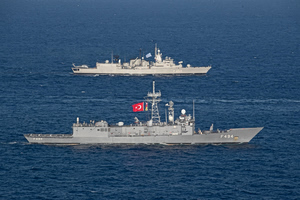
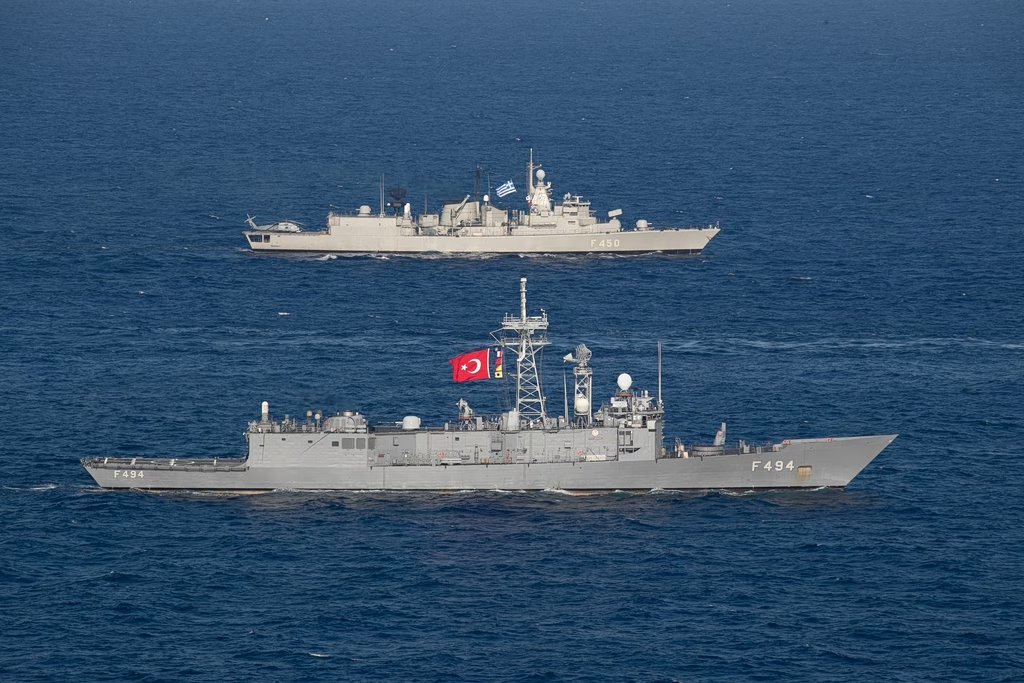
Beyond the legal dispute, a key concern is whether Turkey could seek to escalate the issue through military action.
According to information confirmed by multiple sources, the Greek Foreign Ministry does not rule out the possibility of an incident. Athens has pointed to statements by Prime Minister Kyriakos Mitsotakis and Gerapetritis that Greece’s response would be operationally equivalent to any action taken against the project.
The government has also emphasized that the GSI receives co-funding from the European Union and that Meridiam’s position as majority shareholder provides the project with broader security.
“There are plans for any obstruction of the project, just as I assume there are corresponding plans on the part of the French company and the French state,” Gerapetritis said in an interview with ANT1 television.
Galani considers the deployment of Turkish warships near the survey area a realistic possibility, given the 2024 incident off Kasos. However, she said France’s direct involvement changes the circumstances.
If France formally notifies Turkey before the surveys proceed, Ankara could portray the process as diplomatic recognition of its role, potentially reducing the perceived need for a military show of force, she said.
Liakouras, meanwhile, argued that the previous incident near Kasos was attributed by Turkey to the absence of prior notification. He stressed that Greece must adhere to the letter and spirit of the legal provisions that establish cable-laying and the surveys required for it as freedoms of the sea.
For Athens, the immediate priority is to ensure that the research work is completed, regardless of any potential Turkish reaction at sea.