 Μake us preferred on Google
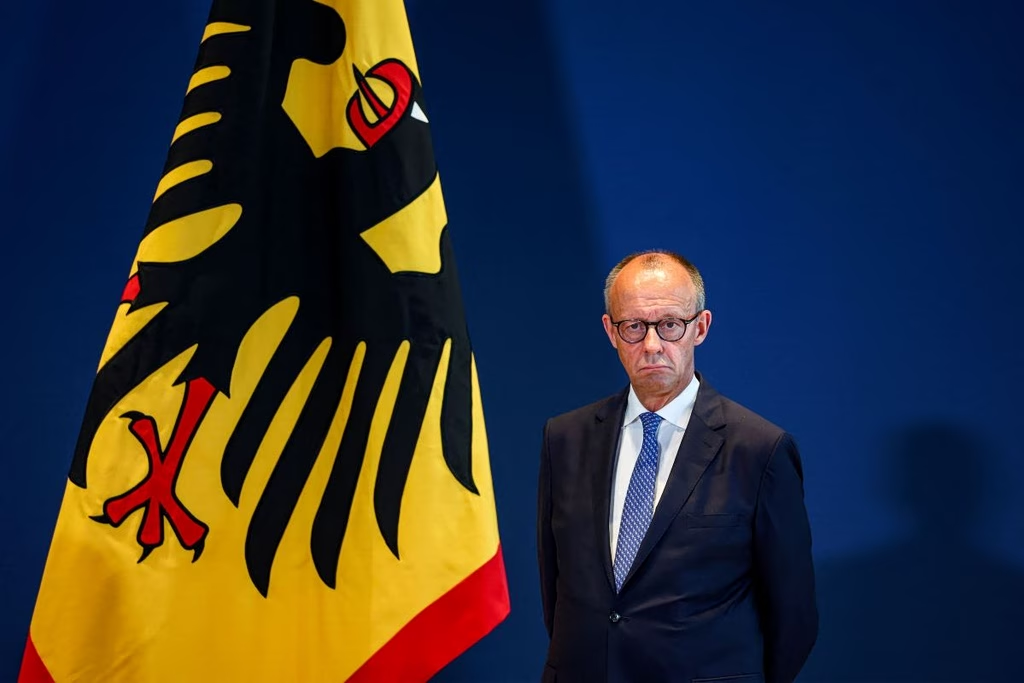
 No line item in the EU budget should be exempt from “substantial” cuts, was the clear message from Friedrich Merz during the first visit by a German chancellor to Ireland since the era of Angela Merkel.
Merz traveled to Dublin on Tuesday for talks with Irish Prime Minister Micheál Martin, dominated by the EU’s negotiations over the 2028-2034 Multiannual Financial Framework (MFF).
Ireland, which currently holds the presidency of the Council of the EU, will play a key role in efforts to reach agreement on the seven-year spending plan before the end of the year.
The discussion is considered so strategically important to Berlin that it prompted the first visit by a German chancellor to Dublin in seven years.
Merz used the trip to repeat Berlin’s demand for a fundamental overhaul of both the structure and the priorities of the EU’s next spending cycle.
Merz: “These cuts are necessary”
The European Commission’s proposed 60% spending increase, Merz argued, is simply unsustainable and impossible to justify at a time when almost all member states are making major efforts to put their public finances in order.
As a result, Berlin believes the proposals need to be cut significantly. Germany’s position carries particular weight, since it contributes more to the EU budget than any other member state.
“These cuts are necessary,” Merz said. “No sector can be exempted,” a Berlin official said ahead of the visit, arguing that net-contributor states, meaning those that put more into Brussels’ coffers than they get back, already fund roughly three-quarters of the EU budget.
The Irish Council presidency is expected to present a new so-called “negotiating box,” with updated spending figures, in time for the EU summit in mid-October. German officials are wary of a scenario in which failed negotiations simply let the MFF’s current spending levels roll over unchanged.
“I hope that you, dear Michael, will put forward a realistic proposal,” the German leader said, addressing Irish Prime Minister Micheál Martin.
How deep should the cuts go
Merz declined to specify exactly how deep the cuts should be, but indicated that savings would need to reach several hundred billion euros to produce a result compatible with Germany’s own federal budget.
He also criticized the Commission’s plan to create 2,500 additional staff positions, arguing such an increase was hard to justify while Berlin is cutting staffing levels across its federal administration by 8%.
Agricultural policy remains another unresolved issue, with Berlin continuing to reject proposals for a new EU-wide corporate tax.