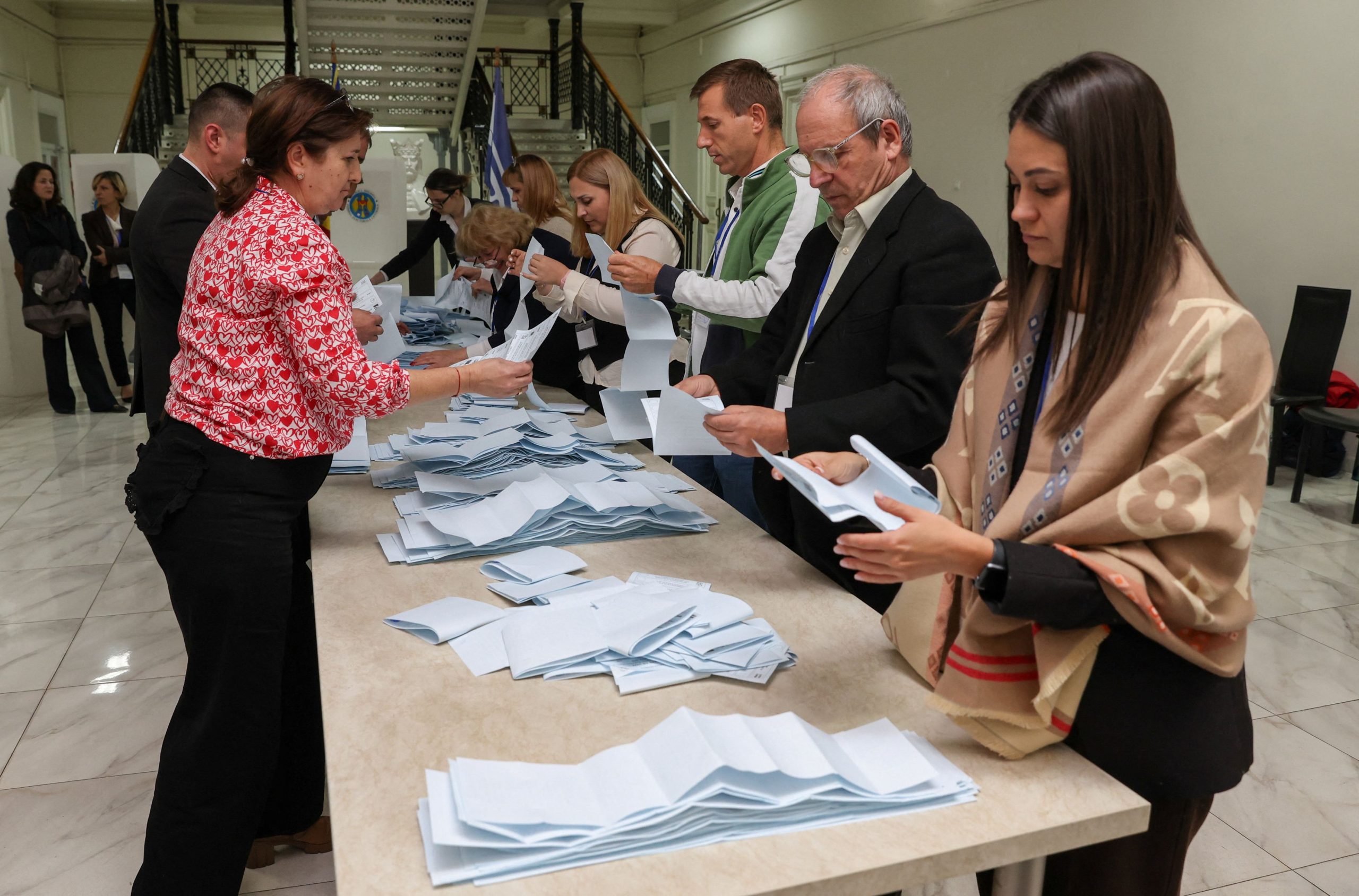
Moldova’s pro-European Union ruling party won a decisive lead in parliamentary elections, bolstering its bid to steer the country firmly toward Brussels and away from Moscow’s orbit.
With more than 99% of votes counted, the Party of Action and Solidarity (PAS) secured 49.99% of the vote, compared with 24.28% for the Russia-leaning Patriotic Bloc. The result positions PAS to potentially command a majority in the 101-seat parliament, sparing it from relying on coalition partners.
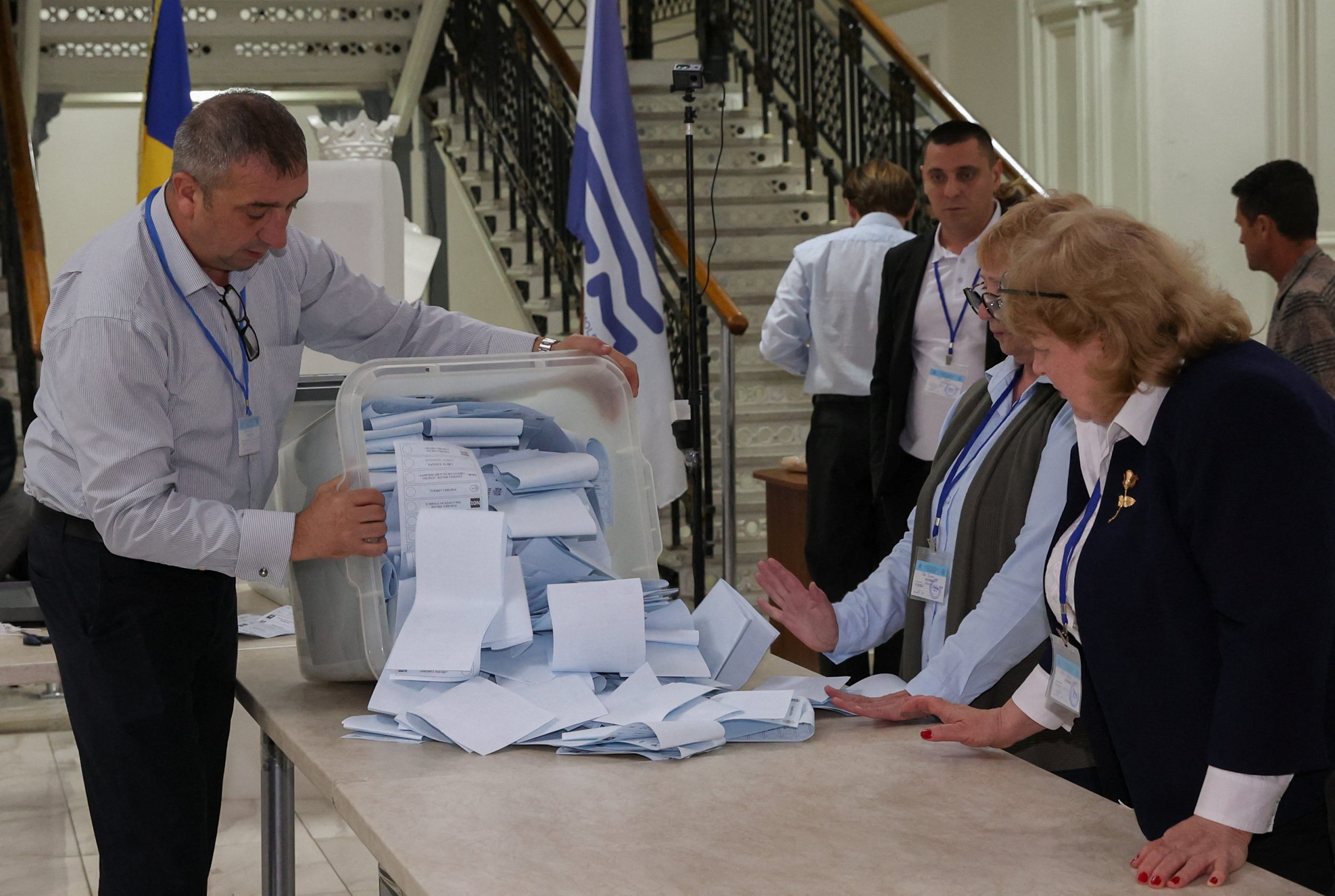
Members of an electoral commission empty a ballot box after polling stations closed in Moldova’s parliamentary elections in Chisinau, Moldova September 28, 2025. REUTERS/Stringer
Other groups entering parliament include the pro-European Alternative bloc with about 8% of the vote, and the populist Our Party with 6.2%. An official final tally is expected later Monday.
Contentious campaign
The election — described by PAS leaders as the most consequential since independence — was overshadowed by allegations of fraud and outside interference.
President Maia Sandu’s government accused Russia of attempting to sway the vote through disinformation campaigns, cyberattacks on government infrastructure, and fake bomb threats targeting polling stations in Moldova and abroad. Moscow denied the claims.
Two pro-Russian parties were barred from the ballot in the run-up to Sunday’s vote over accusations of illegal financing. On election day, Patriotic Bloc co-leader and former president Igor Dodon alleged without evidence that Sandu planned to annul the results, and called for protests outside parliament.
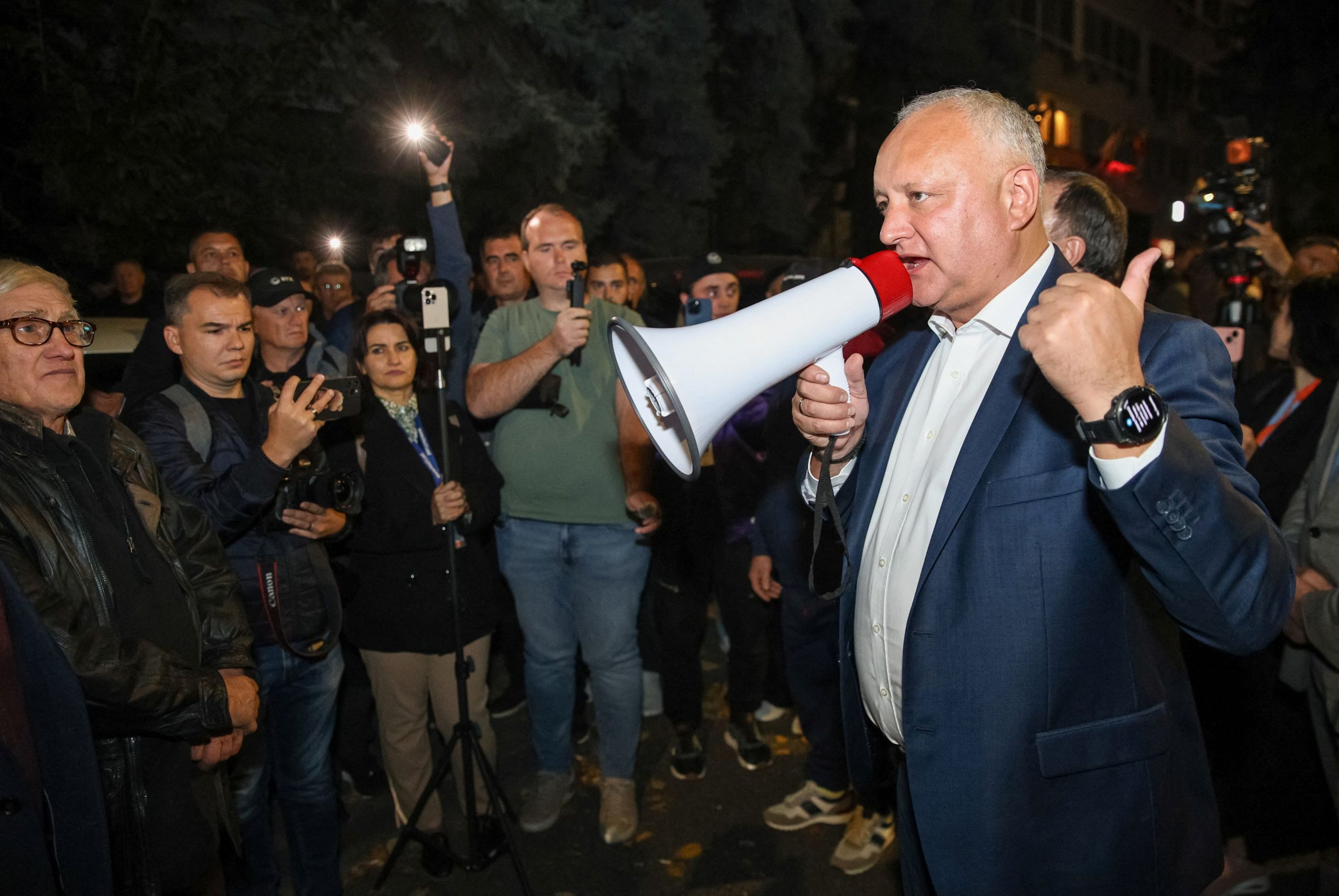
Igor Dodon, leader of Moldova’s Party of Socialists and one of the leaders of the Patriotic Electoral Bloc, speaks to his supporters outside the office of Central Electoral Commission, after polling stations closed during the parliamentary elections in Chisinau, Moldova September 28, 2025. REUTERS/Vladislav Culiomza
Moldova at a crossroads
Authorities warned of possible unrest if the Patriotic Bloc lost, pointing to what they described as Russian-backed efforts to destabilize the country. Moldova, a former Soviet republic of 2.4 million people, has been shaken by the war in neighboring Ukraine, energy shortages, and alleged Kremlin meddling.
Opposition groups campaigned heavily on economic grievances, with inflation near 7% and rising energy costs hitting households hard. But the strong showing by PAS suggests that many Moldovans remain committed to European integration despite economic pressures.
For PAS, the outcome marks a crucial step in advancing the reforms needed for EU accession — a process requiring years of legislative change.