
 Μake us preferred on Google
 Saudi Arabia faces the risk of running out of exportable oil stocks within days unless it can restart its major East-West cross-country pipeline to the Red Sea, which was shut down Friday after drone strikes. The strikes were launched from Iraq, where an investigation is currently underway to ascertain further details.
The disruption could eliminate as much as 4% of the world’s oil supply. Riyadh has yet to disclose the full scope of the damage or provide a timeline for restoring the pipeline. Estimates from sources familiar with the situation vary considerably, ranging from a full repair taking five to six weeks, to a partial restart happening much sooner while work continues.
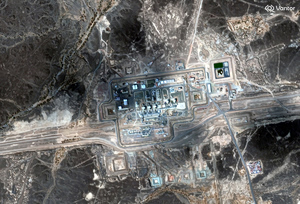
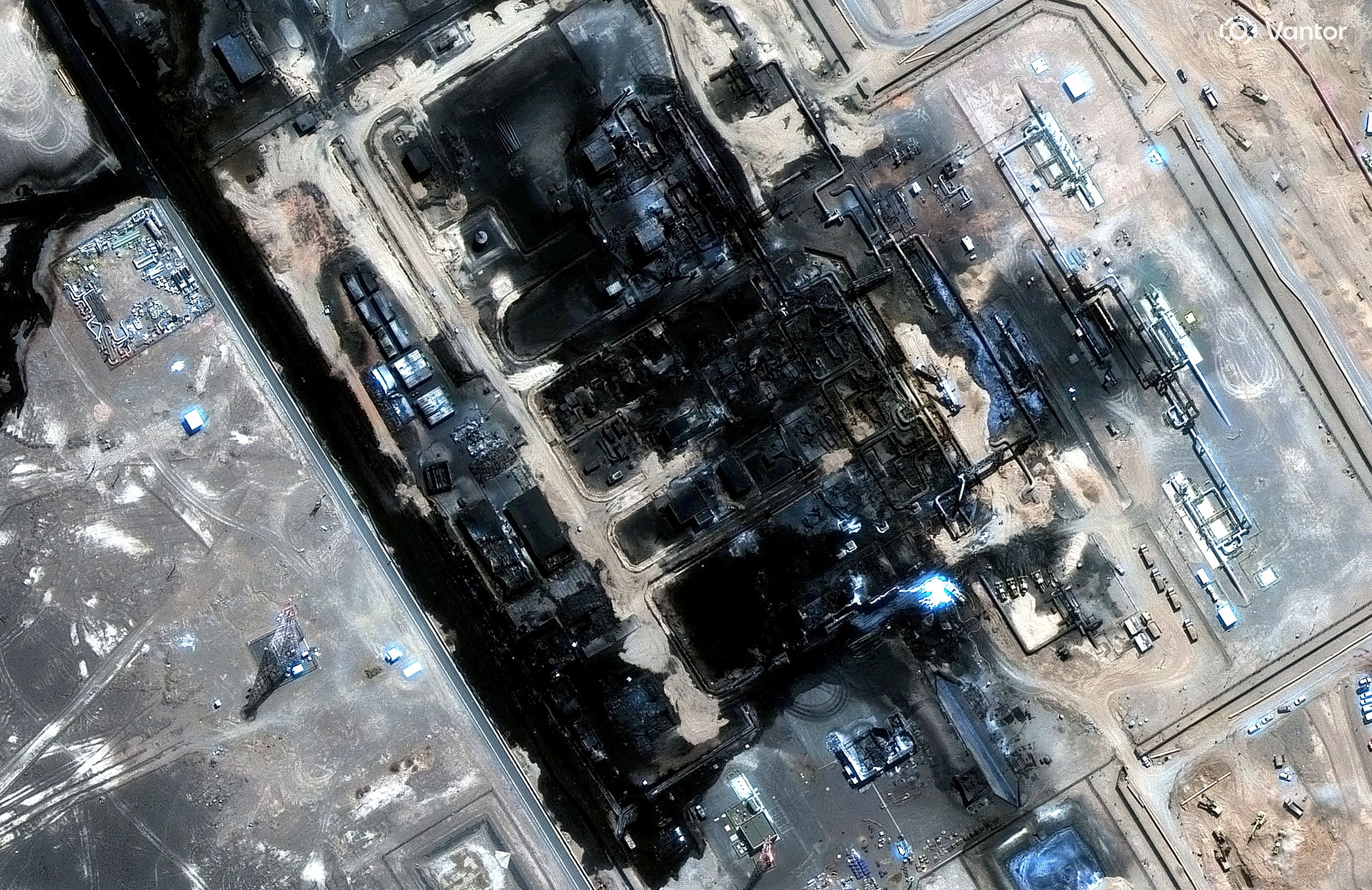
A satellite image shows the Saudi Arabia East-West pipeline, located across the Arabian Peninsula, before a strike that hit it on September 11, 2026, in Saudi Arabia, October 29, 2025. Vantor/Handout via REUTERS
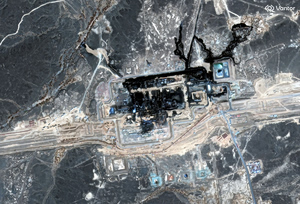
A satellite image shows the Saudi Arabia East-West pipeline, located across the Arabian Peninsula, after a strike that hit it on September 11, 2026, in Saudi Arabia, September 13, 2026. Vantor/Handout via REUTERS
Any further reduction in Saudi exports would deepen an already severe global supply shortage, one that has driven fuel prices to record highs, fueled inflation worldwide, and pushed U.S. bond yields to their highest point since the 2008 financial crisis.
For the past six months, this pipeline, which cuts across the Arabian Peninsula, had allowed Saudi Arabia to largely avoid the worst effects of the wartime closure of the Strait of Hormuz that has devastated exports from neighboring countries. The kingdom, the world’s largest oil exporter, had been rerouting roughly 4 million barrels per day, about 4% of global supply, through the pipeline to the Red Sea port of Yanbu.
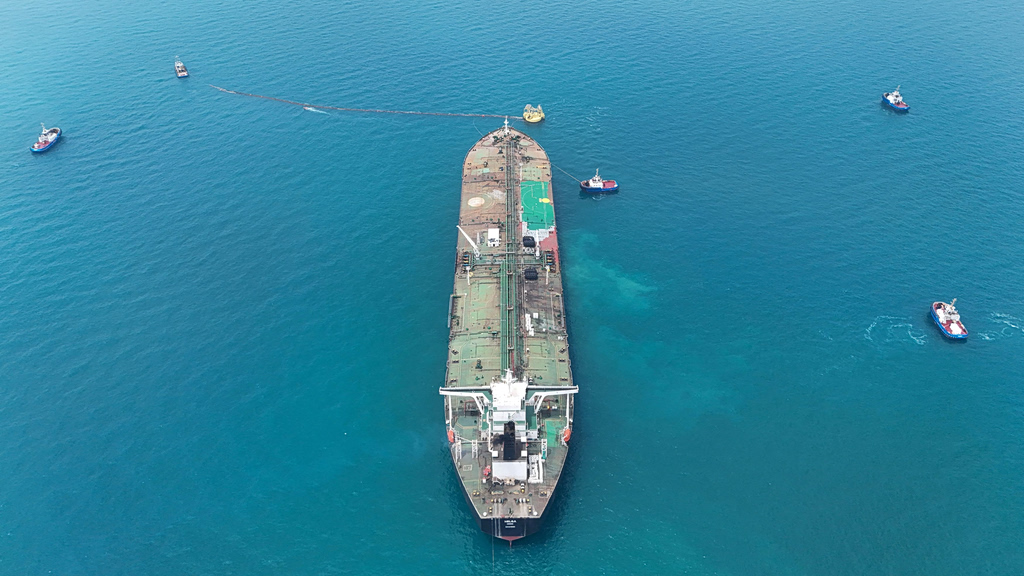
With the pipeline now offline, Yanbu’s remaining reserves can sustain exports for only five to seven more days, according to three industry sources with knowledge of Saudi export operations. A fourth source noted that Saudi Arabia also maintains several days’ worth of supply through Egyptian ports, Ain Sukhna on the Red Sea and Sidi Kerir on the Mediterranean.
Yanbu’s storage capacity is estimated at roughly 35 million barrels, while Ain Sukhna and Sidi Kerir can hold about 18 million and 20 million barrels, respectively. However, none of these facilities are currently at full capacity, and sources warn that supplies will eventually run out if the pipeline doesn’t come back online.
Saudi oil output had already dropped to its lowest level in more than three decades in August, driven by reduced flows through both Hormuz and the Red Sea, according to a Friday report from the International Energy Agency. The IEA, which coordinates energy policy among Western nations, projected that global oil supply will fall by 5.7 million barrels per day this year, roughly a 6% decline.
Compounding the crisis, Houthi forces in Yemen, who have previously threatened Saudi oil shipments, seized an island near the entrance to the Red Sea on Friday.
Before the regional conflict began, Middle Eastern nations collectively supplied around 22 million barrels of oil per day. Flows through the Strait of Hormuz have since slowed dramatically, now estimated at just 6 to 9 million barrels per day, according to industry sources.
Saudi Arabia informed OPEC last week that its oil production had fallen sharply, from 10.9 million barrels per day in February, before the war began, to just 6.2 million barrels per day in August.
Source: Reuters