 Μake us preferred on Google
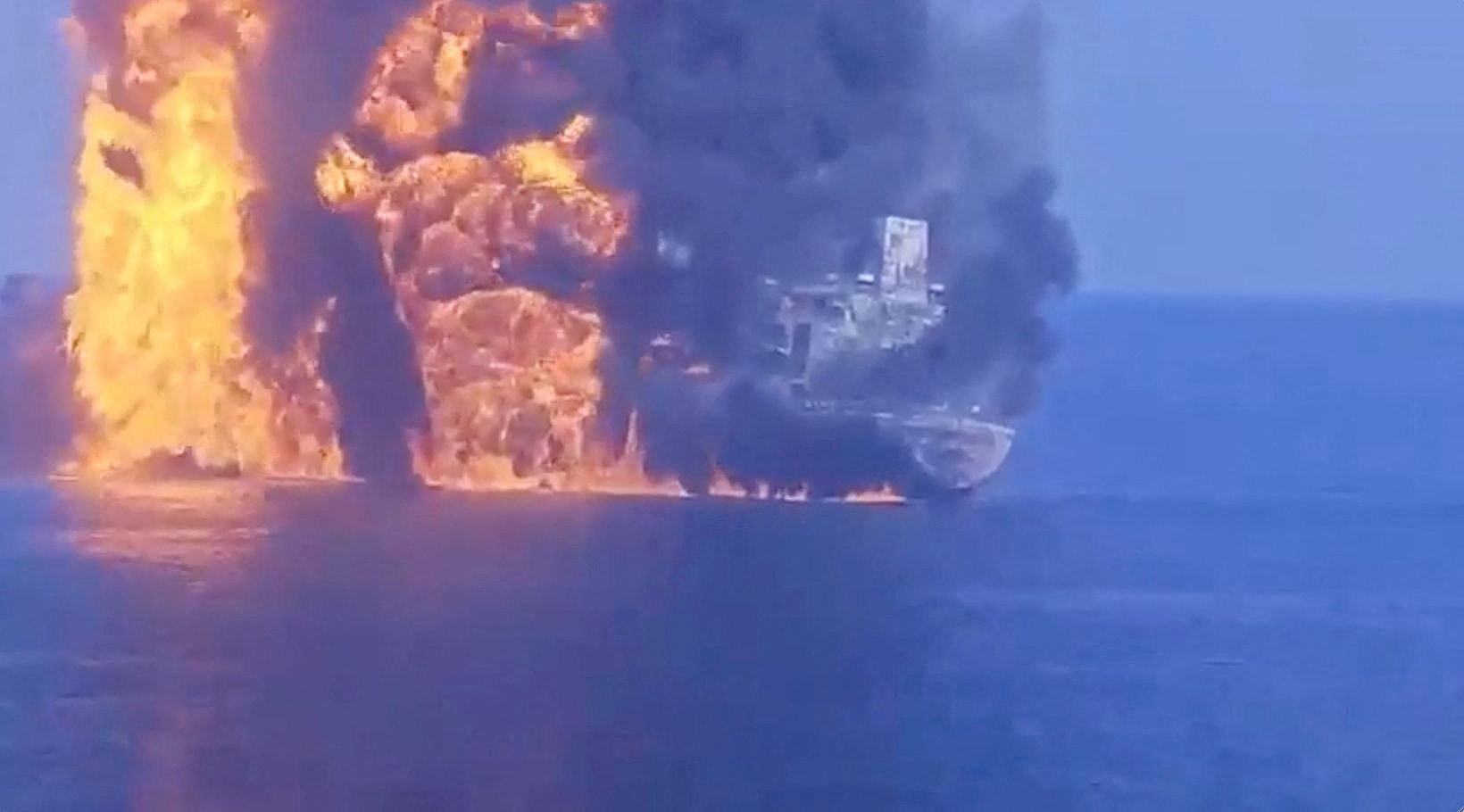
An oil tanker struck a naval mine and caught fire on Wednesday in what Iran calls a “restricted zone” in the Strait of Hormuz, according to the Iranian military. The incident is the latest in a rapidly growing number of mine strikes on vessels that Tehran says defied its rules for crossing the waterway.
In a statement carried by the semi-official Mehr news agency, Iran’s navy said the tanker had disabled its detection and navigation systems before entering “the prohibited area” despite receiving warnings. The vessel then struck a naval mine, caught fire, and came to a standstill. The navy described it as an “offending” tanker, Al Jazeera reported, citing the Fars news agency.
The navy did not name the tanker, its flag, its cargo or the condition of its crew and the laims could not be independently verified.
Three Strikes in One Day
It was not the only incident on Wednesday. Earlier in the day, two oil tankers struck naval mines, exploded and caught fire in the Strait of Hormuz, Iran’s Revolutionary Guards Navy said in a statement carried by state media. Arab News described the army’s report as the third tanker hit by a mine that day.
The strikes are part of a sharp escalation. Iran’s navy and the Revolutionary Guards have reported tankers catching fire after hitting mines almost daily this month. On Monday, the Guards said three “violating” oil tankers caught fire after hitting naval mines in the strait.
A Tanker Sinks
The most serious incident so far came on November 15. The Revolutionary Guards said two oil tankers struck naval mines and caught fire while attempting to cross the southern part of the Strait of Hormuz, sinking one of the vessels. The ship that sank was a supertanker carrying more than 2 million barrels of crude oil.
The Guards said both vessels had been using an “unauthorized” route. The IRGC Navy warned fishermen to take precautions to avoid colliding with the wreckage and urged tanker owners, shipping company managers and crews not to approach the restricted area. Neither vessel was identified, and there has been no independent confirmation of the sinking.
Disputed Accounts
Iran’s version of events has been challenged before. In one earlier case, US Central Command rejected Iran’s account, saying the tanker did not strike a naval mine but had already been damaged in an Iranian attack the month before and was struck again.
A Risky Strategy
Iran has restricted traffic through Hormuz since the US and Israel launched their war against it in February. Tehran demands that all ships seek its authorization to cross, and the United States has imposed a counterblockade on Iranian ports in response. In peacetime, Hormuz carried about a fifth of the world’s oil supplies.
Reporting from Tehran, Al Jazeera’s Resul Serdar Atas said Iran had been involved in more than 160 incidents in the Gulf and the Strait of Hormuz this year. Over the last 10 days, he said, the daily average had risen to about four. According to Iranian military statements, 40 ships had collided, overheated or caught fire after using what Tehran calls “unauthorized routes.”
Atas said the escalation is meant to raise the cost on Washington, which is blockading Iranian ports, while US Central Command says it is also monitoring trade routes through the Caspian Sea. “It’s a risky game, but Tehran thinks it’s worth playing,” he said.
Tehran has set conditions for reopening the waterway. It has told Washington it will not restore normal shipping until its demands are met, including the lifting of the US naval blockade of Iranian ports and an end to the war on all fronts. Under a proposal conveyed through Qatari mediators, it offered to reopen the waterway within 48 hours of Washington meeting its conditions.
Iran’s army spokesman said on Wednesday that the armed forces plan to tighten surveillance over the strait.
The US Response
US Treasury Secretary Scott Bessent claimed on X that Iran has not loaded a single tanker since the US launched Operation Economic Outcast in August. He called the Iranian government “a sinking ship.”
Despite the latest incidents, oil prices fell more than 1% on Wednesday, giving up some of the previous day’s gains.