 Μake us preferred on Google
The head of Greece’s most influential industrial lobby has accused the government of fueling public anger against manufacturers and supermarkets, arguing that its response to the cost of living crisis has undermined consumer trust in businesses.
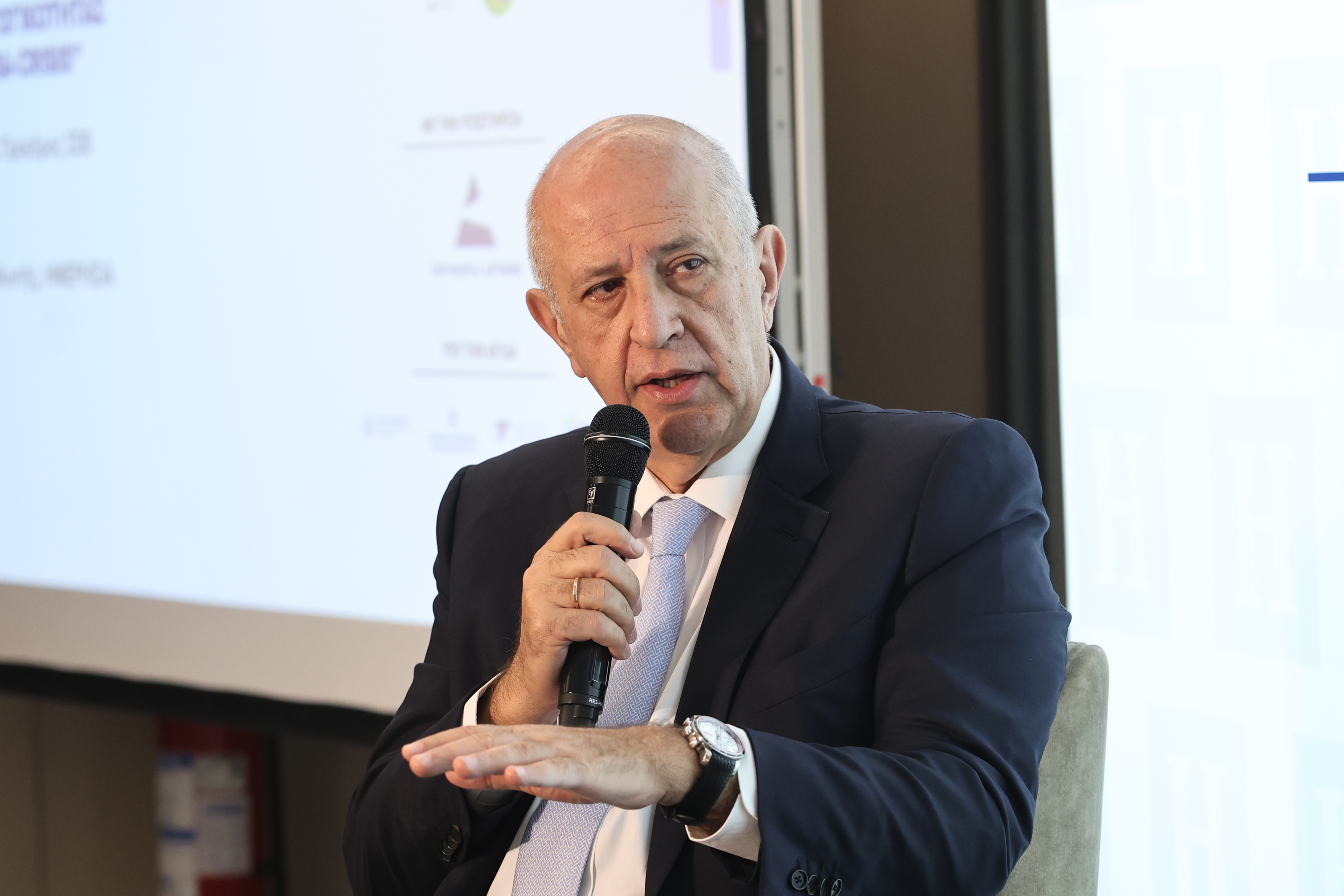
Speaking on Wednesday, Nov. 25, at the 17th conference of the Research Institute of Retail Consumer Goods (IELKA), Spyros Theodoropoulos, chairman of the Hellenic Federation of Enterprises (SEV), also criticized shortcomings in Greek and European energy policy, which he said had left businesses struggling with high electricity costs and weakened industrial competitiveness.
His concerns were echoed by Giannis Masoutis, president of the Greek Supermarket Association (ESE), who placed much of the responsibility for shortcomings in domestic energy planning on the government.
The shortcomings of energy policy
Theodoropoulos identified Greece’s slow rollout of battery storage infrastructure as one of the principal obstacles to bringing down electricity prices. Despite the country’s substantial solar power production during the day, insufficient storage capacity means that surplus electricity cannot be used during the early evening hours, when prices are particularly high, according to the chairman of SEV. He called for substantial and rapid investment in storage infrastructure but stressed that the problem extended beyond domestic energy policy.
Theodoropoulos argued that Europe had designed its electricity market on the assumption that national markets were sufficiently interconnected, without the infrastructure needed to support such a system. Limited connections between southeastern and central Europe, he said, had left countries including Greece, Bulgaria and Romania exposed to higher electricity prices. Increased demand from Ukraine following the outbreak of the war had compounded the problem, while inadequate cross-border infrastructure restricted access to cheaper electricity from central Europe.
Theodoropoulos noted, however, that central European countries were themselves facing high electricity prices, with France benefiting from its nuclear power capacity. He also questioned the pace of Europe’s green transition, arguing that substantial investment had been directed toward decarbonization without sufficient consideration for the competitiveness of European industry.
He called for a broader reassessment of European energy policy, including the cost of carbon emissions and its implications for industrial production.
Masoutis, meanwhile, argued that businesses had followed government policy by investing heavily in electricity generation, energy efficiency and modern equipment, only to see the benefits of those investments diminished by persistent high electricity bills.
Government blamed for erosion of consumer trust
Departing from the scheduled discussion on energy, Theodoropoulos turned to the deterioration of relations between consumers and businesses, accusing both the government and television broadcasters of portraying food manufacturers and retailers as profiteers. “I believe the government has made every possible mistake in recent years in angering consumers,” he said.
Theodoropoulos argued that the government had consistently presented manufacturers, traders and supermarkets as responsible for high prices while positioning itself as the protector of consumers through legislation, regulatory interventions and scrutiny of profit margins.
Such rhetoric, he said, had contributed to an atmosphere of suspicion in which consumers entered supermarkets convinced that businesses were trying to take advantage of them.
The SEV chairman also acknowledged that manufacturers and retailers bore some responsibility for the deterioration in public trust, criticizing businesses for their longstanding reluctance to defend themselves publicly against accusations of profiteering.
Source: OT.gr