Three years after Hamas’ October 7, 2023, attack on Israel, the conflict it triggered continues to reshape the Middle East, while many of the questions surrounding the attack, the war in Gaza and its aftermath remain unanswered. What started as a war between Israel and Gaza, spilled beyond, into the region, as seen in conflicts like Israel-Lebanon, the Iran war, and the Houthis.
The assault killed about 1,200 people, most of them Israeli civilians, and 251 people were taken hostage.
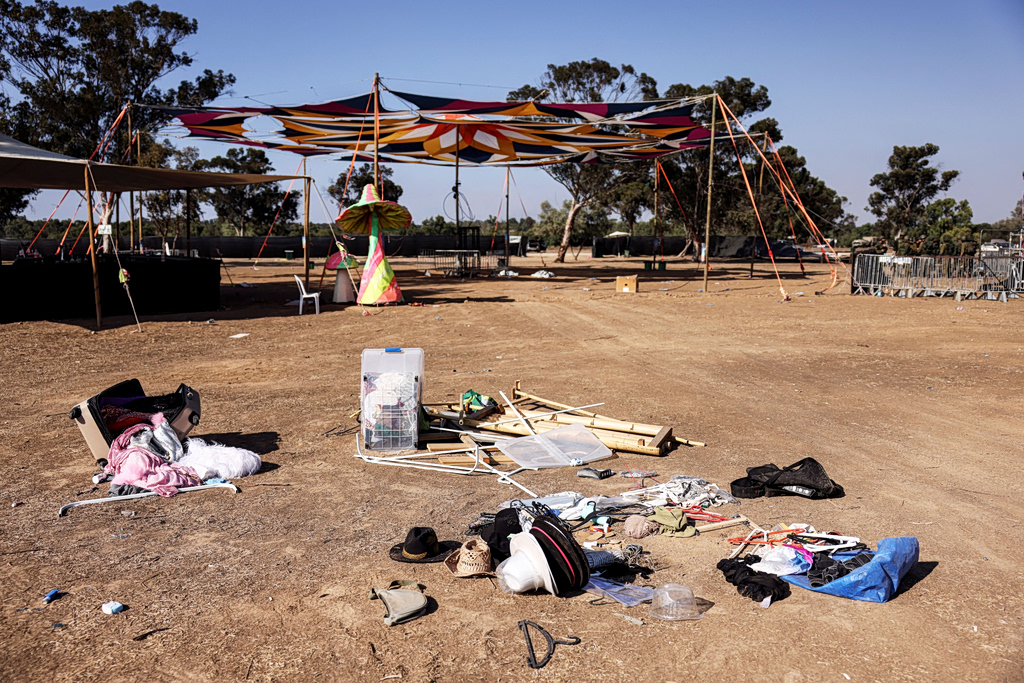
The personal belongings of festival-goers are seen at the site of an attack on the Nova Festival by Hamas gunmen from Gaza, near Israel’s border with the Gaza Strip, in southern Israel, October 12, 2023. REUTERS/Ronen Zvulun
It was followed by a devastating Israeli military campaign in Gaza that, according to the Institute for Middle East Understanding, has killed more than 74,000 Palestinians, a figure that includes only identified deaths, while more than 8,000 people are estimated to remain buried under the rubble.
A ceasefire that took effect in October 2025 secured the release of the remaining hostages taken during the October 7 attack, as well as hundreds of Palestinian prisoners and detainees held by Israel. But it did not bring an end to the violence. Israeli strikes have continued, while Israel has expanded its effective control over large parts of Gaza.
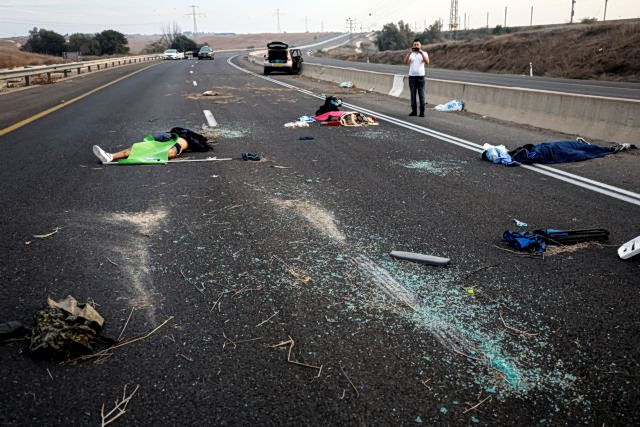
SENSITIVE MATERIAL. THIS IMAGE MAY OFFEND OR DISTURB A man takes a photo of dead people strewn across a road following a mass-infiltration by Hamas gunmen from the Gaza Strip, in the Sderot area, southern Israel October 7, 2023. REUTERS/Ammar Awad TPX IMAGES OF THE DAY
At the same time, international attention to the conflict has waned, even as questions over accountability, security, reconstruction and the future of both Israelis and Palestinians remain deeply contested.
Israel is also preparing for its first parliamentary election since October 7, scheduled for October 27. The vote is taking place against the backdrop of a deeply traumatized society, continued debate over the fate of the hostages and renewed scrutiny of what Israeli authorities knew before the attack.
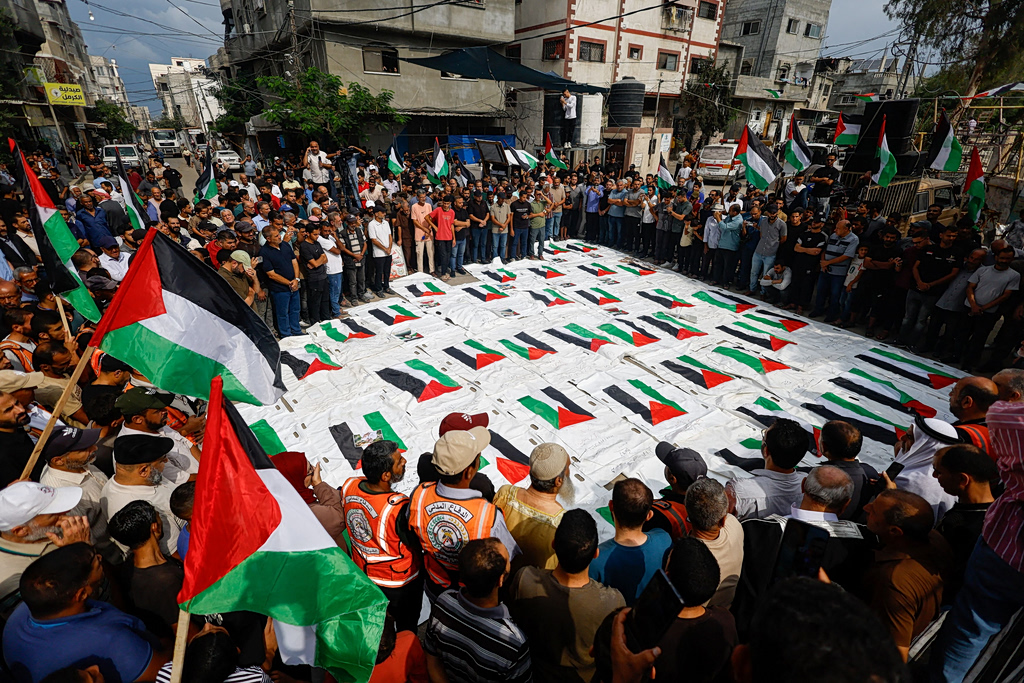
Mourners attend a mass funeral for 41 Palestinians whose bodies were recovered from the rubble of a residential building hit in an Israeli strike on October 31, 2023, according to the Civil Defence, in Nuseirat refugee camp in the central Gaza Strip, September 29, 2026. REUTERS/Mahmoud Issa
Questions over what Israel knew
One of the most persistent questions concerns whether Israeli authorities received sufficient warnings that Hamas was preparing a major attack. The issue has become a central part of the broader debate over the failures that preceded October 7.
Evidence points to multiple warnings in the months and days before October 7.
According to an exclusive by New York Times in 2023, a roughly 40-page Israeli intelligence document known as the “Jericho Wall” reportedly outlined an assault remarkably similar to the one Hamas eventually carried out. The plan described rocket fire, the use of drones to disable border defenses and an incursion into Israeli territory involving large numbers of fighters.
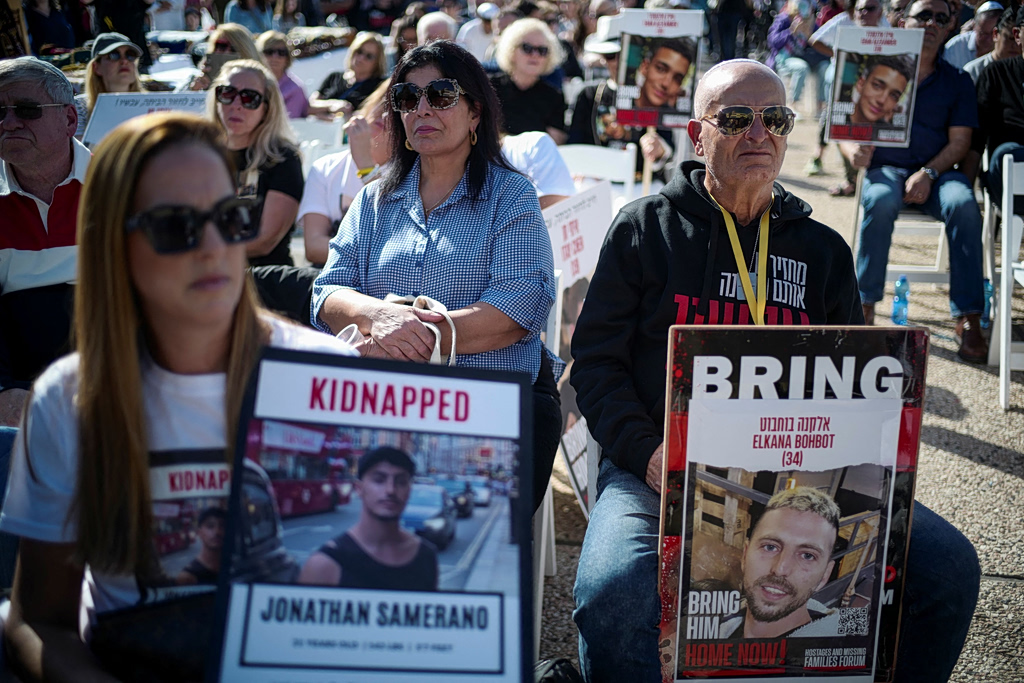
People hold posters during a religious ceremony to pray for hostages kidnapped on the deadly October 7 attack by Palestinian Islamist group Hamas, after a temporary truce between Israel and the Palestinian Islamist group Hamas expired, in Tel Aviv, Israel, December 1, 2023. REUTERS/Athit Perawongmetha
However, the document reportedly circulated among Israeli military and intelligence officials. Yet, officials and experts assessed that an operation of such scale and ambition was beyond Hamas’ capabilities. It is important to note that it remains unclear whether Prime Minister Benjamin Netanyahu or other senior political leaders saw the document.
On August 2023, 2 months prior to the attack, the Israeli National Security C0uncil released a travel advisory warning Israeli citizens of an increased risk of “kidnapping by Hamas and Palestinian Islamic Jihad”. The advisory cited public statements by then-Hamas political chief Ismail Haniyeh indicating that the group was prepared to pursue further kidnappings.
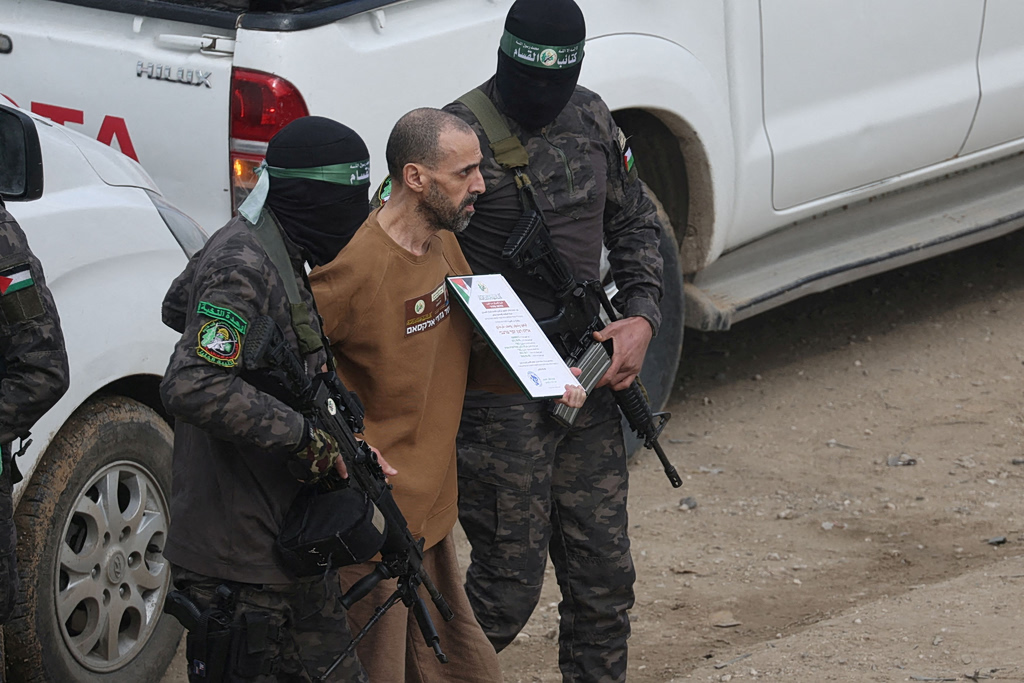
FILE PHOTO: Eli Sharabi a hostage held in Gaza since the deadly October 7, 2023 attack, is released by Hamas militants as part of a ceasefire and a hostages-prisoners swap deal between Hamas and Israel in Deir Al-Balah in the central Gaza Strip, February 8, 2025. REUTERS/Ramadan Abed/File Photo
According to the Times of Israel, earlier, in September 2023, a veteran analyst in Unit 8200, Israel’s signals intelligence agency, reportedly warned that a Hamas training exercise closely resembled the plan outlined in the Jericho Wall. The analyst argued that the exercise demonstrated Hamas was building the capacity to execute the operation. Her concerns were dismissed by a senior officer in the Gaza Division.
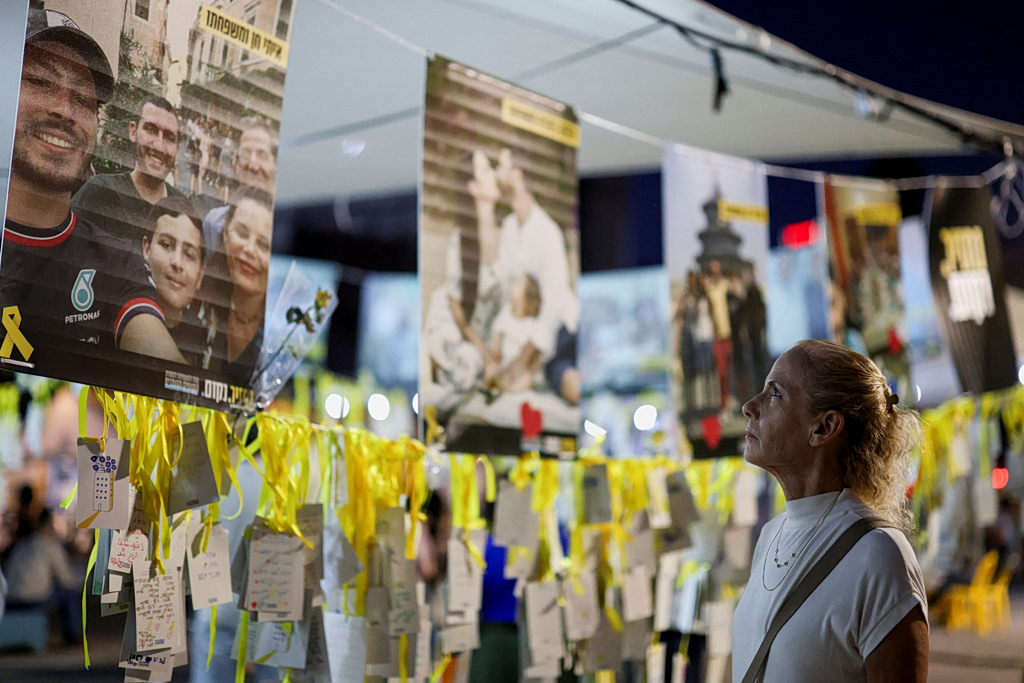
A woman looks at pictures of people who were taken hostage during the deadly October 7, 2023 attack by Hamas, at “Hostages Square” in Tel Aviv, Israel, October 14, 2025, following the release of hostages after a ceasefire between Israel and Hamas went into effect. REUTERS/Hannah McKay
Of course, other warnings followed.
The Israeli intelligence officer warned that Hamas could be preparing a large-scale invasion and intended to take as many as 250 hostages. A senior officer reportedly issued four warnings in the three weeks before October 7 that Hamas was moving toward a confrontation. Egypt’s intelligence services also reportedly warned Israel that “something big” was about to happen.
In 2026, a Haaretz investigation further reported that UAE President Mohammed bin Zayed Al Nahyan and Egyptian intelligence chief Abbas Kamel had warned Netanyahu about a major Hamas operation shortly before October 7.
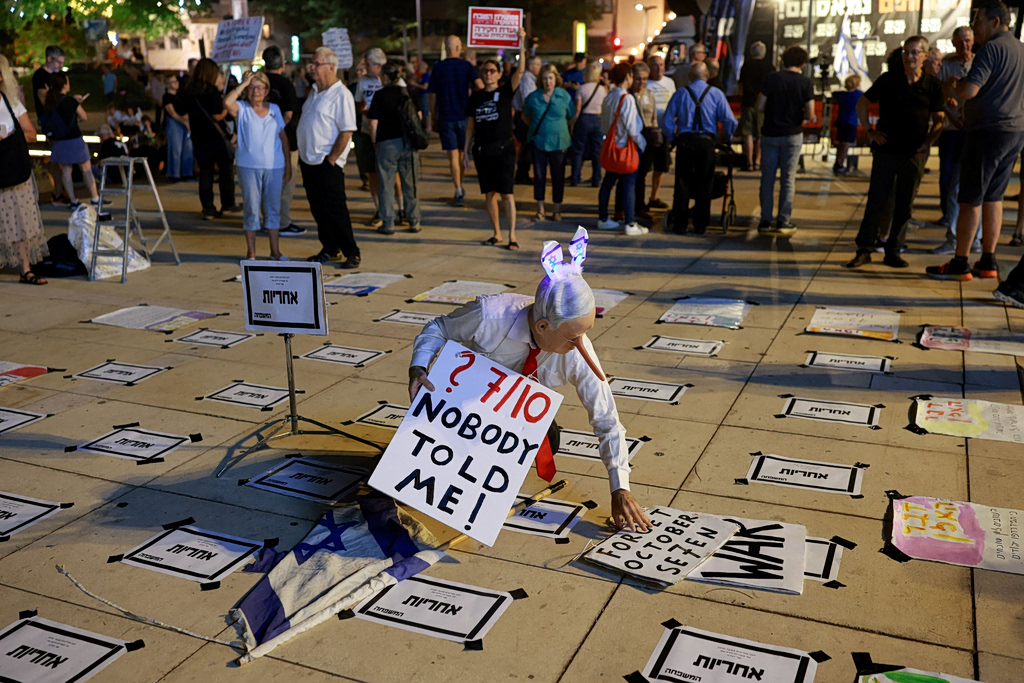
A demonstrator in a costume representing Israeli Prime Minister Benjamin Netanyahu sets up a public installation as Israelis protest demanding a state commission of inquiry into the deadly October 7, 2023, Hamas-led attack, in Tel Aviv, Israel, October 3, 2026. REUTERS/Ronen Zvulun
According to that report, Kamel told Netanyahu that Hamas was preparing “something unusual, a terrifying operation.” Netanyahu allegedly responded that Israel had the situation in Gaza under control and was instead concentrating on the West Bank. Netanyahu’s office has categorically denied the UAE warning, calling the report “an absolute lie.” Former Prime Minister Naftali Bennett, however, said he was certain that both bin Zayed and Kamel had warned Netanyahu.
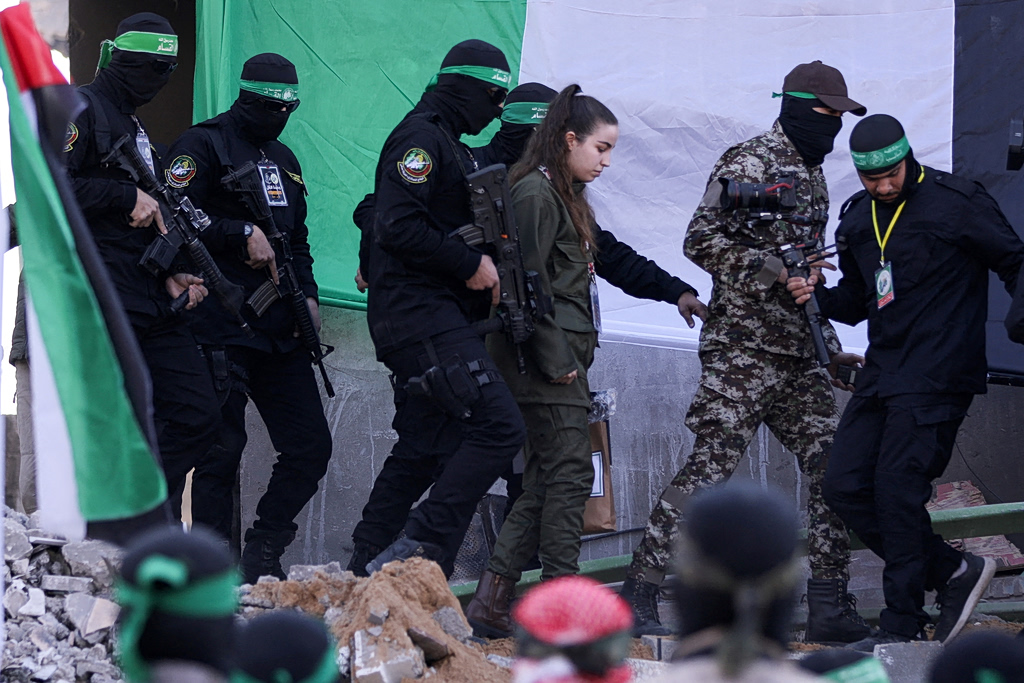
FILE PHOTO: Palestinian Hamas militants release female Israeli soldier and hostage Agam Berger held in Gaza since the deadly October 7 2023 attack, as part of a ceasefire and a hostages-prisoners swap deal between Hamas and Israel, in Jabalia, in the northern Gaza Strip, January 30, 2025. REUTERS/Dawoud Abu Alkas/File Photo
By the early hours of October 7, Israeli authorities were reportedly aware of unusual activity in Gaza, including the activation of a large number of Israeli SIM cards. Senior security officials were alerted, but intelligence agencies were unable to identify enough additional indicators to conclude that an attack was imminent.
The debate over accountability does not end with the question of what Israeli intelligence knew beforehand and goes beyond, into the handling of the hostage crisis.
Although all those taken during the attack were eventually released under the 2025 ceasefire, debate continues over whether an agreement could have been reached earlier. According to the Washington Institute, Israeli official Nitzan Alon, who was involved in hostage affairs, argued that the war could have ended a year earlier under the same terms for releasing all the hostages.
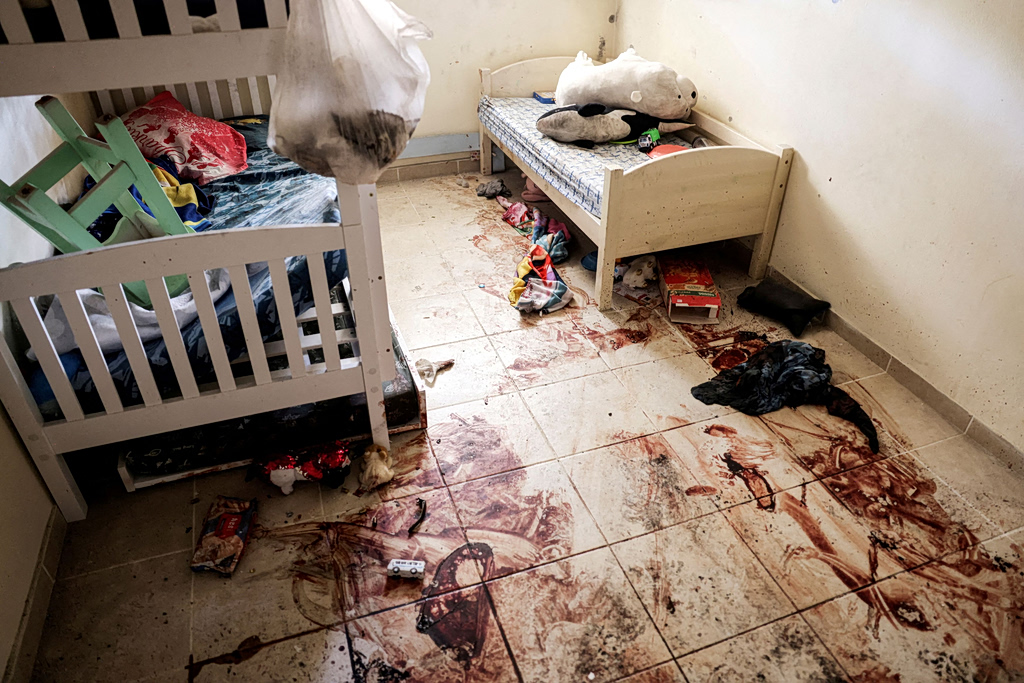
FILE PHOTO: Children’s toys and personal items lie on the bloodstained floor of a child’s bedroom, following a deadly infiltration by Hamas gunmen from the Gaza Strip, in Kibbutz Beeri in southern Israel October 17, 2023. REUTERS/Ronen Zvulun/File Photo To match Special Report ISRAEL-PALESTINIANS/KIBBUTZ-ATTACK
Gaza after the ceasefire
The ceasefire that began on October 10, 2025, halted a return to full-scale Israeli military operations but did not end Israeli attacks.
Gaza’s health ministry says at least 1,400 Palestinians have been killed since the ceasefire. Israel says its strikes target Hamas and accuses the group of attempting to carry out attacks and rearm. Hamas denies the allegations.
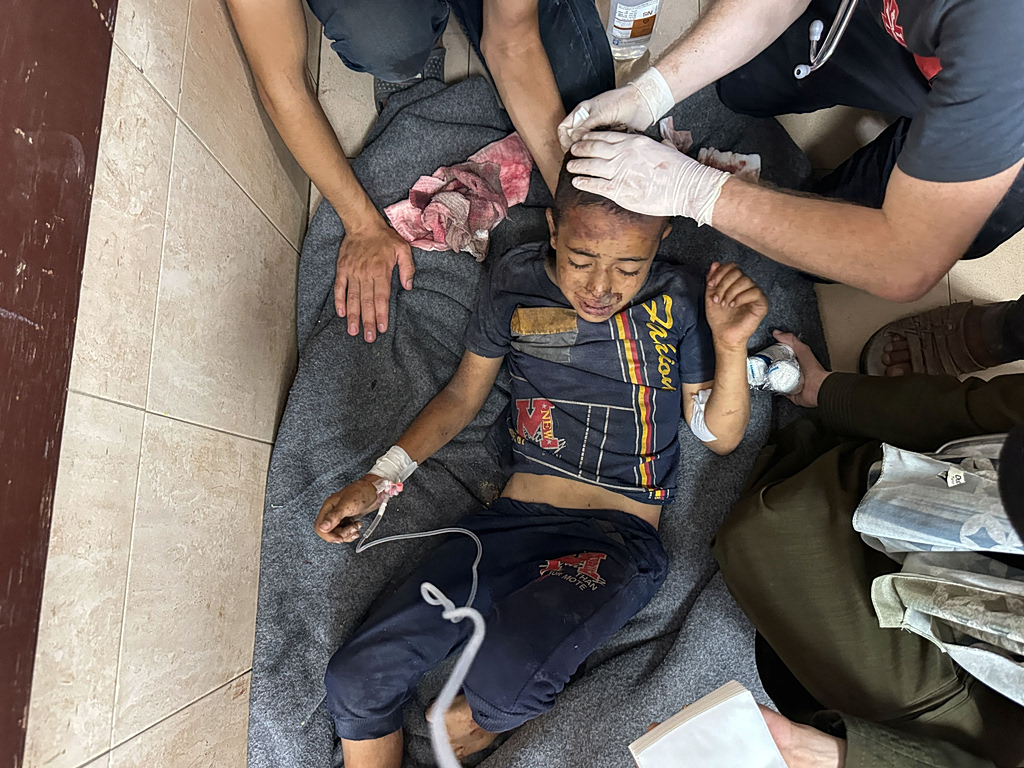
SENSITIVE MATERIAL. THIS IMAGE MAY OFFEND OR DISTURB A wounded Palestinian, injured in an Israeli strike on a UNRWA school shelter, receives a treatment at Al-Aqsa Martyrs Hospital, amid the Israel-Hamas conflict, in Deir Al-Balah, in central Gaza Strip, June 6, 2024. REUTERS/Doaa Rouqa
Meanwhile, Israel’s effective control over Gaza has expanded.
As reported in Reuters, the initial phase of the US-backed plan envisioned Israeli forces withdrawing to a “yellow line” that would leave them controlling 53% of Gaza. The supplied material says Israeli forces now control around two-thirds of the territory.
The shifting line has pushed more Palestinians into a shrinking coastal area, where about 2 million people are sheltering in tents and damaged buildings.
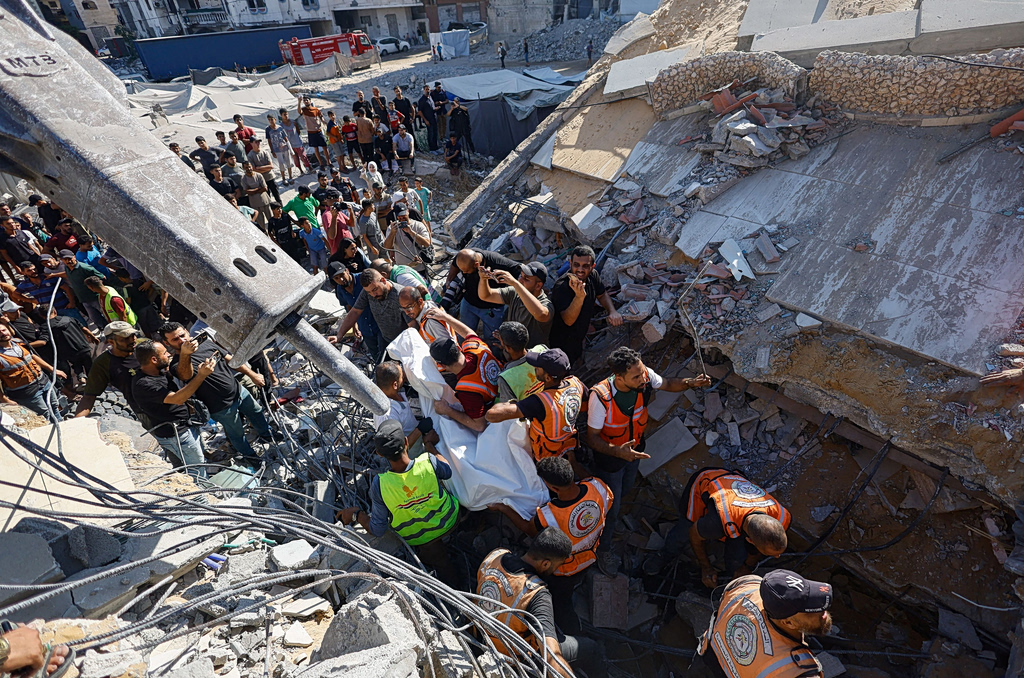
SENSITIVE MATERIAL. THIS IMAGE MAY OFFEND OR DISTURB Rescuers recover the body of a Palestinian from under the rubble of a residential building that had been damaged in an earlier Israeli strike during the war and collapsed on Wednesday, in Gaza City, September 16, 2026. REUTERS/Mahmoud Issa
Humanitarian conditions remain severe. More than 1.2 million people are still facing acute hunger, according to the global hunger watchdog IPC. Between the October 2025 ceasefire and the end of May, an average of 227 trucks a day carrying humanitarian and commercial supplies entered Gaza, less than half the 600-truck minimum stipulated in the Gaza plan.
Gaza’s Reconstruction and the International Vision
Reconstruction in Gaza remains at an early stage, with the scale of the destruction far exceeding the resources currently committed. The Board of Peace unveiled a $2.45 billion plan in September to begin rebuilding the enclave, while an EU and UN assessment estimates that $71.4 billion will be needed for recovery and reconstruction over the next decade.
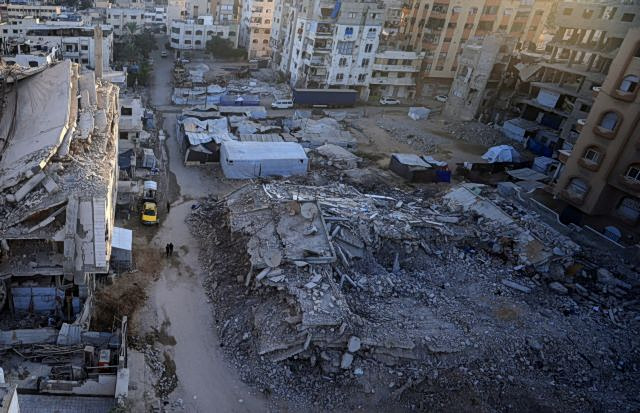
Palestinians walk near the rubble of a residential building that had been damaged in a previous Israeli strike during the war and collapsed on Wednesday, in Gaza City, September 17, 2026. REUTERS/Dawoud Abu Alkas TPX IMAGES OF THE DAY
Rebuilding is closely tied to the broader political and security arrangements proposed for Gaza. US President Donald Trump’s 20-point plan calls for Hamas to disarm, the creation of a new Palestinian governing structure and the gradual withdrawal of Israeli forces. A 15-point implementation roadmap agreed in July established the National Committee for the Administration of Gaza as a transitional authority. The committee, appointed in January and led by Ali Shaath, a former deputy minister in the Palestinian Authority, has yet to enter Gaza.
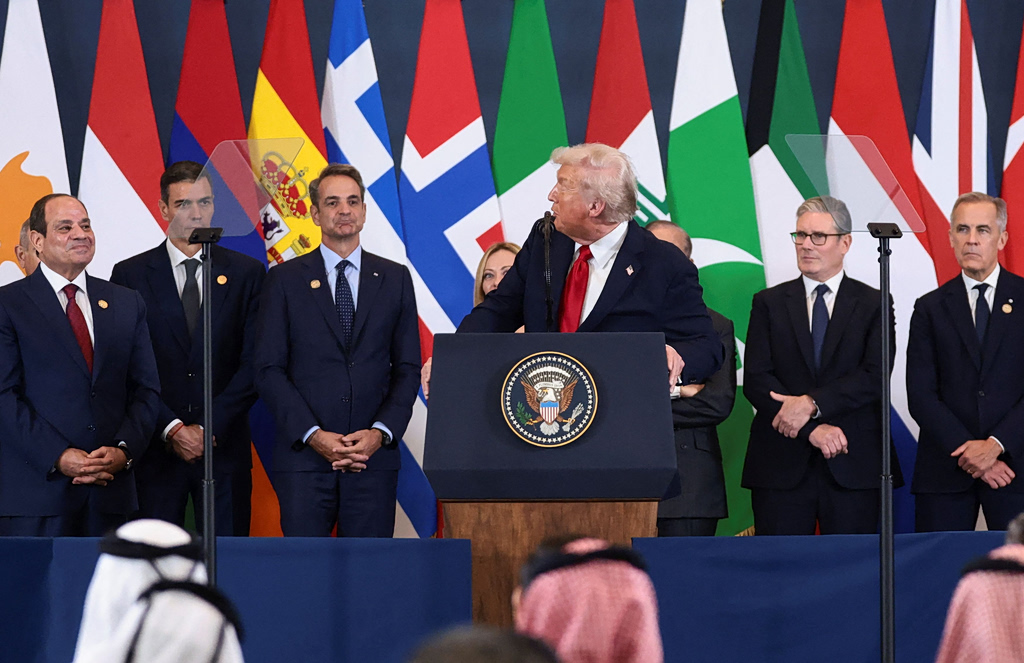
U.S. President Donald Trump delivers remarks next to Egyptian President Abdel Fattah el-Sisi, Spain’s Prime Minister Pedro Sanchez, Italian Prime Minister Giorgia Meloni, British Prime Minister Keir Starmer and Canadian Prime Minister Mark Carney, following the official signing of the first phase of the Gaza ceasefire agreement between Israel and Hamas, during a world leaders’ summit on ending the Gaza war, in Sharm El-Sheikh, Egypt, October 13, 2025. REUTERS/Evelyn Hockstein
The plan also envisages an International Stabilization Force (ISF) to help secure Gaza during the transition. US Major General Jasper Jeffers has been named its commander, while Indonesia, Morocco, Kazakhstan, Albania, Kosovo and Uganda have committed personnel. Jeffers has said the force could eventually comprise 20,000 troops and train 12,000 Palestinian police officers.
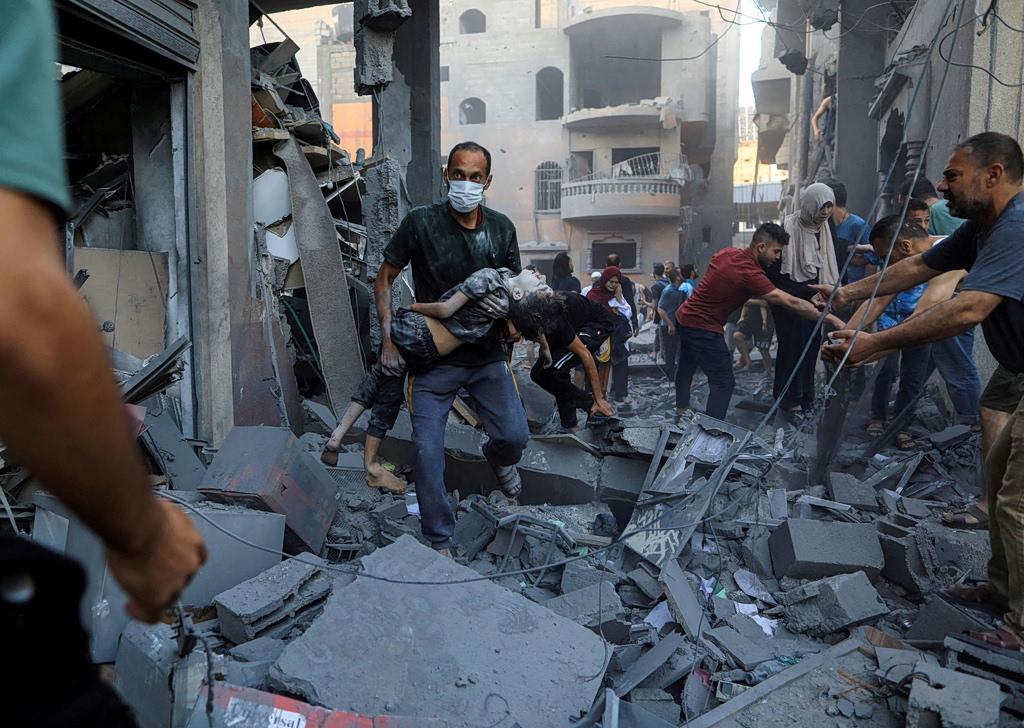
SENSITIVE MATERIAL. THIS IMAGE MAY OFFEND OR DISTURB A man carries a child casualty at the site of an Israeli strike on a house in Khan Younis, amid the ongoing conflict between Israel and the Palestinian Islamist group Hamas, in the southern Gaza Strip October 19, 2023. REUTERS/Yasser Qudih TPX IMAGES OF THE DAY
But key elements of the plan remain unresolved. Hamas has indicated that it is prepared to hand over its weapons to a US-backed Palestinian technocratic government, although it has rejected the term “disarmament.” Israel, which remains skeptical that Hamas will surrender its weapons, has said it will not withdraw its forces until the group is fully disarmed.
The future of Gaza’s population is another major point of contention. While the US-backed plan envisions Palestinians remaining in Gaza, Israeli right-wing politicians have continued to call for what they describe as “voluntary emigration.” Defense Minister Israel Katz said there was “no real solution” for Gaza without such migration.
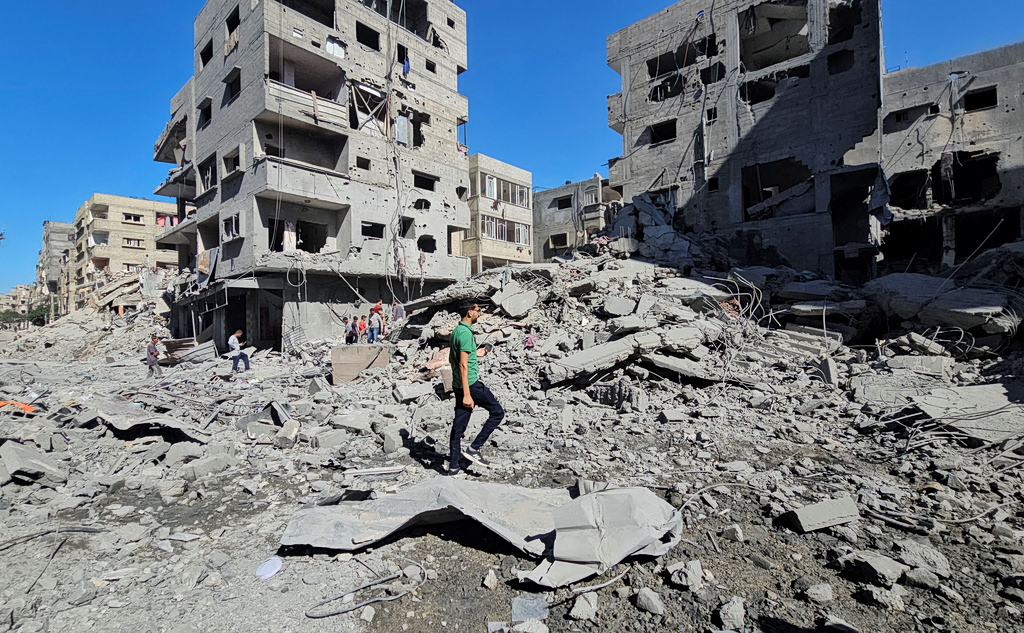
Palestinians gather at the site of Israeli strikes on houses and residential buildings, amid the ongoing Israel-Hamas conflict, in Beit Lahiya, in the northern Gaza Strip October 20, 2024. REUTERS/Abdul Karim Farid
Human Rights and Accountability
The war has also brought sustained international scrutiny over violations of international humanitarian and human rights law in Gaza, the West Bank and Lebanon.
In November 2024, the International Criminal Court issued an arrest warrant for Israeli Prime Minister Benjamin Netanyahu, finding reasonable grounds to believe he bore criminal responsibility for war crimes and crimes against humanity, including starvation as a method of warfare, and the crimes against humanity of murder, persecution, and other inhumane acts. The court also issued a warrant for former Defense Minister Yoav Gallant. Israel has rejected the court’s jurisdiction and the allegations.
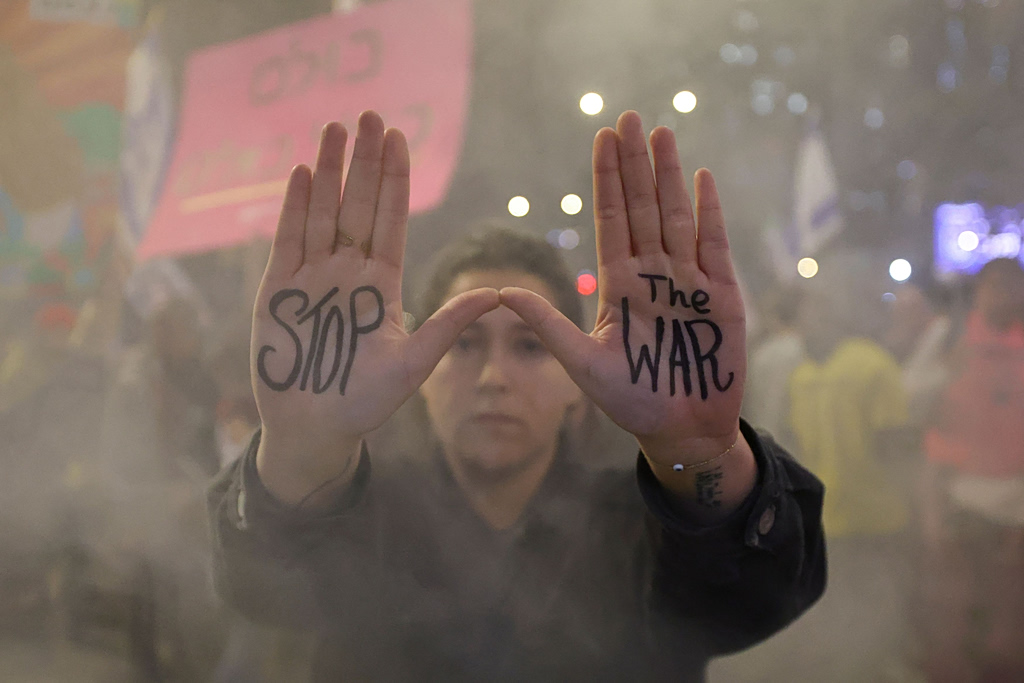
People protest against the government and to show support for the hostages who were kidnapped during the deadly October 7, 2023 attack, amid the ongoing conflict in Gaza between Israel and Hamas, in Tel Aviv, Israel January 4, 2025. REUTERS/Kai Pfaffenbach TPX IMAGES OF THE DAY
UN investigators and human rights bodies have continued to raise concerns over Israeli conduct. A UN Human Rights Office report published in 2026 said intensified attacks, the destruction of neighborhoods and restrictions on humanitarian assistance in Gaza, alongside forcible transfers in Gaza and the West Bank, raised concerns over ethnic cleansing. Another UN report documented the displacement of more than 36,000 Palestinians in the West Bank amid settlement expansion and settler violence.
The concerns extend to Lebanon, where Human Rights Watch has accused Israeli forces of violations of the laws of war since October 2023, including deliberate or indiscriminate attacks affecting civilians, journalists, medics and peacekeepers.
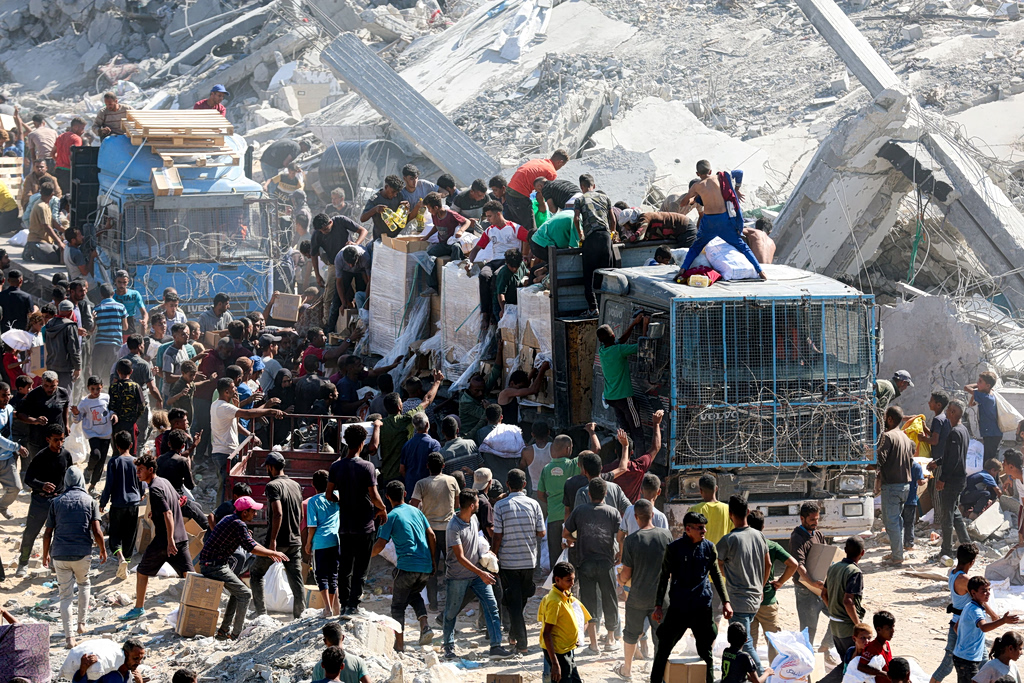
Palestinians collect aid supplies from trucks that entered Gaza, amid a ceasefire between Israel and Hamas, in Khan Younis, in the southern Gaza Strip October 12, 2025. REUTERS/Ramadan Abed
A Wider Regional Conflict
The consequences of October 7 have extended well beyond Gaza and Israel.
Israel subsequently fought Hezbollah in Lebanon and confronted Iran-backed groups across the region, including the Houthis and pro-Tehran Iraqi militias. It also moved toward direct confrontation with Iran following Iranian ballistic missile strikes.
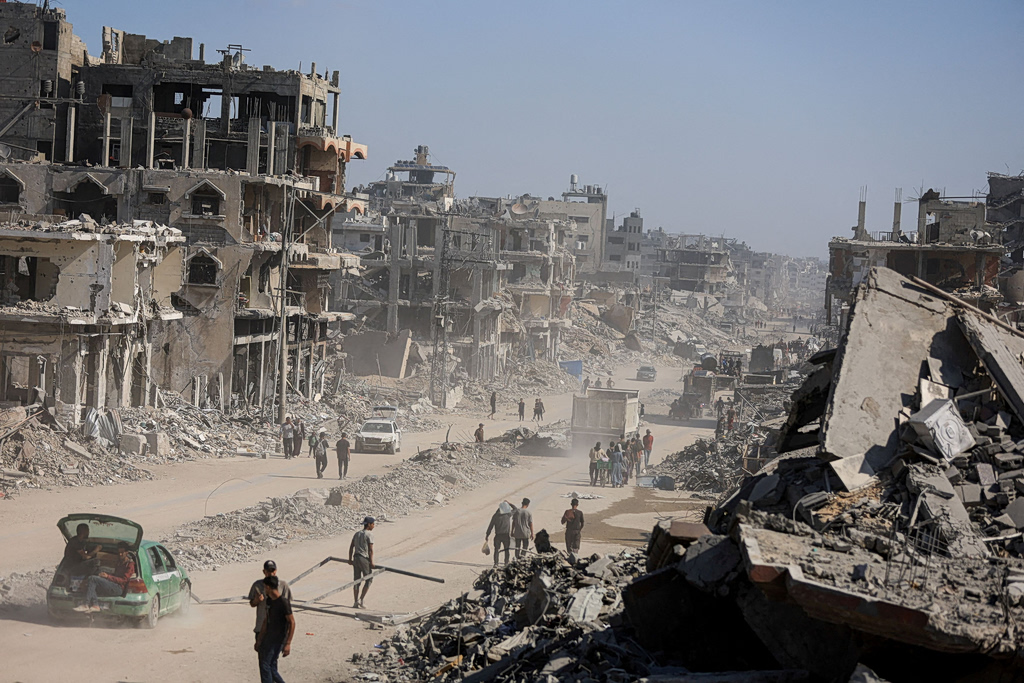
Palestinians walk past the rubble of destroyed buildings, amid a ceasefire between Israel and Hamas, in Gaza City, October 16, 2025. REUTERS/Dawoud Abu Alkas TPX IMAGES OF THE DAY
The conflict has exposed differences between the United States and European countries over Gaza, Palestinian statehood, Israeli security and the broader regional response. Lebanon has become another major theater in the conflict, while international attention to Gaza has declined from the levels seen during the earlier stages of the war.
Three years after October 7, the challenge extends beyond stopping the immediate and horrible violence. The proposed peace framework, reconstruction plans and international stabilization arrangements all depend on resolving fundamental questions over security, governance, disarmament, Palestinian self-determination and the future of the West Bank.