 Μake us preferred on Google
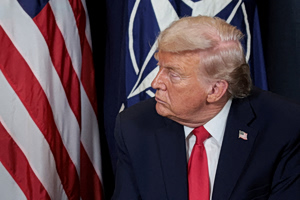
 U.S. President Donald Trump has paused a military-backed operation designed to escort commercial vessels through the Strait of Hormuz, saying there has been “great progress” toward a broader agreement with Iran.
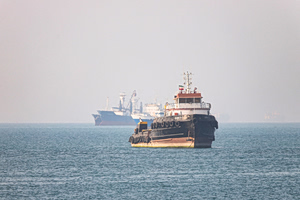
The announcement came as the United States and Iran remain locked in a confrontation over control of the strategic waterway, which has been largely shut since the conflict began and is responsible for roughly 20% of global oil flows. The disruption has fuelled a global energy crisis.
In a social media post, Trump said the two sides had agreed to temporarily halt the escort operation, known as “Project Freedom,” while negotiations continue.
“We have mutually agreed that, while the Blockade will remain in full force and effect, Project Freedom… will be paused for a short period of time to see whether or not the Agreement can be finalized and signed,” Trump wrote.
The White House did not immediately provide details on the reported progress or the duration of the pause.
Earlier, U.S. Secretary of State Marco Rubio said the operation had begun to escort stranded tankers out of the Gulf, where shipping has been severely disrupted. He also said Iran could not be allowed to control maritime traffic through the Strait of Hormuz.
According to Rubio and other officials, Iran has sought to restrict access to the waterway through threats involving mines, drones, missiles and fast-attack craft, while the United States has responded by escorting commercial ships and targeting Iranian naval capabilities.
The U.S. military said it had destroyed several Iranian small boats, as well as cruise missiles and drones, as part of its operations in the region.
Rubio also said the United States had achieved its main military objectives, describing the campaign as concluded, while stressing that Washington did not seek further escalation.
“Operation Epic Fury is concluded,” Rubio said. “We’re not cheering for an additional situation to occur.”
Despite the pause announcement, tensions remain high in the region. The UAE said its air defences were again responding to missile and drone attacks, while Iran denied carrying out any such strikes and said its actions were defensive in nature.
The UAE foreign ministry described the situation as a serious escalation and said the country reserved its right to respond, while Iran rejected the allegations and said its military operations were aimed at countering American aggression.
Meanwhile, reports from maritime authorities indicated continued risks to shipping in the Strait, including incidents involving commercial vessels.
The conflict has disrupted global trade routes and contributed to rising energy prices, with oil markets reacting sharply to developments. U.S. crude prices fell following Trump’s announcement of the pause.