Μake us preferred on Google
 The World Health Organization (WHO) announced on Thursday that it is facing drastic budget cuts for its global humanitarian operations in 2025, warning that the outlook for 2026 remains “bleak.”
According to Teresa Zakaria, WHO’s head of humanitarian interventions, the UN health agency received 40% less funding for emergency health needs around the world compared to 2024 — a reduction she described as “massive.”
Under pressure from tighter budgets among major donors — including the United States, which scaled back its international aid during Donald Trump’s presidency — the WHO says it has been forced to make painful choices about where to allocate limited resources.
The organization has identified over 300 million people in need of humanitarian assistance, but due to funding constraints, it must now prioritize only the most vulnerable populations and the hardest-to-reach areas.
As a direct consequence of the cuts, more than 5,600 health centers have reduced services globally, while over 2,000 facilities have been forced to suspend operations altogether.
“This has directly limited access to healthcare for 53 million people worldwide,” Zakaria said, adding that the prospects for next year are “indeed grim.”
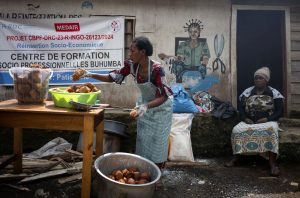
The impact is already visible in countries such as the Democratic Republic of the Congo, Sudan, and Haiti, where rising maternal mortality and malnutrition rates have been reported.
WHO Director-General Tedros Adhanom Ghebreyesus expressed deep concern about the consequences for the world’s poorest nations but noted a potential silver lining: several countries are beginning to mobilize their own resources to fund national health systems, including emergency response mechanisms.
Despite these encouraging signs, the WHO warns that without renewed international commitment, the global health system’s ability to respond to crises — from epidemics to conflict-driven emergencies — could be seriously compromised.