 Μake us preferred on Google
 It is midday in Berlin’s sunlit historic Potsdamer Platz, the square that once lay divided by the Berlin Wall, symbolizing the Cold War split between East and West. Thousands of Iranians have gathered there to protest the regime in Tehran.
In their hands are tricolor flags bearing a lion before a rising sun—the emblem of pre-1979 Iran, before the Islamic Revolution overthrew the monarchy and established the Islamic Republic. Was it coincidence that the Israeli military operation launched on February 28 was called “Lion’s Roar”?
An Iranian man suddenly grabs the microphone to address the crowd. He barely manages a few words before chaos erupts. People scream, collapse into each other’s arms, cry and dance at the same time. A name spreads through the roar of the crowd, that was almost impossible to make out.
I ask someone nearby what happened. “The Israelis bombed Khamenei,” he says breathlessly. “They killed him.”
That is how To Vima learned, on that Saturday afternoon in Berlin’s historic square, of the death of Ayatollah Ali Khamenei, Iran’s Supreme Leader, hours before any official announcement would take place.
As the march continued, the name chanted by the protesters became clearer. It was Reza Pahlavi.
He is the eldest son of Mohammad Reza Pahlavi, the last Shah of Iran, and enjoys considerable support among Iranian communities across Europe—including Germany.
“Like Driving Against Traffic”
It has not been long since Pahlavi himself was in Germany. In mid-February he attended the Munich Security Conference, where he met politicians and security experts and appeared on a panel moderated by Christiane Amanpour, the prominent CNN journalist of Iranian origin who lived in Tehran until she was 12.
“Reza Pahlavi’s significance is growing these days. I could see an opportunity for him to be supported even as a transitional solution,” Ralph Thiele tells To Vima.
Thiele, a retired German colonel and president of the Political-Military Society (Politisch-Militärische Gesellschaft) in Berlin, is familiar with Iran from decades of security cooperation and joint exercises with Iranian officers before the revolution.
Today, however, the geopolitical landscape has dramatically changed. Several days have passed since the start of U.S.–Israeli airstrikes against Iran.
Thiele is deeply worried. He describes the operation as “like driving against traffic.”
“Or like a highly advanced, powerful force driving straight into a wall of smoke,” he says. “We don’t know if it will emerge, how it will emerge, or what will happen before it does. There is no plan for the day after. The plan is determined as events unfold. We cannot rely on Donald Trump. His mind is on the (midterm) elections.”
EU and NATO Are Always Two Steps Behind
Thiele’s concerns focus primarily on Europe. “The biggest danger is actually an endless war, an asymmetric war with hybrid warfare spreading across the entire region, even reaching Europe.”
We mention that Cyprus, an EU member state, recently became the first to be struck by drones in the escalating conflict. Maybe the Iranians were testing European preparedness to activate the EU’s mutual defense clause (Article 42.7).
Ans some German analysts have criticized the fact that it was not activated. Thiele, drawing on decades of experience, is blunt: “The EU is always very slow. Unfortunately, the same applies to NATO. They are always two steps behind the reality on the ground.”
He attributes part of the problem to the EU’s raison d’être. “The European Union is fundamentally conceived as a peace project. Many bureaucrats in Brussels dislike dealing with armed forces and declare military matters are not within their remit.”
In Germany 58% of the public opposes the Israeli-U.S. military intervention in Iran according to a recent infratest dimap poll for the ARD television network. Seventy seven percent say they feel fear or threat from the escalation, across all political affiliations. Last Tuesday, officials from Germany’s Foreign Ministry summoned the Iranian ambassador to demand explanations after Iran launched attacks on U.S. bases in Gulf countries.
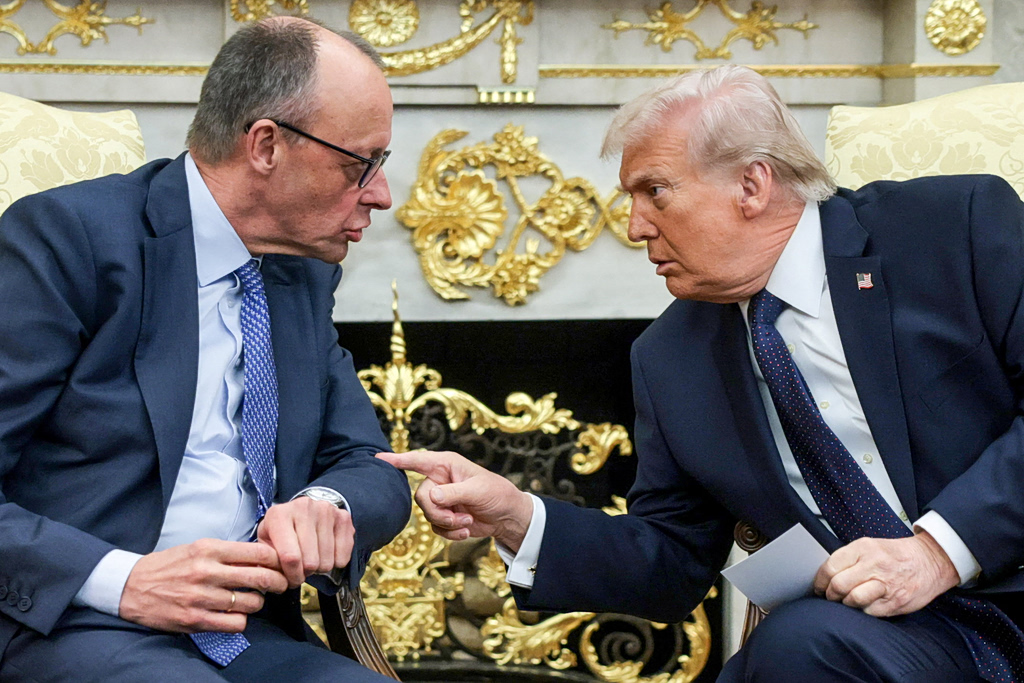
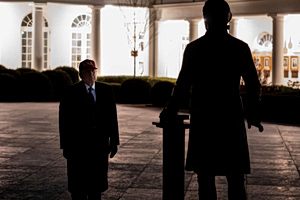
U.S. President Donald Trump and German Chancellor Friedrich Merz meet in the Oval Office at the White House in Washington, D.C., U.S., March 3, 2026. REUTERS/Jonathan Ernst
Why Crete Matters
Behind the diplomatic concerns lies another worry: American military infrastructure across Germany.
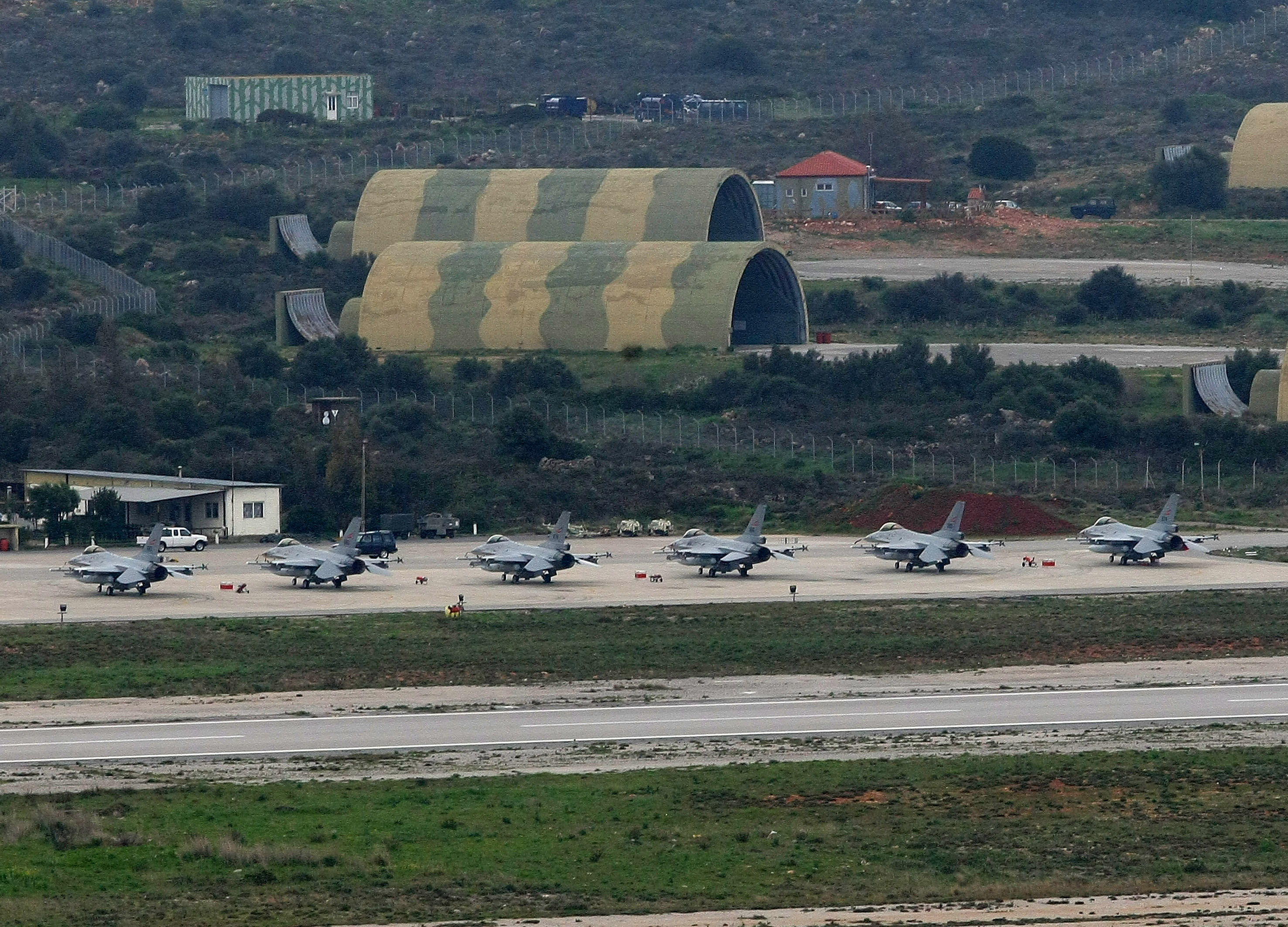
Residents near U.S. bases in Germany report unusually high activity since the beginning of the year. The same applies to Souda Bay, the strategic NATO and U.S. naval base on the Greek island of Crete.
“Crete is extremely important,” Thiele says. “Practically all American aircraft have passed through there. All reinforcements pass through there. The longer this war lasts, the more facilities like these will become targets. Iran’s real strategy is to hold out for a long time and strike these soft targets — places such as tourist destinations. The hope is that countries that are hit will then turn against the United States and make its operations more difficult.”
“Souda Would Be Easy to Target”
How realistic is such a threat? “Very easy,” Thiele responds bluntly. “You need explosives, drones, and someone willing to do it. Drones are now produced in hundreds of thousands.They only need to fly a few kilometers. Two or three attacks would be enough. There doesn’t have to be a full-scale war. There just has to be a massacre. The longer the war drags on, the stronger fanaticism grows.
Amid the escalating tensions, French President Emmanuel Macron recently reopened a major strategic debate. In a high-profile speech, he proposed extending France’s nuclear deterrent umbrella to European countries that wish to join it. Could France become Europe’s ultimate security guarantor?
Thiele is skeptical. “France mainly wants to share the costs, not the responsibility,” he says. “This involves an entire process that has to be followed. Germany, for example, does not possess nuclear weapons, but it does have fighter aircraft capable of carrying them. For now, those aircraft can only carry U.S. nuclear weapons, though in the future they might also be able to carry British or French ones. For that to happen, additional authorization procedures would still need to be agreed upon.
And in the end, we would have to trust that the French president or the British prime minister would give the green light in a moment of crisis. That is the final and crucial link in the chain. Deterrence depends on credibility — we want these weapons precisely so that we never have use them. The big problem is that Trump is undermining that credibility.”
Ukraine Becomes the Forgotten War
Another casualty of the new conflict is Ukraine. With the world’s attention shifting to the Middle East, Kyiv risks sliding into the background once again. In just two days, Israeli and American forces reportedly used as much ammunition as was consumed in the entire 12-day conflict last June. “That means there will be less left for the Ukrainians. And since the Europeans buy the weapons from the Americans and then give them to the Ukrainians, that means US munitions will become more expensive and more scarce”
So what are the alternatives? The German expert sees only one: a quick end to the war and regime change in Iran.”
Otherwise, he warns, the consequences will be severe. “If there is no regime change, it will be unpleasant for us. For all of us. Not only for the Americans—whom many people seem to wish it on.”