SEATTLE—For all of the controversy that had engulfed Team USA in the 24 hours leading up to its match against Belgium, the game itself was always going to represent something more than a political maelstrom.
The round-of-16 game at Lumen Field was the ultimate litmus test for U.S. Soccer. A team that had reached the quarterfinals just once since the inaugural tournament in 1930 would either match its best result in a generation or fail to reach an obvious target in a home World Cup.
But when the Americans lost 4-1 to Belgium , they didn’t just miss. In what is likely the most watched soccer match in the country’s history, they flamed out in epic fashion with a blowout defeat.
“It stings,” said U.S. midfielder Tyler Adams. “This was a moment to have the opportunity to advance and really try and do something special—but we fell short.”
This was the summer the U.S. had gone all in for. They had spent millions on a high-profile coach with a glittering European résumé. They had assembled a team eight years in the making. And, at every step of the tournament, they would have the swelling support of playing on home soil.
What the Americans learned instead was that they could still be stopped in their tracks by a middling European side with its stars on the bench.
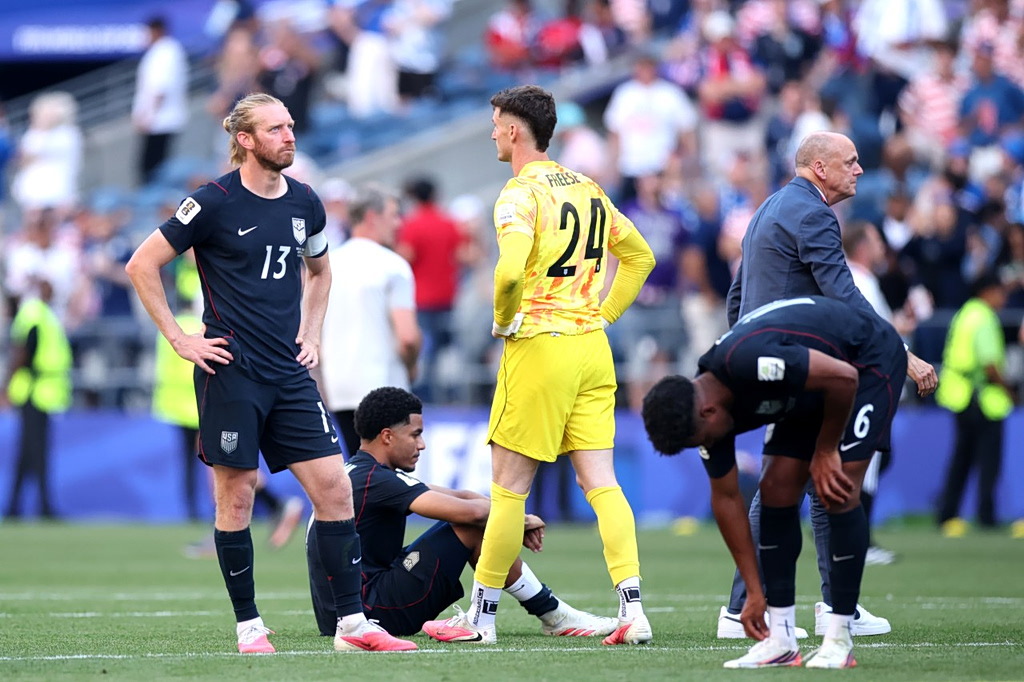
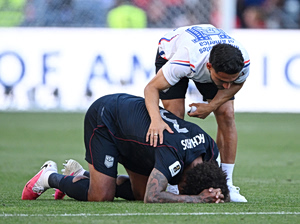
Tim Ream (No. 13) and Matt Freese (No. 24) react after the U.S. loss to Belgium. Alex Grimm/Getty Images
In the end, after a historic start to the tournament, the American campaign came to the same old ending. This marked the fourth consecutive U.S. appearance that ground to a halt in the round of 16.
“It’s true today that we were not the same team,” head coach Mauricio Pochettino said. “Very bad day…When that happens in a tournament like the World Cup, you don’t have another chance.”
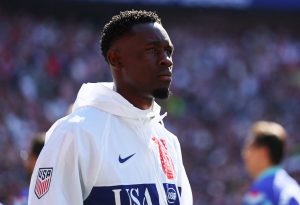
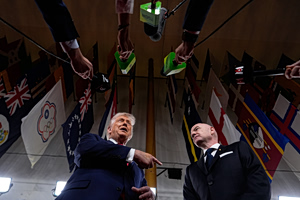
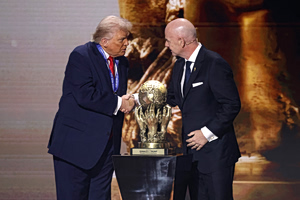
The buildup to the match was inflamed by FIFA’s surprising decision on Sunday to reinstate American striker Folarin Balogun, who was originally suspended after receiving a red card in the previous game. That pivot came after President Trump personally lobbied FIFA boss Gianni Infantino —infuriating the Belgian soccer federation and leaving much of the soccer world aghast.
Afterward, U.S. players said the tumult wasn’t a distraction. They found out on the team bus on the way to training, around the same time as the public did, and they were happy to learn that the team’s leading goal scorer would be able to join them on the pitch. Balogun said he wasn’t personally involved in the process that overturned the ban and didn’t know much about it as it was happening.
“I accepted the decision when I was given a red card,” he said, “and I accepted the decision when I was told I was allowed to play.”
But once the match began, the same bunch of Americans who had touted the group’s cohesiveness looked completely disjointed from the opening whistle until Romelu Lukaku scored the Red Devils’ fourth goal.
“Overturn that,” the Belgian national team wrote on social media afterward.
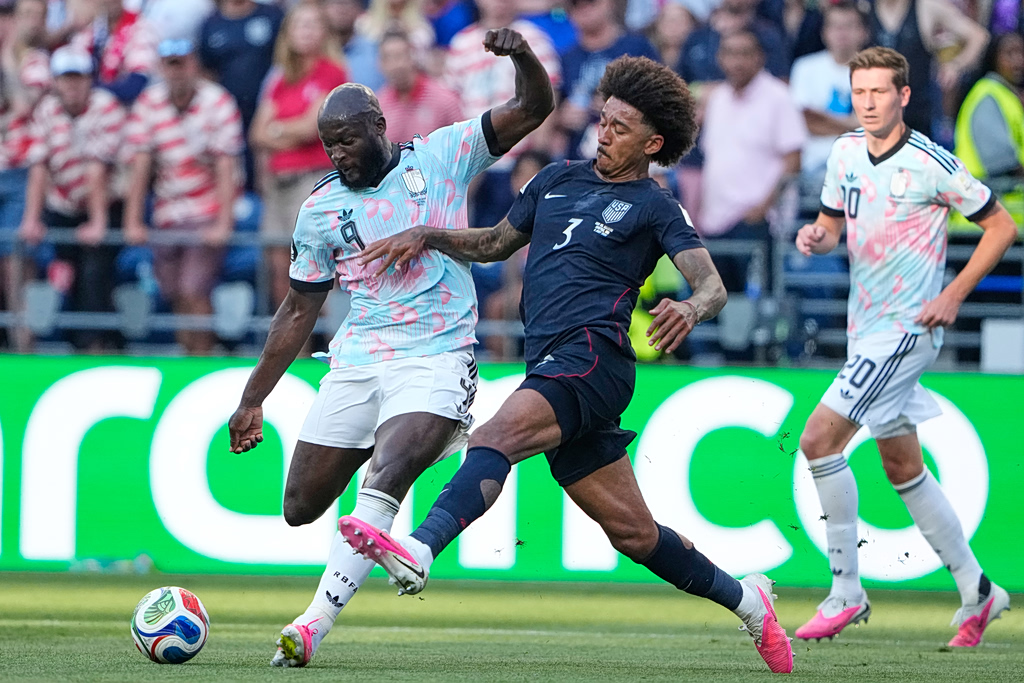
Belgium’s Romelu Lukaku kicks the ball past Chris Richards of the U.S. to score his team’s fourth goal. Lindsey Wasson/Associated Press
For U.S. Soccer, it will lead to yet another round of introspection in what has become a quadrennial routine. After missing the tournament entirely eight years ago in Russia, it turned over the roster and built around a young core it hoped would mature together over the next decade. The round-of-16 defeat to the Netherlands in 2022 was viewed as a steppingstone to an even better result this go-round, especially when well-heeled donors helped pay to bring Pochettino aboard two years later.
Now, officials will have to decide whether Pochettino is still the right man to lead the Americans in the run-up to the 2030 World Cup—and that’s if Pochettino wants to stick around that long. Before this tournament began he had already been linked to club openings in Europe.
More broadly, the federation will have to once again examine if there are systemic issues that hold the team back. Even Pochettino said that he realized early on that the team’s culture was worse than he had grasped.
But Pochettino was also the person who managed to instill belief. With back-to-back wins, the Americans raced off to a historic start and their 11 goals scored were their most ever at a World Cup. All tournament, the players echoed his rallying cry: “Why not us?”
By the end of it, however, he was still being asked about Balogun and the White House.
“In a personal way I feel so disappointed with too many people, because [they] mix things. They talk about politics, manipulation,” Pochettino said. “That is not an excuse to say we didn’t perform because of that. That is not true.”
Whether or not the previous day’s events were on their minds, the Americans picked the wrong moment to deliver their worst showing of the tournament.
“We didn’t give the crowd a lot to cheer for, that’s the most disappointing thing,” Balogun said. “We have to wait four years again to be in this position.”