 Μake us preferred on Google
 The earthquakes that struck Venezuela on Wednesday night were a dangerous two-punch combination known as a doublet, collapsing buildings in Caracas and raising fears for the fate of the population in the worst-affected areas.
The first magnitude-7.2 shock hit San Felipe, to the west of Caracas. Data from the U.S. Geological Survey suggested it added stress onto another nearby fault just over 3 miles away, triggering a larger magnitude-7.5 quake 39 seconds later. It was a relatively shallow 6 miles deep and was felt as far away as northern Brazil.
“This could have happened because Earth’s crust displacement in the first earthquake fault increased stress on the second earthquake’s source fault,” said Mark Quigley, a professor of earthquake science at the University of Melbourne in Australia. “The passage of seismic waves from the first earthquake could have rattled nearby faults already prone to a rupture.”
Are these doublet earthquakes unusual?
They aren’t the most common kind of earthquakes, but they do happen, and they tend to be destructive.
In 2023, a doublet hit Turkey and Syria, with the first quake of magnitude 7.8 and the second reaching magnitude 7.6 nine hours later. Turkish seismologist Süleyman Nalbant led a recently published study concluding that stress had been loading for over two centuries on the fault responsible for the initial quake. When it ruptured, it unclamped the pressure on a nearby fault, quickly triggering the second earthquake.
“The sequence was a complex, cascading process driven by a combination of long-term historical stress and immediate stress transfer,” Nalbant said.
Is Venezuela vulnerable to earthquakes?
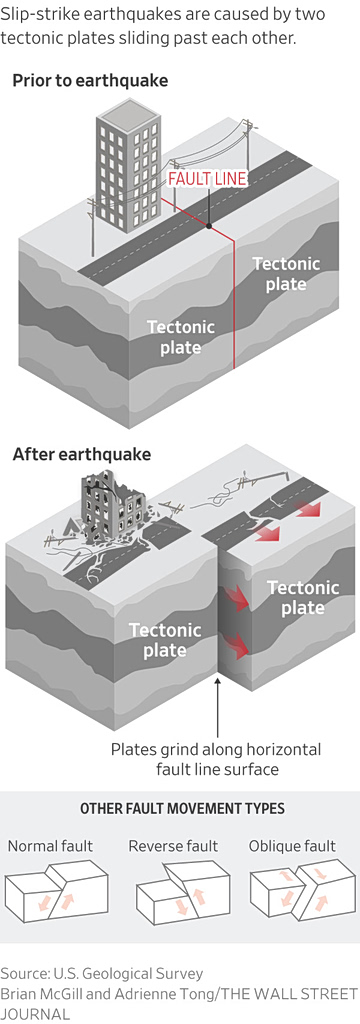
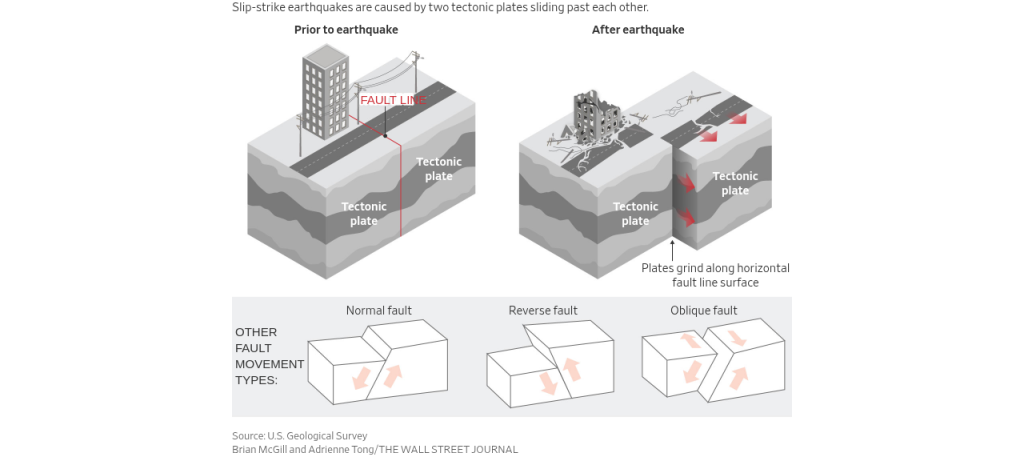
Yes. The country sits on one of the most active tectonic boundaries in South America, where the Caribbean Plate is sliding eastward along the South American Plate. There are several strike-slip faults where the two plates slide up against each other horizontally, sometimes snagging and building stress before violently rupturing and sometimes, as in Wednesday’s event, releasing another earthquake.
These strike-slip earthquakes can occur at shallower depths than subduction quakes, where one tectonic plate is forced below another. Some of the most devastating quakes in recent years have been strike-slips, including the lethal earthquakes in Turkey and Syria and the earthquake in central Myanmar last year.
How bad will the damage and loss of life be?
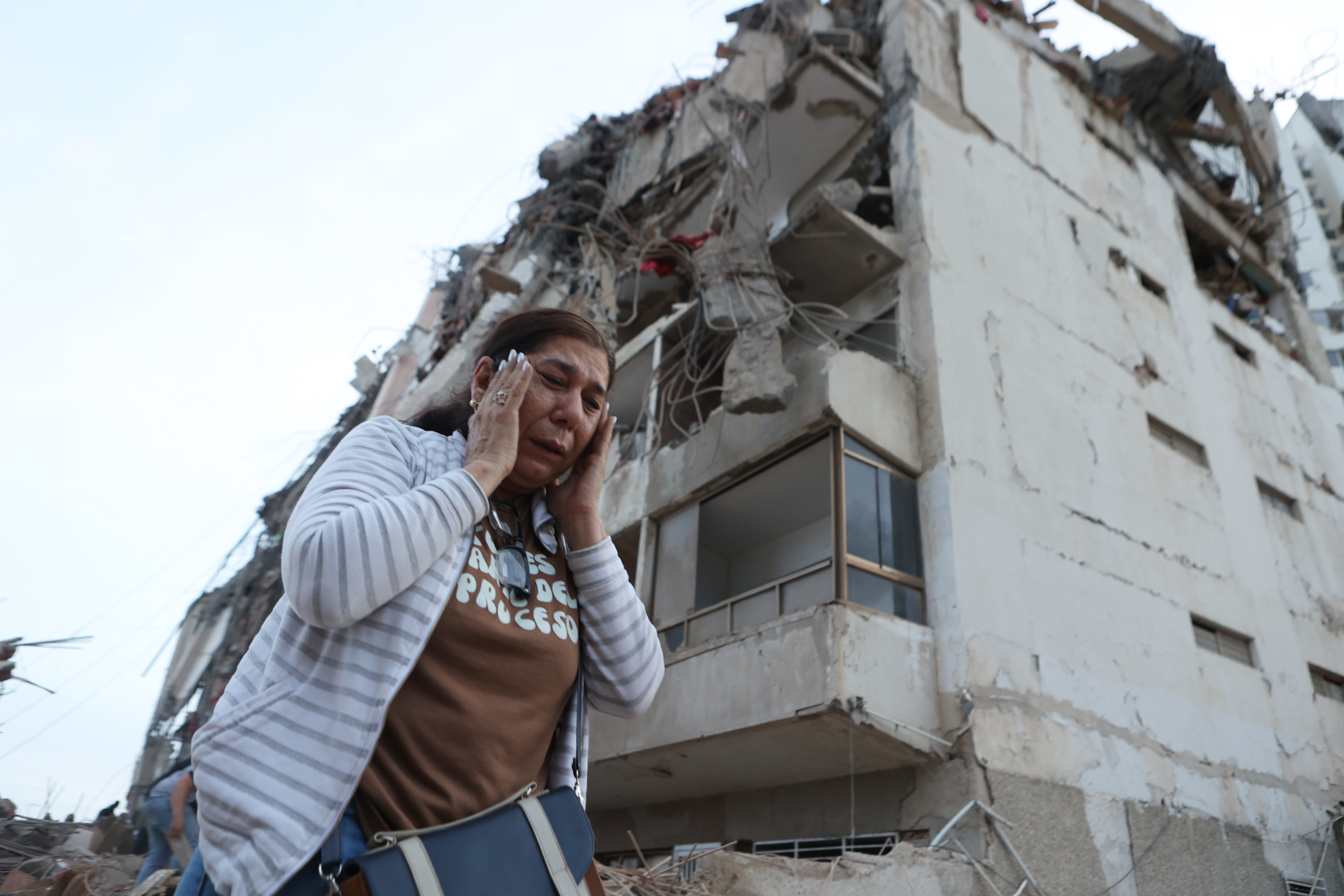
It will likely be significant. At least 164 have been killed and nearly 1,000 injured, Venezuela’s interim President Delcy Rodríguez said Thursday. At least 10 buildings had collapsed in Caracas and many more in the worst-hit state of La Guaira, she said.
A state of emergency was in place and the Simón Bolívar International Airport, located just outside Caracas, was closed because of damage.
Quigley, the Australia-based seismologist, said landslides and liquefaction are likely to have occurred throughout the region. The area is mountainous, while Caracas is built on a plain where the sediment can amplify seismic waves and worsen damage.
Significantly, authorities were still awaiting updates from La Guaira. “We can say that the state of La Guaira is experiencing a genuine tragedy and has become a disaster zone,” Rodríguez said.
How is the U.S. responding?
President Trump, who has supported Rodríguez since her rise to power in January after the U.S. military ousted leftist strongman Nicolás Maduro, said the U.S. was ready to send help.
“I have instructed all agencies of our government to get ready to move quickly. We will be there for our new and great friends,” Trump wrote on social media. “Early reports are not good.”
Write to James Hookway at James.Hookway@wsj.com