
 Μake us preferred on Google
 Over a small, private dinner of spinach soup, scallops and Diet Coke on Monday night, President Trump told the Dutch king and queen that he wants to bring the war in Iran to a swift end.
The only way to get Tehran back to the negotiating table, Trump explained to his royal guests and Dutch officials at the White House dinner, was to increase the pressure, officials briefed on the dinner said.
The Dutch government already had declined to help Trump with a blockade on Iranian ports, which it called “worrying” and an “escalation upon escalation.” Dutch Prime Minister Rob Jetten, who had seized on the monarchs’ visit to secure an invitation and speak to Trump, told the president that European allies would stand up an international coalition to help secure the Strait of Hormuz—but only after the fighting ended.
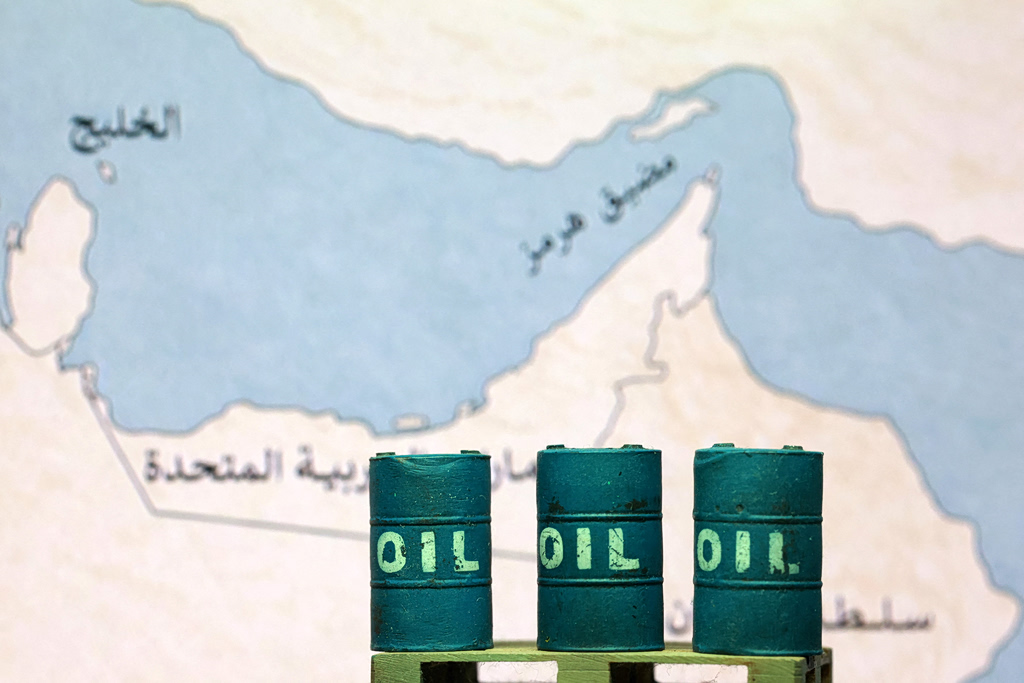
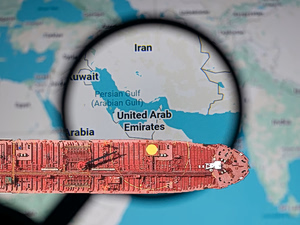
A map showing the Strait of Hormuz, also known as Madiq Hurmuz, and 3D printed oil barrels are seen in this illustration taken March 26, 2026. REUTERS/Dado Ruvic/Illustration
“We agree to disagree,” Jetten told reporters afterward. The meal “was too short to convince each other, but long enough to get a better understanding of each other’s positions.”
The dinner laid bare the conundrum before Trump as he tries to ratchet up economic pressure on Iran, even as he declared that the war is “very close to over.” While Trump said that he would be announcing “other countries” that will be involved with the blockade, none have stepped forward, and many have outright refused. Days later, the promised list of participating countries hasn’t materialized.
“The blockade is being implemented perfectly without the help of other countries because we have the strongest Navy in the world, and Iran’s Navy is in the bottom of the sea,” said White House press secretary Karoline Leavitt.
This week, Trump told the New York Post that U.S. officials could return to Pakistan immediately to resume talks with the Iranians, but so far no plans had been set. When talks took place last weekend, Trump said they were irrelevant because the U.S. already had won the war.
Trump wants Iran to turn over its enriched uranium and commit to at least a 20-year freeze on enrichment. Iran countered by offering a 5-year freeze but wants to keep enriched uranium inside the country.
“I view it as very close to over,” Trump told Fox Business’ Maria Bartiromo in an interview that aired Wednesday. “If I pulled up stakes right now, it would take them 20 years to rebuild their country. And we’re not finished. We’ll see what happens. I think they want to make a deal very badly.”
While Trump says the war will end soon, some officials and analysts estimate it could take months or longer for the Iranian regime to feel enough economic pain from the blockade to yield in the negotiations.
Trump has told aides he is comfortable with keeping the blockade in place for as long as it takes, but he also says he thinks Iran is close to making a deal.
A senior U.S. military official said the U.S. Navy could sustain the blockade indefinitely. However, there are concerns in the Pentagon that a prolonged blockade would strain American warships and weaken the U.S. presence in other regions where American naval power is in demand, such as the Pacific. More than 10,000 U.S. sailors, Marines, and airmen are involved in the mission, as well as more than a dozen warships and aircraft, according to U.S. Central Command.
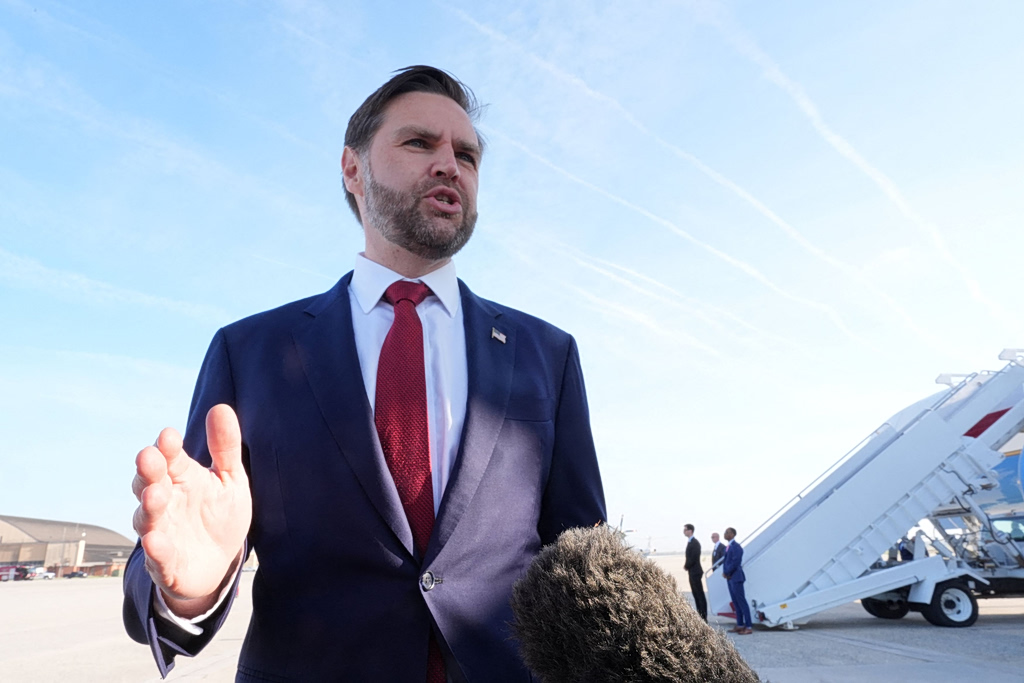
U.S. Vice President JD Vance speaks to the media before boarding Air Force Two for expected departure to Pakistan for talks on Iran, at Joint Base Andrews, Maryland, U.S., April 10, 2026. Jacquelyn Martin/Pool via REUTERS
Administration officials said Vice President JD Vance, who led the first round of failed negotiations with Iran, is on standby to travel again to Pakistan this week for more talks with Iran if the administration thinks it could make headway, though no decision has been made. Vance would be joined at the talks for the second time with special envoy Steve Witkoff and Jared Kushner, the president’s son-in-law, officials said.
Trump has at least two major red lines in negotiations, the officials said. The first is forcing Iran to freeze enrichment for at least 20 years, though he wants to push for longer. The second is the removal of enriched uranium from Iranian soil. Iran has yet to bow to the demands and has a decadeslong history of enduring U.S. economic-pressure campaigns aimed at halting its nuclear program and support for terror networks throughout the Middle East.
U.S. approaches “based on threats, pressure and military action” will only make matters worse, Iranian President Masoud Pezeshkian said Tuesday. He added that Tehran would only continue talks if “they protect the rights of the Iranian people.”
The peace talks in Pakistan ended with no breakthroughs. Officials and analysts said both countries outlined demands that would be nonstarters for the other side.
“The two sides are still really far apart in negotiations,” said Matthew Kroenig, a former Pentagon official at the Atlantic Council, a Washington-based think tank. “The blockade will start to bite, but I think we’ll need to let the pressure build for a bit before Iran is willing to negotiate in earnest.”
Some U.S. officials with extensive Middle East experience estimated that the current Iranian government is unlikely to give up its nuclear ambitions—even if it risks bringing the country to economic ruin. They also noted that after the U.S. and Israeli bombing campaign killed many senior Iranian leaders, the void is being filled by other regime hard-liners considered even more radical and who have shown little interest in compromise.
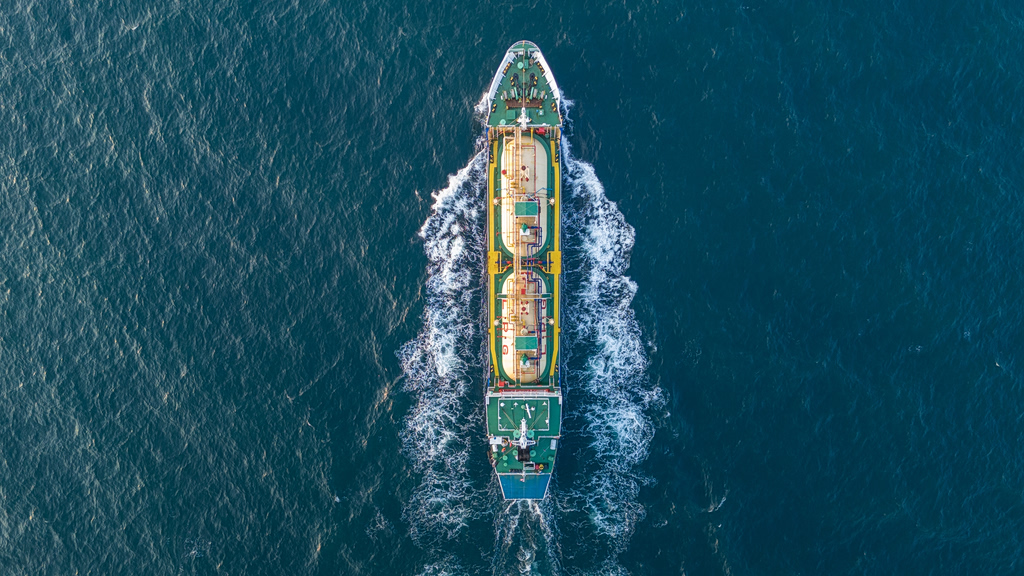
But senior Trump administration officials disagree, contending that Iran’s economy had been crippled by decades of sanctions and systemic corruption even before the war and new U.S. blockade. Trump officials also said outside powers, such as China and Pakistan, are pushing Tehran to make a deal that would end the war and ease pressure on global energy markets roiled by Iran’s decision to close the Strait of Hormuz to most commercial trade.
Still, Trump faces pressures of his own. A vocal wing of the Republican party has bristled at the prospect of another costly war in the Middle East, and Trump’s Republican allies on Capitol Hill privately fret that the war and knock-on effects on gas prices and inflation at home could cost the GOP in the midterm elections.
Saudi Arabia, a key U.S. ally in the region, is pressing the U.S. to drop the blockade over fears Iran could activate proxy militant groups in Yemen to attack maritime trade in the Red Sea and shut down yet another vital artery in global energy trade.
Speaking to a conservative-youth event Tuesday in Georgia, Vance said that the deep mistrust between the U.S. and Iran remained a major obstacle. “You’re not going to solve that problem overnight,” he said.
“I think the people we are sitting across from wanted to make a deal and I know the president of the United States told us to go out there and negotiate in good faith. That’s what we did, that’s what we’re going to keep on doing,” Vance said. “You never know, though.”