 Μake us preferred on Google
 KIRYAT GAT, Israel—President Trump’s peace plan for Gaza envisioned a 20,000-strong force of international peacekeepers to secure the war-torn Palestinian enclave and prevent the re-emergence of Hamas as a military power.
Now, with the wider Middle East stuck between war and peace, the promised International Stabilization Force for Gaza is struggling to deploy even an initial group of about 10 to 20 troops, according to a U.S. military official and other people familiar with the plans.
The Moroccan soldiers, who were meant to deploy in June, are now expected within months and won’t go into Gaza right away, instead training near its border in Israel before beginning limited operations in the enclave. More peacekeepers are expected to join them at a later date.
The underwhelming extent of the deployment and its delay demonstrate the limitations of the Trump approach to ending wars, which gives priority to bold moves to stop the killing and leaves knotty details about securing long-term peace for later.
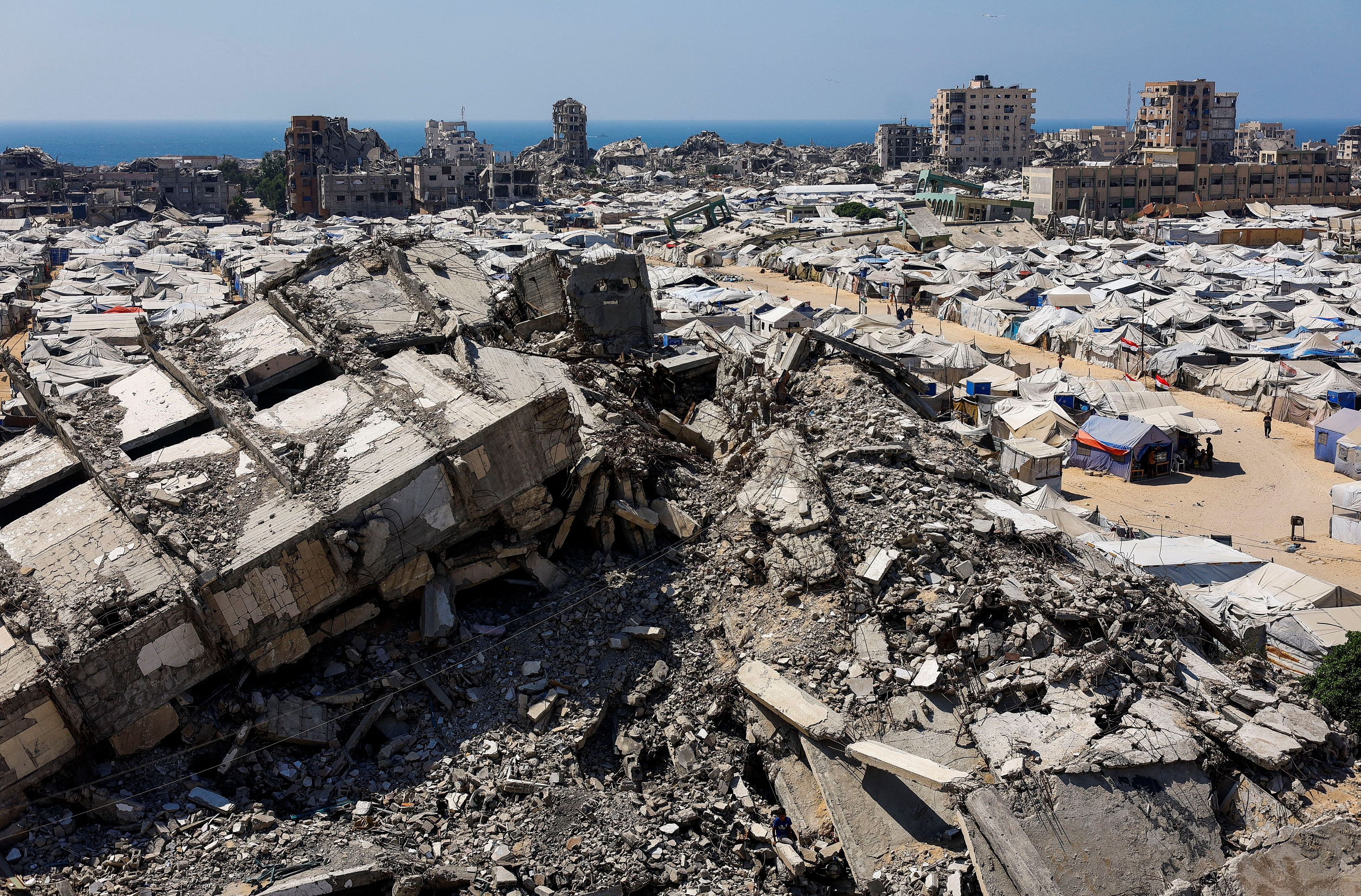
Progress toward the deployment is, however, a small step forward in a peace process that has otherwise stalled leaving 2.1 million Gazans to live among the rubble from two years of war, with no end in sight.
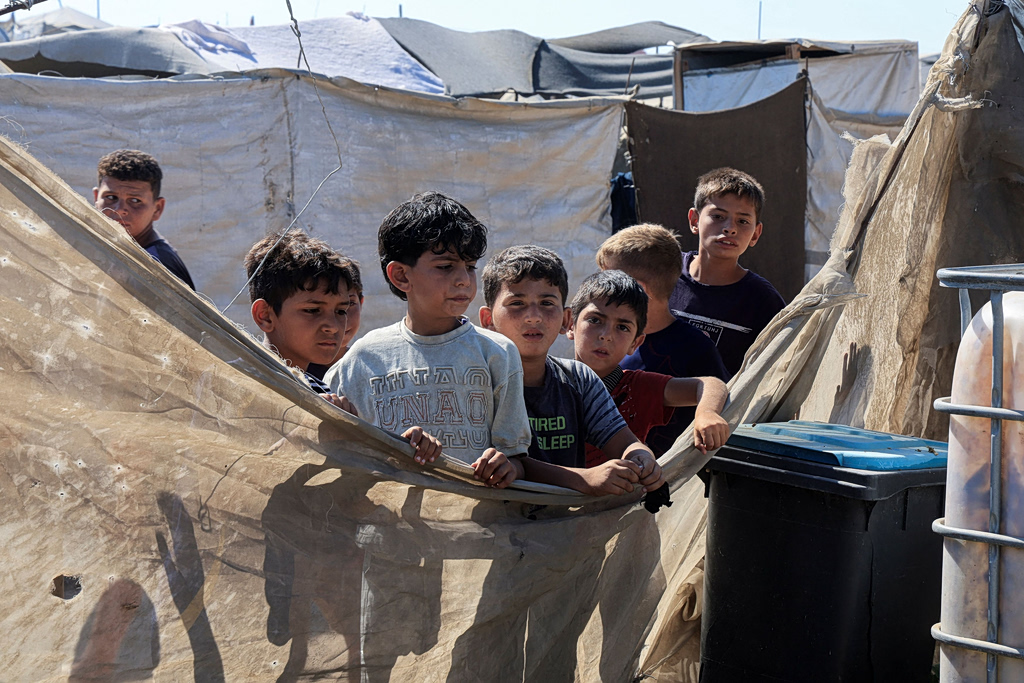
Young boys look on as Palestinians inspect the site of an Israeli strike on a tent in Khan Younis, in the southern Gaza Strip, July 8, 2026. REUTERS/Haseeb Alwazeer
Trump heralded the “historic dawn of a new Middle East” when his 20-point peace plan took effect in October, saying it would pave the way to a windfall of investment in glamorous beachside reconstruction projects. The original idea was that a multistage peace process would unlock doors to a durable end to the war. But the delays in Gaza show how even small advances in that direction are difficult to achieve.
The first phase paused the fighting and split control of Gaza between Israel and Hamas. The second required Hamas to disarm and transfer power to a Palestinian technocratic council. Israel would withdraw its troops, and the peacekeepers would move in. A Board of Peace, chaired by Trump, would oversee the process.
But after phase one, progress is halting. Hamas refuses to disarm and Israel continues to carry out strikes in the tiny territory, killing more than 1,000 people since the ceasefire, according to health officials in Gaza who don’t say how many were combatants. Rebuilding hasn’t yet begun, billions of dollars pledged for reconstruction haven’t materialized, and initial offers of troops have been held back because of wider regional instability, including the wars in Iran and Lebanon.
“The war in Iran didn’t just delay decisions on this, I think it has weakened the appetite of some of the countries involved,” said Daniel Shapiro , a former deputy assistant secretary of defense for the Middle East in the Biden administration.
On Monday, Hamas’s governing body, which controls parts of the enclave, said it would step down and transfer power to the technocratic council but didn’t commit to its military wing laying down arms. Middle East analysts interpreted the move as a signal that Hamas may be willing to engage, but cautioned that it was too early to proclaim progress. Others saw the move as a political stunt given the group remains the dominant force in the enclave.
The National Committee for the Administration of Gaza, which currently sits in Cairo, said it was ready to govern the territory once the political and security landscape allows. The committee is in the early stages of setting up a new police force that is meant to decommission Hamas’s weapons once the militant group agrees to hand them over.
A Board of Peace official said that the humanitarian part of the peace process isn’t dependent on the disarmament of Hamas, but would be accelerated by it.
Meanwhile, conditions in Gaza are deteriorating; the population is crammed into a diminishing area as Israel expands its control in the enclave, where many live in bombed-out buildings and rodent-infested tent encampments.
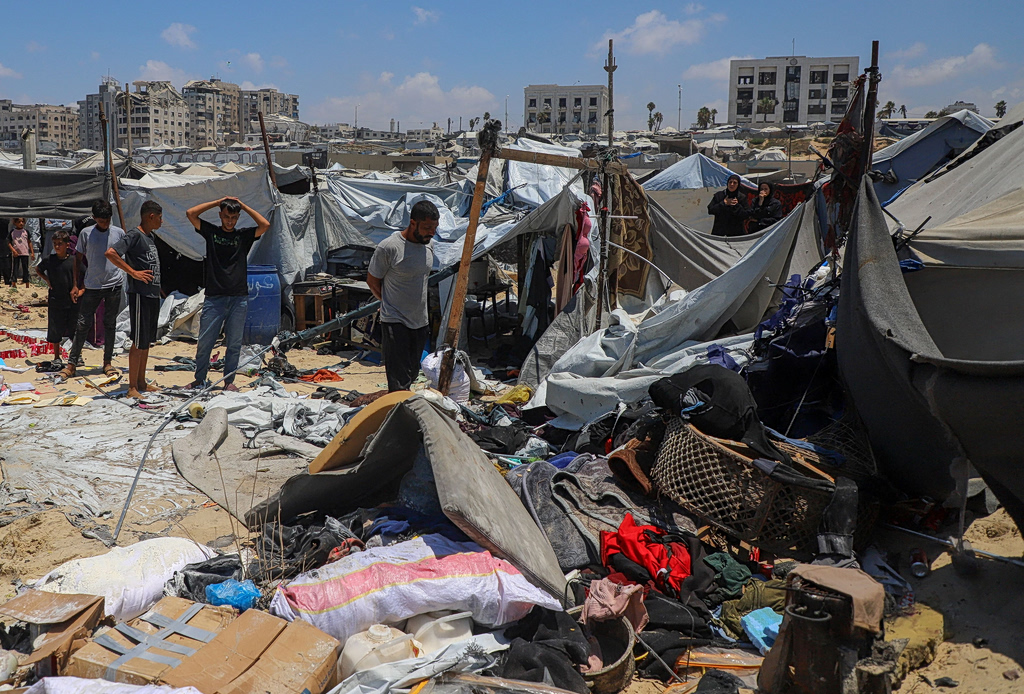
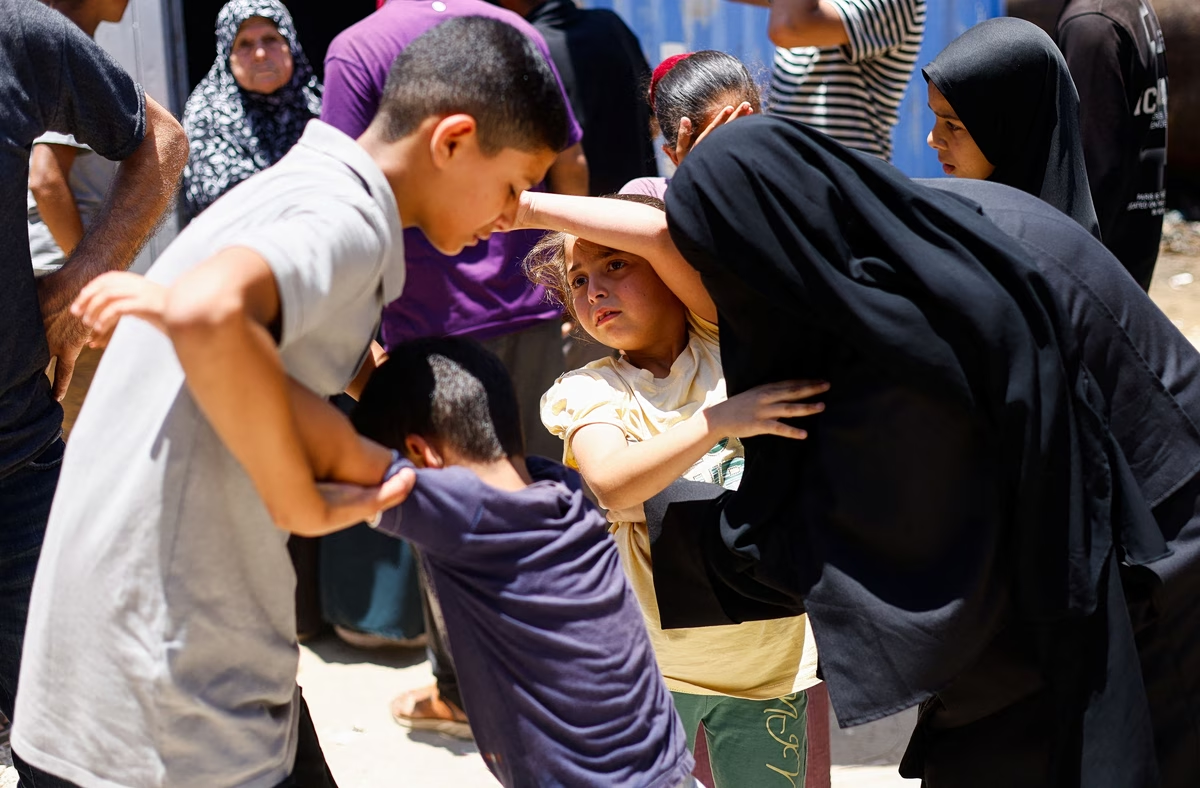
Palestinians inspect the site of an Israeli strike on a tent at a camp sheltering displaced people, in Gaza City, July 7, 2026. REUTERS/Ebrahim Hajjaj
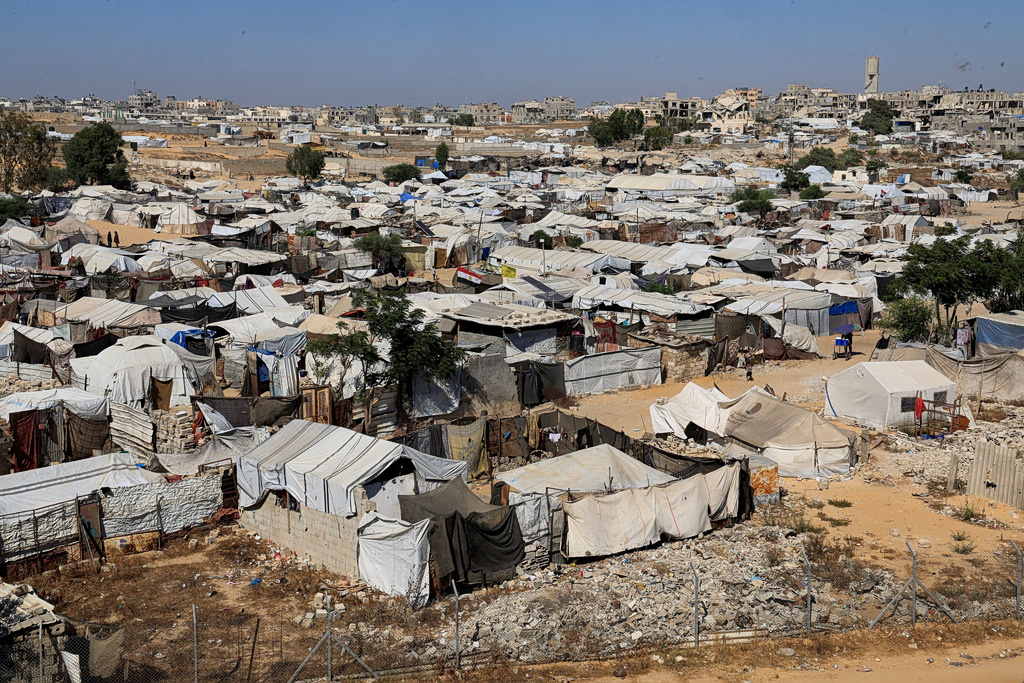
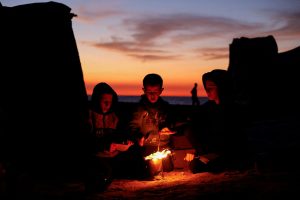
Displaced Palestinians shelter at a tent camp in Khan Younis, southern Gaza Strip, July 8, 2026. REUTERS/Haseeb Alwazeer
“The ceasefire last October offered a glimpse of hope, but it needs to translate into meaningful improvement in the lives of Palestinians in Gaza,” said Pat Griffiths , spokesman for the International Committee of the Red Cross in Jerusalem.
Amid the impasse, the Board of Peace has secured a fraction of around $17 billion it said was pledged for reconstruction, much of it by Gulf countries. The Board of Peace official said it has collected “hundreds of millions of dollars in contributions and has significantly greater commitments from governments as additional operations come online.”
The ISF, as the peacekeeping mission is known, was designed as a crucial pillar of Trump’s peace plan and meant to demonstrate political buy-in from countries willing to put their own troops on the line. The Board of Peace has said the ISF would ultimately have about 20,000 troops. U.S. officials told The Wall Street Journal in December that an initial deployment was expected early this year, but it was delayed.
The war with Iran made it even more difficult to secure commitments to the ISF. The biggest blow came from Indonesia, a major contributor of peacekeepers to the United Nations that made a potential commitment of thousands of troops for Gaza. In March, Jakarta announced that it was putting talks about its involvement on hold citing regional instability.
In the weeks afterward, a string of clashes between Israel and Hezbollah militants killed four Indonesian peacekeepers in Lebanon. A spokeswoman for Indonesia’s Ministry of Foreign Affairs confirmed the country’s participation in the ISF is still on pause.
Despite the setbacks, four countries—Albania, Kazakhstan, Kosovo and Morocco—are now on course to sign formal commitments to the ISF, according to the U.S. military official. Albania’s Defense Ministry declined to comment, and the administrations in the three other countries didn’t respond to requests for comment.
The ISF plans to start its phased deployment within months, the official said, with troops eventually based out of two sites: a Logistics Support Area, a newly built logistics hub in Israel near the Kerem Shalom border crossing into Gaza; and a Mission Support Site, inside Gaza. The logistics hub is mostly built, while construction of the mission site hasn’t begun.
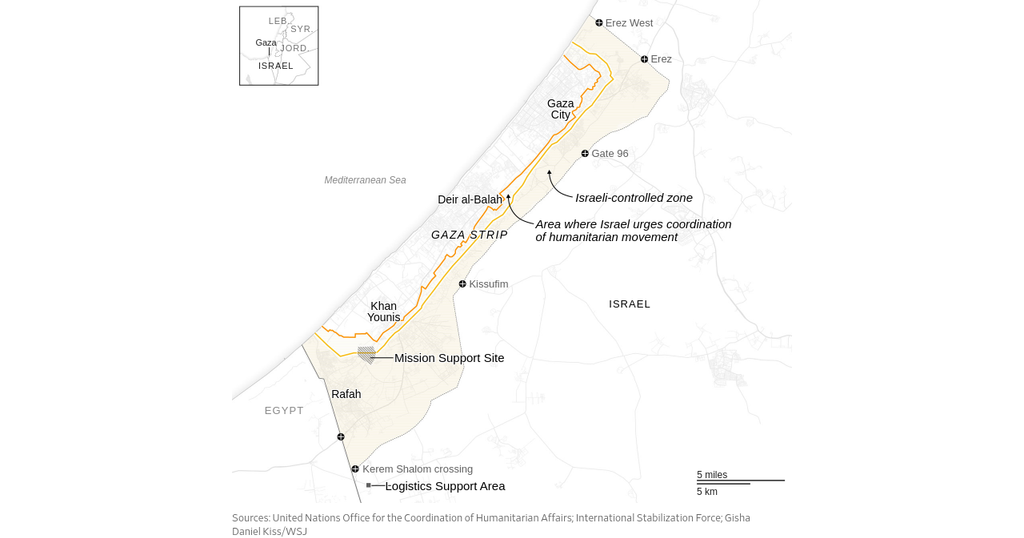
The two sites, once built and operational, are meant to accommodate about 5,500 ISF personnel.
The small Moroccan contingent, a mix of officers and security troops, will be based at the logistics hub near the Gaza border, the U.S. official said. They will initially be tasked with securing the site, which recently received its first delivery of tactical vehicles. Eventually, troops based there will carry out expeditionary-style operations inside Gaza, like route reconnaissance, the official said.
Until Hamas disarms, reconstruction projects under the plan will remain limited to parts of Gaza that Israel currently controls. Few donors—especially wealthy Arab states—are willing to support projects there, which they see as entrenching an Israeli occupation.
One notable exception is the United Arab Emirates, a signatory of the Abraham Accords that normalized relations with Israel in 2020, and a critic of Hamas. A U.A.E. official said the country has already disbursed about $100 million to the Board of Peace.
Abu Dhabi is also behind a planned development in Rafah, Gaza’s southernmost province. The “Emirates Temporary Planned Communities” is a pilot project designed to house about 25,000 Gazans who were displaced from Rafah and meant to serve as a template for other parts of the enclave. The ISF will have a role in securing that site, and the mission support facility will be built adjacent to it, according to the U.S. military official.
Construction on that project hasn’t begun. In May, a crew of Gazan land surveyors were stopped at a Hamas checkpoint and prevented from traveling to the Yellow Line, where they were due to cross into Israeli-controlled territory and assess the site, the official said. The incident has been widely cited as an example of Hamas obstructing progress.
Write to Feliz Solomon at feliz.solomon@wsj.com