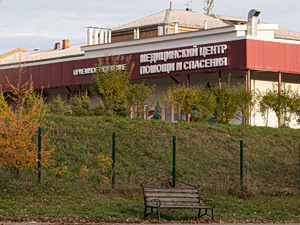
The U.S. has warned Moscow that its failure to disclose details about the death of a lab worker from a plague research center in Siberia runs counter to its international health obligations, U.S. officials said. Russia has provided the U.S. with little information about the mysterious episode, which has stirred fears that an infectious disease might spread inside Russia and beyond the country’s borders, American officials say.
The confidential diplomatic communication, known as a démarche, adds another source of tension between Russia and the U.S. as Trump seeks to improve ties with Russian President Vladimir Putin and make headway on efforts to end the war in Ukraine.
President Trump told reporters at the White House that he has a call scheduled with Russian President Vladimir Putin “soon.” When asked what U.S. intelligence agencies are telling him about the incident, the president said he should be able to share more Wednesday.
Secretary of State Marco Rubio on Tuesday said the information shared by Moscow was “still quite limited” but made no reference to the private diplomatic communication.
“We encourage Russia to be transparent and share more information with the world so that all of us could react accordingly and appropriately,” added Rubio, who was in Iceland to discuss security cooperation in the Arctic. “Maybe there’s nothing there. Maybe it’s bigger than we thought. We don’t know.”

US Secretary of State Marco Rubio, Iceland’s Foreign Minister Thorgerdur Katrin Gunnarsdottir and US Ambassador to Iceland Billy Long talk as they arrive at Keflavik Airport in Iceland, October 6, 2026. Mark Schiefelbein/Pool via REUTERS
A State Department spokesperson said the department has officially requested additional information from the Russian government and it is in official communication with other countries around the world to share information.
Four days after the death of the woman, identified in local media reports as Daria Shipilova, Russian authorities still haven’t disclosed the exact cause of her death, saying only that she died of pneumonia. The lack of detail has fueled speculation that her lab work resulted in the exposure to a deadly pathogen and raised questions about whether Russia has done enough to contain what authorities have called an infectious disease.
Under a 2005 global health pact called the International Health Regulations, countries are required to notify the World Health Organization within 24 hours of an event that could become an international public health emergency. The pact also requires signatories to provide detailed updates, including lab results and measures being taken to contain the threat.
While Moscow has provided some information to the WHO, it has yet to answer basic questions about the case, including what tests were run.
The governor of Irkutsk, Igor Kobzev, said earlier in the week that specialists had carried out extensive laboratory analyses of the woman’s body which found no “microorganisms connected to her professional activities.”
The WHO said Tuesday the possible pneumonic plague case in Russia poses a “very low” risk outside of the country.
The Trump administration withdrew the U.S. from the WHO earlier this year in part because of the U.N. health body’s handling of the COVID-19 pandemic.
Experts say that Russia should share information about the fatal episode even if Moscow insists there is no risk of a broader emergency that would trigger a reporting obligation.
“As much transparency as possible will help calm fears of further international spread,” said Hayley Severance, a former policy adviser at the Defense Department and an expert on global biological policy at the Nuclear Threat Initiative, a nonprofit security organization.
Russia’s consumer watchdog agency, which oversees the lab where she worked, has said her death was pneumonia due to “an unknown cause.” Since her infection, contacts of the woman have been put under medical observation. On Tuesday, authorities said that among her contacts there has been evidence of COVID-19 and a cold virus.
The State Department says that Russia still has a germ weapons program that violates the Biological Weapons Convention.
“Russia inherited the past offensive program of biological research and development from the Soviet Union,” the State Department said in a 2025 report. “The U.S. assesses that the Soviet program was absorbed, not dismantled, by the Russian Federation, and that the program has continued and evolved.”
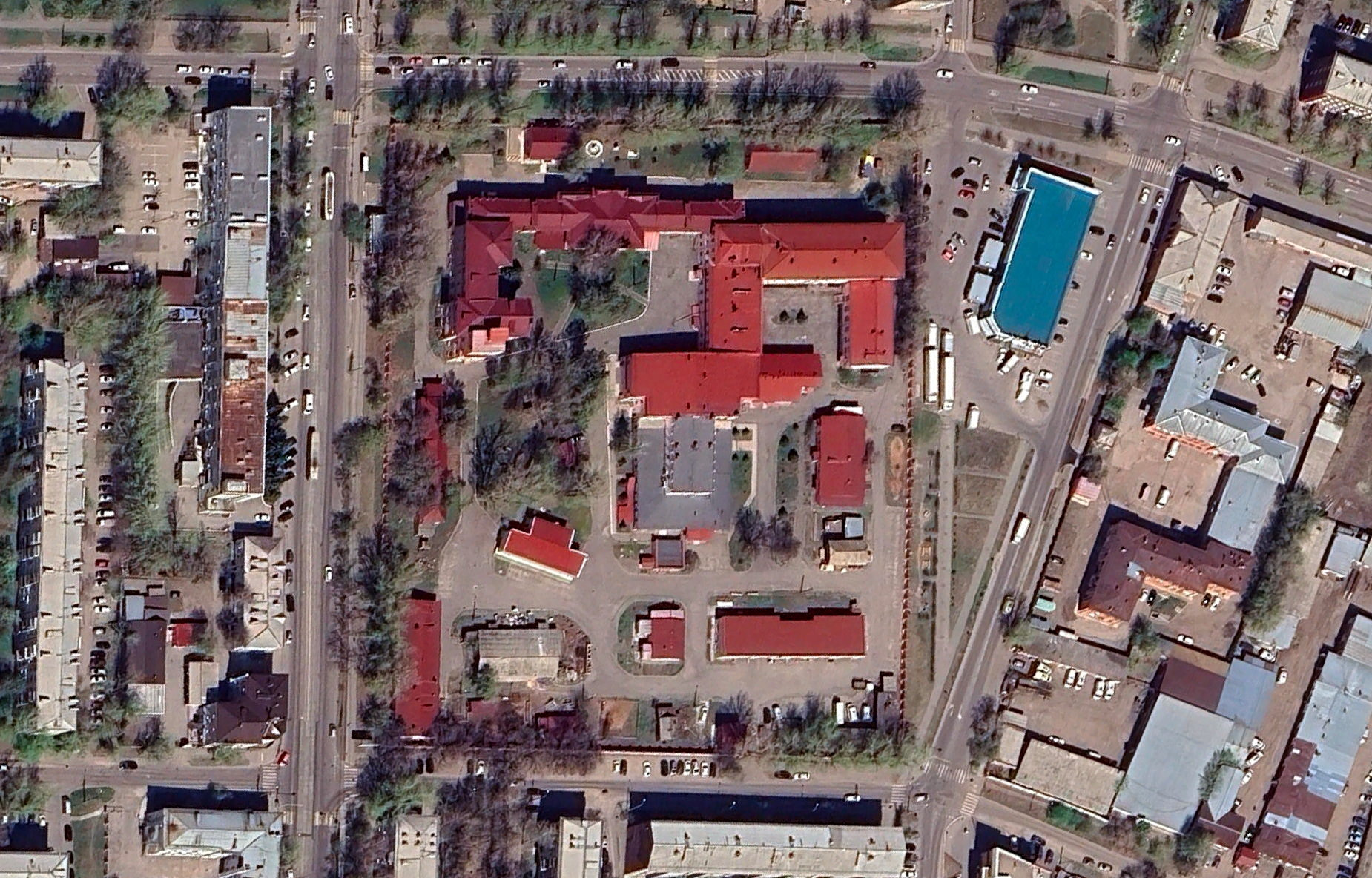
A satellite image shows the Anti-Plague Institute of Siberia and the Far East in Irkutsk, Russia, May 8, 2025. An employee of the institute, Darya Shipilova, 28, was named by Russian media as the laboratory worker who, according to authorities, died from pneumonia of an as-yet unestablished origin on October 2, 2026, prompting authorities to quarantine about 200 people and causing public health fears on social media. Google/Airbus/Handout via REUTERS
In 1979, an accident at a Soviet facility led to an anthrax outbreak in Sverdlovsk, Russia, now known as Yekaterinburg. Soviet officials initially said the illnesses were the result of contaminated meat. Boris Yeltsin, who served as Russia’s first president after the breakup of the Soviet Union, later told a Russian newspaper that a “military development” led to the outbreak.
A lack of trust in Russian public health institutions has triggered fear of a potential plague outbreak among residents in the Siberian region of Irkutsk, near the border with Mongolia. Neighboring Central Asian countries have likewise boosted health safety measures at borders and airports.
While there are parallels between Russia’s reluctance to share information on the incident in Siberia and China’s lack of transparency on the COVID-19 outbreak, officials say there is no indication the Russian case could trigger an outbreak as contagious as the COVID-19 pandemic.
President Trump said Monday that the U.S. could help with the situation. In a veiled jab at the U.S., Russia’s consumer watchdog agency responded that it would be willing to help the U.S. with its outbreaks of measles.
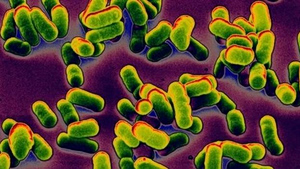
The bacterium Yersinia pestis, which can cause pneumonic and bubonic plague, has been identified from time to time in Siberia, linked to exposure to vermin. The anti-plague institute in Irkutsk was established in 1934, under Soviet leader Joseph Stalin, to control cases of plague, its website says. Since then, it has conducted work to monitor, research and develop treatment for other serious infectious diseases, including cholera, anthrax and brucellosis.
The institute took part in a bilateral training exercise with China earlier this year against the potential outbreak of an infectious disease.
“We’re watching it very closely, hour by hour,” said Rubio. “We have multiple agencies, not just in the U.S. but internationally, that are watching it.”