 Μake us preferred on Google
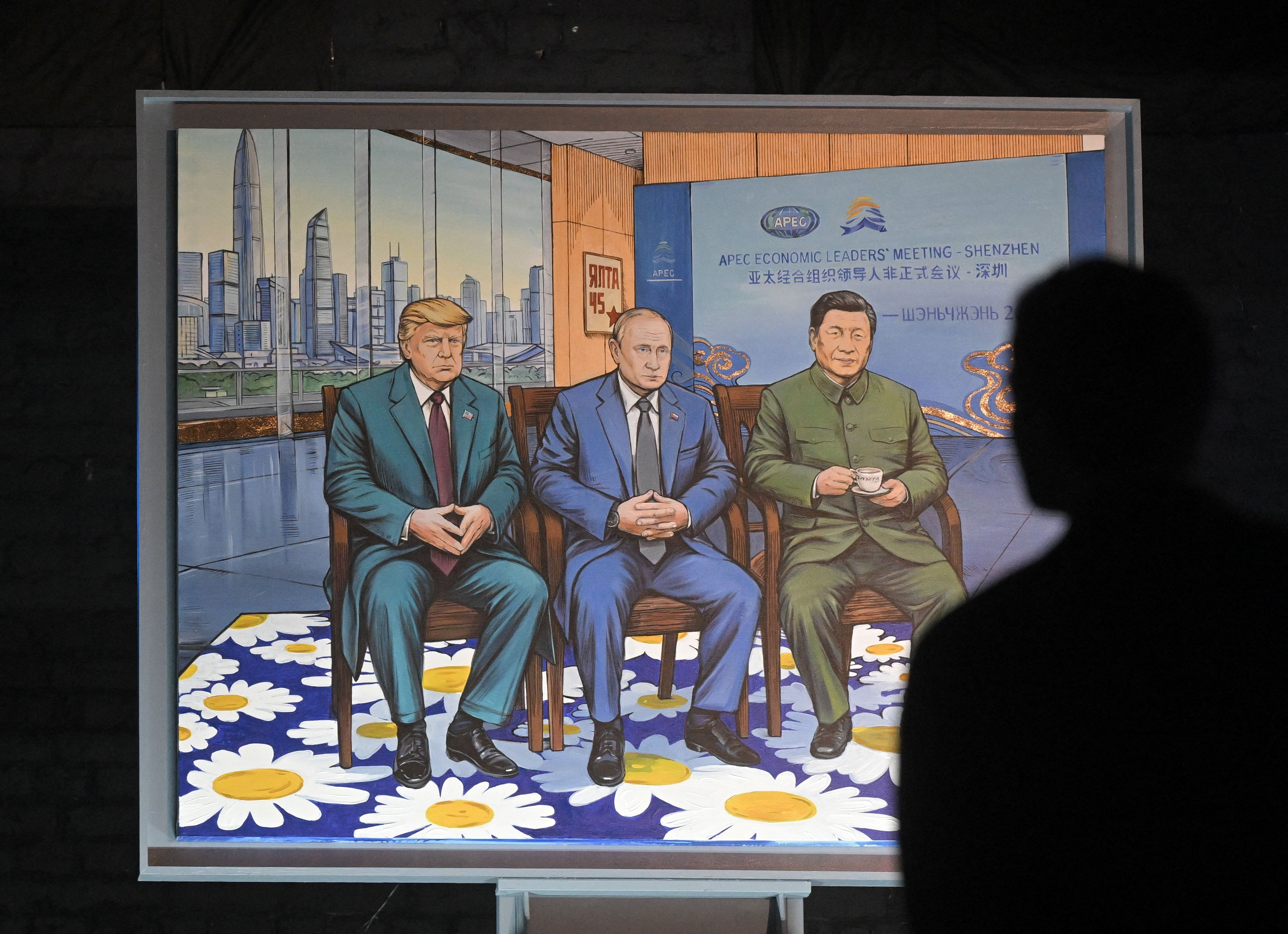
The southern Chinese city of Shenzhen is set to be the stage for a first meeting between Donald Trump, Xi Jinping and Vladimir Putin on Thursday — the culmination of a week of high-stakes diplomacy in Asia.
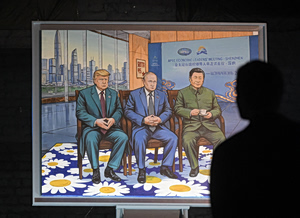
Some are dubbing the trilateral meeting “Yalta 2.0” after the 1945 conference in Crimea, where US President Franklin D Roosevelt, British Prime Minister Winston Churchill and Soviet Premier Joseph Stalin decided the post-second world war international order.
While expected to deliver few concrete outcomes, the powerful imagery of Trump meeting authoritarian Xi and revanchist Putin will reverberate throughout the world, especially in flashpoints such as Ukraine, Taiwan and the Middle East.
The three-way talks, and a bilateral meeting between Trump and Xi, will take place on the sidelines of the Asia-Pacific Economic Cooperation leaders’ summit on Wednesday and Thursday.
Apec, whose members account for 62 per cent of global GDP and roughly half of global trade, is expected to discuss issues such as supply chain security and artificial intelligence. But its sessions will be overshadowed by the Xi-Trump-Putin meetings as well as any encounter between the Chinese leader and Japan’s Prime Minister Sanae Takaichi, whose remarks on Taiwan last year sparked a bitter dispute with China.
Ahead of Apec, Trump is visiting Manila for the Association of Southeast Asian Nations’ annual summit. He is expected to reaffirm ties with defence partners such as the Philippines, which is under pressure from China over conflicting claims in the South China Sea.
There has also been speculation that Trump could meet North Korean leader Kim Jong Un, either in China or the Philippines, but a US official said nothing was planned.
The ‘trilateral’
In recent months, Trump and Putin had both publicly floated the idea of a trilateral meeting. Beijing was initially wary because of the inherent risks for Xi given the unpredictable nature of his two counterparts. But following weeks of negotiations with Washington and Moscow, it decided to proceed.
One person familiar with the planning said China, Russia and the US had decided against an agreed agenda, in an unusual move by the host Xi, who usually insists on tightly scripted conversations with foreign leaders.
An American official said Trump would raise nuclear arms control and proliferation but stressed that the president wanted to start a discussion between the three biggest nuclear powers and did not expect to reach an agreement.
“This is a difficult topic for China to address, but we do think it’s time for China to sort of step up to the adult table,” said the US official.
World leaders are gathering in Asia for a week of heavyweight diplomacy, capped off by a potential trilateral meeting between Donald Trump, Xi Jinping and Vladimir Putin. Trump will stop in Manila for the Association of Southeast Asian Nations meeting before heading for Shenzhen, southern China for the Apec forum. China has said it is in discussions with the US and Russia. Deliverables, however, are likely to be in short supply. China does not want to get deeply involved in talks about the Ukraine or Iran wars, nor does it want to discuss nuclear arms controls. The main takeaways might be vague statements about maintaining the global strategic order. The other big meeting at this year’s APEC is expected to be a bilateral session between Xi and Trump. They are expected to discuss their truce in their trade war, as well as export controls, a particularly sensitive subject after the Nvidia scandal. More generally, talks at this year’s APEC are expected to focus on supply chains in the light of growing protectionism around the world, but do not expect much free-flowing discussion. This is one of the most tightly controlled forums in recent memory, with many of the sessions truncated, and some, such as the leaders’ retreat, eliminated altogether.
Key issues to watch on this year’s Asean and Apec summits © FT
While Xi wants to highlight his relationships with Trump and Putin, he also wants to avoid comparisons with the 1945 Yalta Conference, which excluded China despite its important role in fighting Japan in the second world war.
The trilateral also holds risks for Xi by potentially associating China with the conflicts in Ukraine and Iran, as Beijing seeks to stay away from centre-stage roles in peace negotiations.
Da Wei, a Tsinghua University professor, said China would use the trilateral to demonstrate its diplomatic power and Xi’s statesmanship. He said Xi was unlikely to hold deep talks on the Ukraine war or arms control but would probably focus on discussions about global stability. The meeting was part of a “proactive” Chinese foreign policy, Da said.
Moscow has made no secret of its desire to create a “new, modern-day Yalta” to reflect its aims in Europe. But a person close to the Kremlin said China’s reluctance to take a hands-on role in the Ukraine peace process meant the three leaders were unlikely to discuss it in detail in Shenzhen.
Alexander Gabuev, director of the Carnegie Russia Eurasia Center in Berlin, said the meeting was a low-risk event for Russia that created prestige for Putin. “This gives him the status of a top world leader even though Russia is objectively not in the same league as the US and China, unless you go by the size of its nuclear arsenal,” he said.
Xi and Trump, again
Xi and Trump’s bilateral meeting on the Apec sidelines will be their third this year, two months after Trump welcomed Xi at the White House and six months since the US president made a state visit to China. A fourth encounter is expected at a G20 summit in Miami in December.
US officials said Thursday’s meeting would focus heavily on trade and the implementation of the trade war truce that Trump and Xi reached in October 2025. Washington has accused China of not fulfilling the agreed terms and said Beijing is only exporting two-thirds of the rare earths it had pledged. China has repeatedly denied that it is reneging on the terms of the ceasefire, which is set to expire on January 10.
“We are getting rare earths and derivative products from the Chinese, [but] we’re not getting them at the pace and at the level that we would like,” said one US official. “I expect the president will raise it with President Xi.”
China’s state media have made little mention of the Xi-Trump bilateral session ahead of the summit, instead emphasising Apec’s multilateral component and Xi’s role as host. Beijing does not want “US-China to suck out the oxygen”, said one Chinese think-tank analyst.
A second US official said the presidents were not expected to discuss Nvidia or Alice Huang, the Chinese woman the US suspects of having connections to Chinese intelligence with whom Jensen Huang, the former Nvidia chief executive who resigned last week, had an affair.
Xi would also probably not raise the issue, amid fears in China that it could poison the atmosphere in Washington against Beijing, said the Chinese analyst.
Can Takaichi and Xi make up?
For the past 12 months, relations between Tokyo and Beijing have deteriorated. Comments on Taiwan by Japanese Prime Minister Sanae Takaichi triggered a row that has led into an acrimonious stalemate, with neither side appearing eager to find an exit.
A handshake between Xi and Takaichi on the sidelines of the Apec summit seems plausible but is unlikely to carry much weight, say diplomats, and few expect any meaningful talks between the two leaders.
Neither side has much to gain from appearing at all concessionary. China’s government and media have been running an unremitting online campaign of anti-Japanese propaganda that casts Takaichi as an imperial warmonger, while Takaichi’s strong stance against an overbearing China has helped her to sustain her popularity at home.
Carney, an advocate for ‘middle powers’
Mark Carney is set to meet Xi on Tuesday, part of the Canadian prime minister’s drive to rekindle relations with Asia’s superpowers India and China and seek stronger regional partnerships to reduce over-reliance on trade with the US.
In January, Carney was the first Canadian prime minister to visit Beijing in almost a decade. Ties deteriorated in 2018 when China jailed two Canadians in response to Canada’s arrest of Meng Wanzhou, the chief financial officer of China’s Huawei, following a US extradition request.
As part of thawing relations, Canada agreed to limited imports of Chinese electric cars with a 6.1 per cent tariff, down from 100 per cent. China agreed to lift barriers on canola, seafood and some agricultural products.
This year, Ottawa and Beijing officials have repeatedly met to rebuild ties, culminating this month in China issuing a Rmb4bn ($600mn) sovereign “green bond” in Canada, the first offshore yuan bond sale of its kind in North America.
Trump in Manila
Trump, who arrives in Manila on Tuesday, will start his three-day trip to Asia by attending the Asean summit in the Philippines. He will meet south-east Asian leaders anxious about his commitment to the region given the Iran conflict and punitive American tariffs. The region has become critical to global supply chains as manufacturers move from China. The US and Thailand are also expected to sign a trade deal in Manila.
The American president is also expected to meet his counterparts from the Quad, a security-focused grouping that includes Japan, Australia and India, as well as President Ferdinand Marcos Jr of the Philippines, with which the US has a mutual defence treaty.
A US official said Trump would conclude his visit with a number of commercial deals and strategic investments in sectors including aviation, defence, energy and technology that would “strengthen American security and prosperity while cementing American leadership in a free and open Indo-Pacific”.
Reporting by Joe Leahy in Beijing, Demetri Sevastopulo in San Francisco, Leo Lewis in Tokyo, Anantha Lakshmi in Manila, Max Seddon in Berlin and Ilya Gridneff in Toronto
Copyright The Financial Times Limited 2026
© 2026 The Financial Times Ltd. All rights reserved. Please do not copy and paste FT articles and redistribute by email or post to the web.