 Μake us preferred on Google
 The Audit Council has approved four contracts related to hydrocarbon exploration tenders awarded to the Chevron-HelleniqEnergy consortium, the Minister of Environment and Energy, Stavros Papastavrou, announced, adding that the agreements will now be forwarded to the Greek Parliament for final approval.
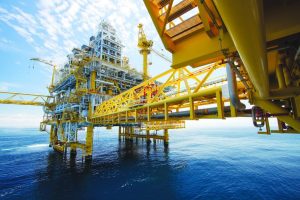
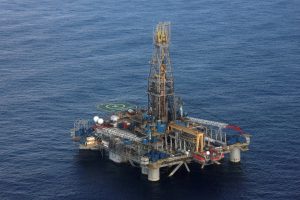
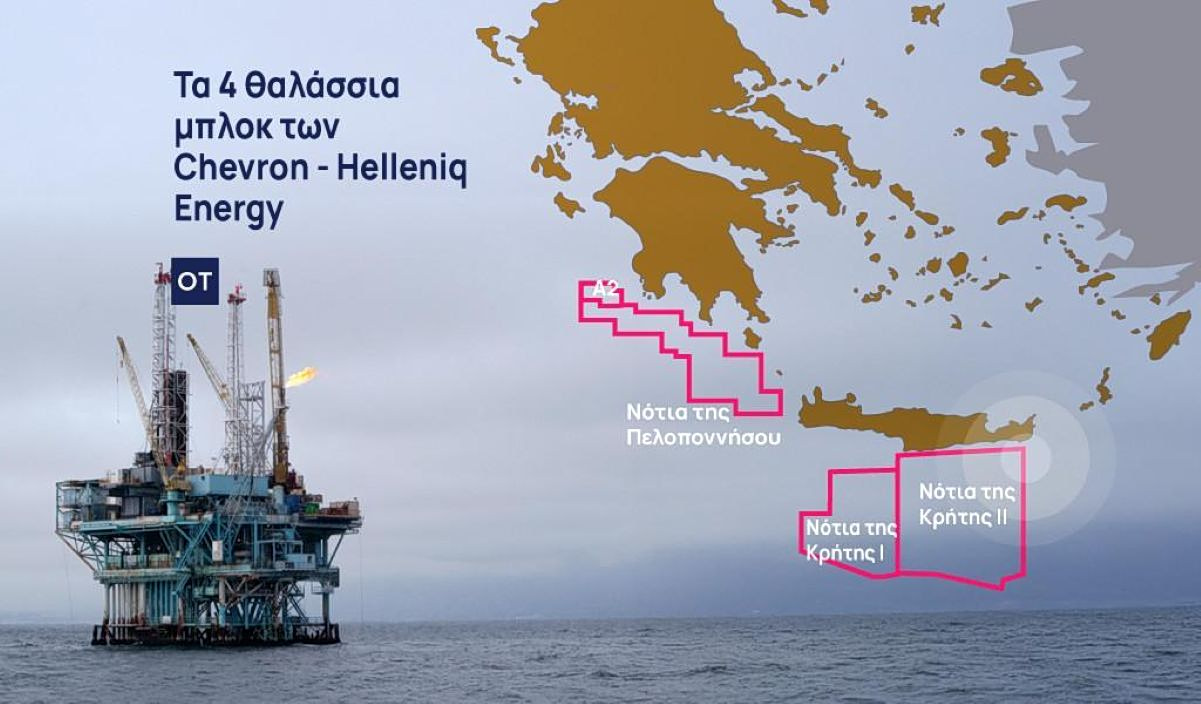
Chevron, in partnership with HELLENiQ Energy, had previously emerged victorious in the international tender conducted by the Hellenic Hydrocarbons and Energy Resources Company (HEREMA) for the offshore blocks “South of Crete I,” “South of Crete II,” as well as the “South Peloponnese” and “A2” areas.
Industry estimates indicate that Chevron is expected to begin initial seismic surveys in these offshore blocks in 2026. These surveys mark the first major step in activating the concession agreements—both for the upstream company and for Greece, as the state leasing the blocks. They are also critical for the company’s future decisions on drilling or potential relinquishment.
Given that seismic surveys are typically conducted during the winter months, from October to December, Chevron is expected to deploy a specialized survey vessel in the final quarter of 2026. The vessel will perform geophysical operations across a total area of 47,000 square kilometers, corresponding to the four leased offshore blocks.
The initial surveys will focus on acquiring two-dimensional (2D) seismic imaging of the subsoil, with evaluations expected to guide potential three-dimensional (3D) seismic studies in 2027. These follow-up surveys will target specific zones showing promising hydrocarbon structures.
Minister Papastavrou emphasized that the entire process is progressing according to the planned timeline, aiming for seismic and geophysical operations to begin in 2026.
Saudi Arabia Visit
The Minister also highlighted the outcomes of his recent visit to Saudi Arabia during an interview with ANT1 television. Discussions included a major initiative to establish an electricity interconnection cable linking Saudi Arabia and Greece, a project that would connect the Middle East with Europe.
Papastavrou noted that bilateral relations between Greece and Saudi Arabia span a century, and since 2022 these ties have been upgraded to strategic partnership status.