From Koronia in northern Greece to Mornos, the reservoir in the south-central mainland that supplies much of greater Athens-Piraeus agglomeration’s fresh water, Greece’s lakes are telling a story written of receding shorelines and increasingly unpredictable water levels.
At Lake Koronia, once one of northern Greece’s most important wetlands, the change has been particularly dramatic. Satellite imagery analyzed by Meteo, the weather and climate service of the National Observatory of Athens, shows its water surface falling from 34.4 square kilometers in 2016 to 29.8 in 2024, 17.9 in 2025 and just 2.7 square kilometers in 2026. Compared with the 42.8-square-kilometer surface recorded in 1984, that represents a loss of about 94%.
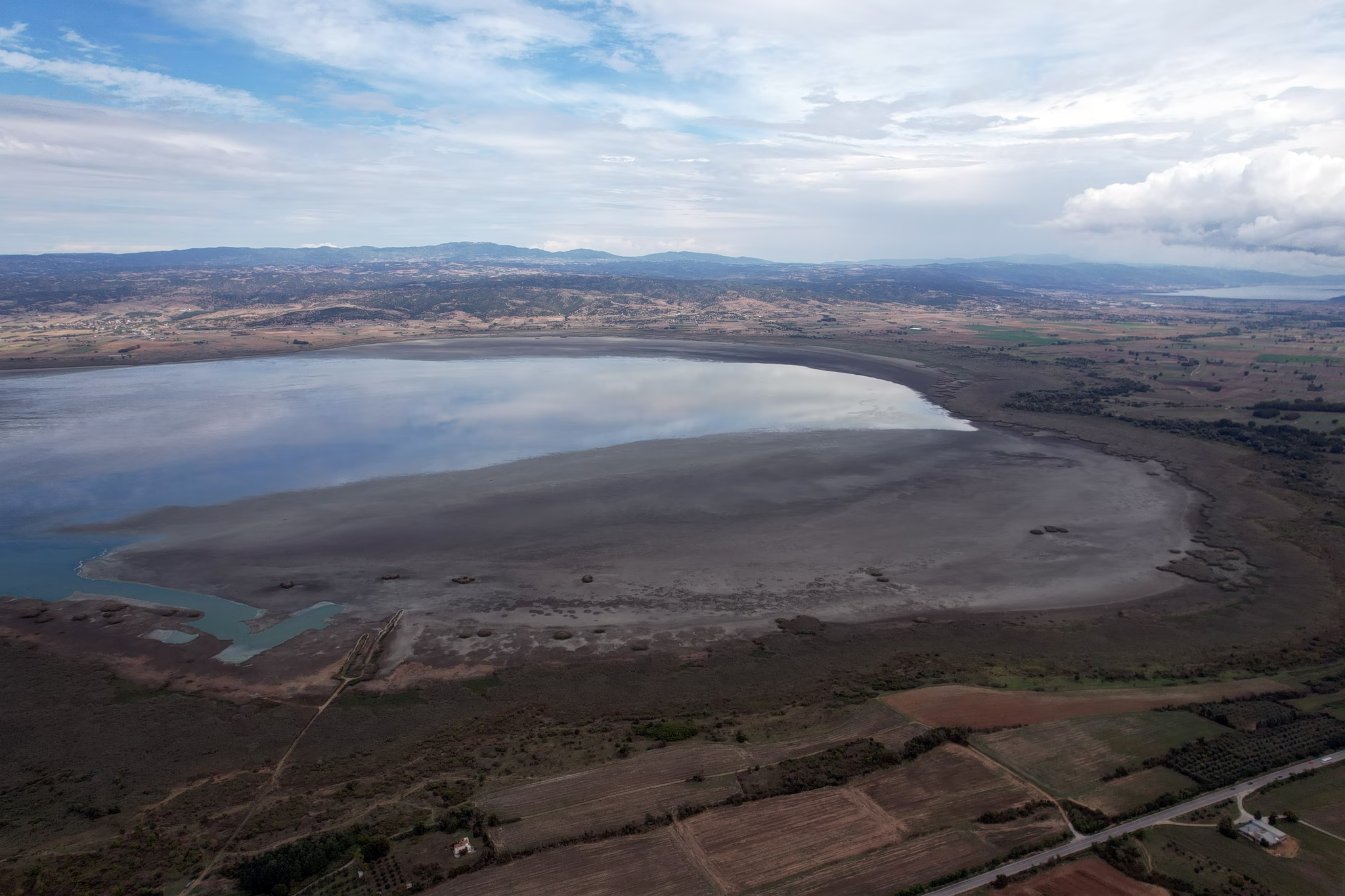
Lake Koronia, in the northern Greece.
But Koronia is not simply a story of a lake disappearing. It is part of a broader and increasingly familiar pattern across Greece: water bodies can contract dramatically during prolonged dry periods and, in some cases, recover substantial volumes after a wet winter.
Lake Amvrakia in Aetoloakarnania prefecture in western Greece is one such example. After prolonged dry conditions had exposed large areas of its lakebed, heavier rainfall during the latest winter altered the picture again, with the lake reaching considerably higher levels by March 2026.
An even more striking transformation occurred at the small Lake Vyrou in Vouliasta, in mountainous northwest Ioannina prefecture, where the water level fell by about 12 meters during the summer of 2025, leaving the lake appearing close to disappearing.
Mornos provides another, particularly consequential, example. Unlike Koronia and the other natural lakes, it is an artificial reservoir and a key source of water for the greater Athens-Piraeus area. Extremely low rainfall in 2025 pushed the reservoir to increasingly depleted levels. By early 2026, its surface had fallen to 9.1 square kilometers.
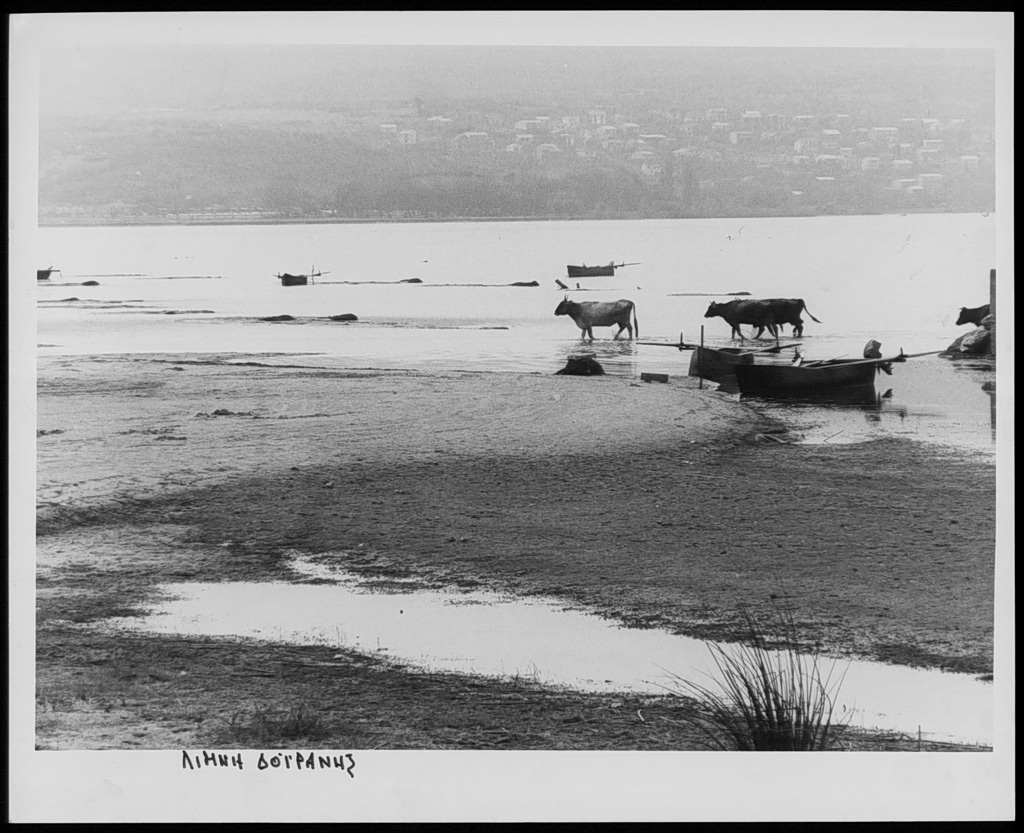
Lake Doirani, in northern Greece, from an old B&W photograph.
Then the rains returned
By February, the surface had expanded to 13 square kilometers, although it remained about 26% below the average February level for 2006-2024. Later spring rainfall brought further recovery. To Vima reported in April that Mornos’ water reserves had risen from about 157 million cubic meters in October 2025 to nearly 492 million cubic meters by early April, while the lake’s surface expanded from 8.3 to 14.7 square kilometers. By late April, satellite data put the surface at 15.5 square kilometers.
The recovery was significant, but it did not erase the underlying concern. Although water reserves supplying the Athens basin improved after a wet winter, they remained below levels seen in earlier years, underscoring the longer-term pressure on Greece’s water resources.
Similar fluctuations have been observed at Lakes Volvi, Doirani and Pikrolimni. Monitoring studies point to a combination of declining rainfall, rising temperatures and human water withdrawals as factors affecting water levels. At Pikrolimni, the retreat has repeatedly resulted in complete drying during summer.
And when a lake shrinks, it is not only the landscape that changes.
Shallow waters, reed beds, muddy shores and aquatic vegetation provide critical feeding and breeding grounds for fish, amphibians and waterbirds. Koronia is a protected wetland of international importance, and its history already includes mass deaths of fish and birds as well as complete drying episodes in 2002 and 2008. Recent satellite evidence has revived concerns over the long-term condition of its ecosystem.
The return of water, meanwhile, does not necessarily mean an ecosystem immediately returns to its previous state. Rapid drying can alter temperatures and increase concentrations of salts and other substances in the remaining water, while sudden refilling can once again change the system’s physical and chemical conditions.