For centuries, the Kerameikos site marked a threshold between the “living city” of Athens and the world beyond its walls, which also served as the renowned city’s graveyard. Potters worked along the usually languid Eridanos River, religious processions passed through its monumental gates and the city’s dead were laid to rest along the paths leading west from the walls.
Now, after a three-year restoration and upgrading project, the important archaeological site is being reintroduced more fully to the modern city.
The works were inaugurated this week in the presence of Prime Minister Kyriakos Mitsotakis, Culture Minister Lina Mendoni and Katerina Sakellaropoulou, the former president of the republic and current president of the Athens Epidaurus Festival. The project, carried out from 2023 to 2026 with a budget of roughly four million euros from Recovery Fund financing, has expanded public access while reshaping how visitors enter, move through and experience the site.
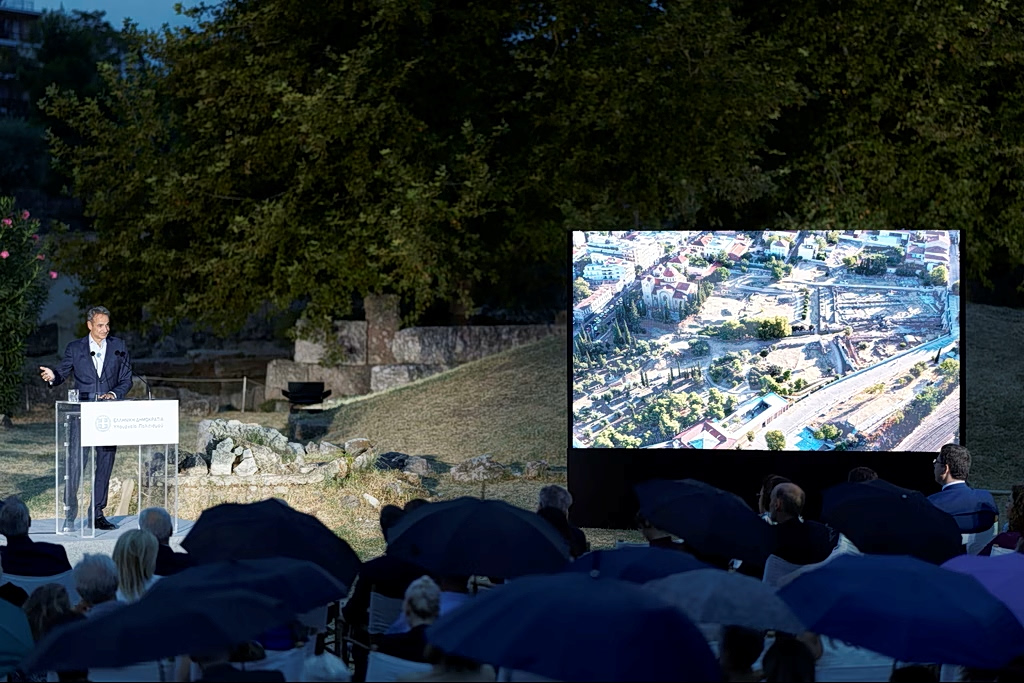
Greek Prime Minister Kyriakos Mitsotakis at the Kerameikos archaeological site. / Prime Minister’s Office.
About 1.1 acres have been incorporated into the visitor experience. Among them is a 2,700-square-meter area of particular archaeological importance, containing remains of fortifications, houses and workshops dating from the Hellenistic and Roman periods, which had previously been blocked off from the public.
The physical changes extend beyond the newly accessible archaeological remains. More than 3,500 trees and plants have been added, while the hill known as the Staktothiki was reshaped. The area had been formed partly from waste associated with an old soap factory and rubble from earlier excavations. An entrance on Ermou Street has been upgraded, replacing a temporary ticket booth installed in 2011 with a visitor reception building. A second exit has also been created on Asomaton Street, ending the site’s longstanding dependence on a single entrance and exit.
On the Asomaton side, a multifunctional building has replaced semi-derelict former shacks and shops that had been expropriated by the culture ministry beginning in the 1970s. The new structure includes a cafe, shop and areas for study and rest, with improved access for people with disabilities, older visitors and families with children.
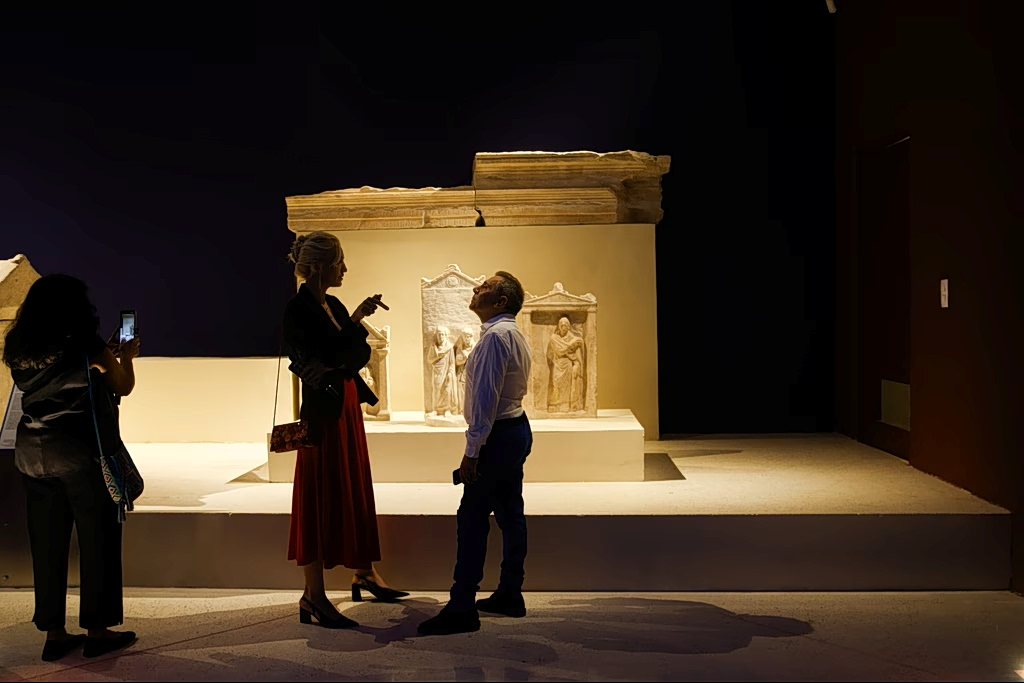
Among others, visitors are greeted by a replica of the funerary monument of Aristion, while noted Roman-era funerary monuments, including the sarcophagus of Philotera, are displayed nearby. A collection of pithoi points to the area’s long association with pottery production.
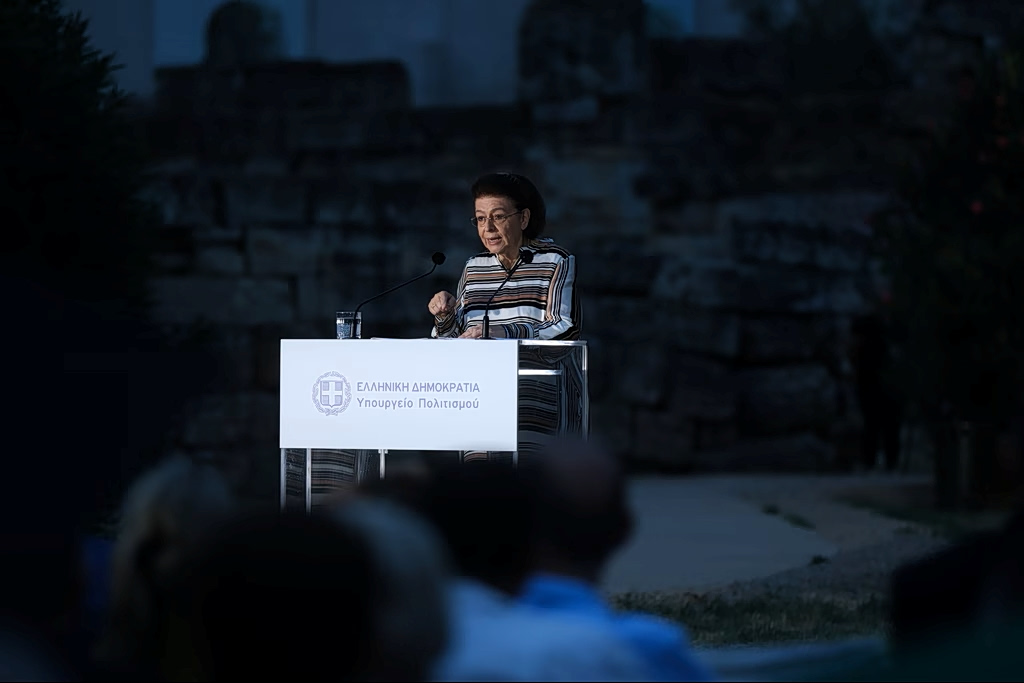
Culture Minister Lina Mendoni at the Kerameikos archaeological site on Tuesday, Sept. 15, 2026. SOOC
The changes also reinforce the relationship between the Kerameikos and the Ancient Agora. Together, the two archaeological areas cover about 134,500 square meters, with Kerameikos accounting for 41,000 square meters. The Dipylon was the principal gateway into ancient Athens and connected the city to the roads leading toward the outside world. The Kerameikos and Agora therefore formed complementary parts of the ancient city’s civic, commercial, ritual and funerary landscape.
The Kerameikos was both an inner district connected to the Agora and an outer area containing Athens’ principal ancient cemetery. The city walls divided these zones, with the Sacred Gate opening onto the road to Eleusis and the Dipylon serving as the great ceremonial gateway toward the road to the Academy. The Eridanos, which runs through the site, also played an important role in its development. Its flooding made parts of the area unsuitable for settlement, while its clay deposits attracted potters and vase painters.
The cemetery was in use from the Bronze Age and continued to serve as Athens’ principal burial ground for centuries. Excavations have uncovered funerary monuments, inscriptions and pottery that offer an unusually detailed record of Athenian society across different periods. The Street of Tombs, in particular, preserves evidence of monumental Classical-period family burial plots.
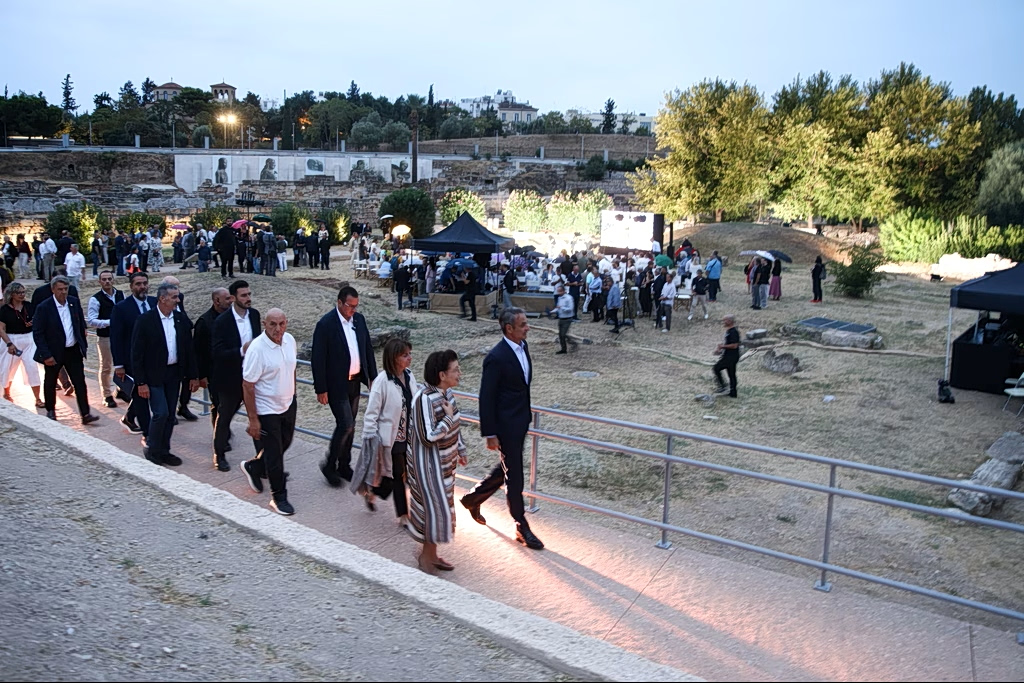
Inauguration of the upgraded Kerameikos archaeological site in Athens, Greece, Tuesday, Sept. 15, 2026. / SOOC
The site is also closely connected with the civic and religious life of ancient Athens.
Processions to Eleusis, modern-day Elefsina to the west, passed through the Sacred Gate, while the roads and gates of the Kerameikos formed a physical transition between the city and the wider Attic landscape. The area was also associated with the public commemoration of Athens’ war dead and the tradition of the funeral oration, linking the archaeological landscape with the political culture of Classical Athens.
A view of the Kerameikos archaeological site in central Athens. SOOC
Mendoni described the project as an effort not merely to restore monuments and infrastructure but to reconnect the ancient landscape with contemporary Athens. Mitsotakis likewise characterized the Kerameikos site as a meeting point between the past and present.
That dialogue now extends into contemporary art, as the archaeological site has become the permanent home of A Transfer, a sculptural installation by Maria Loizidou donated by the NEON organization and its founder, Dimitris Daskalopoulos. The work adds a contemporary layer to a landscape shaped for centuries by craft, burial, ritual and collective memory.