 Μake us preferred on Google
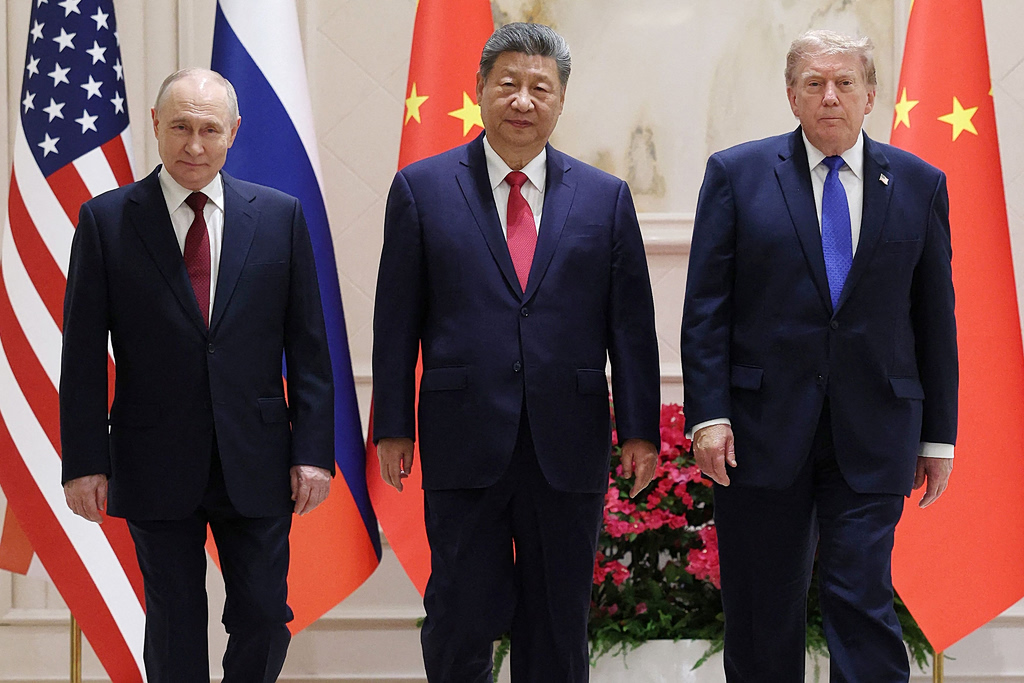
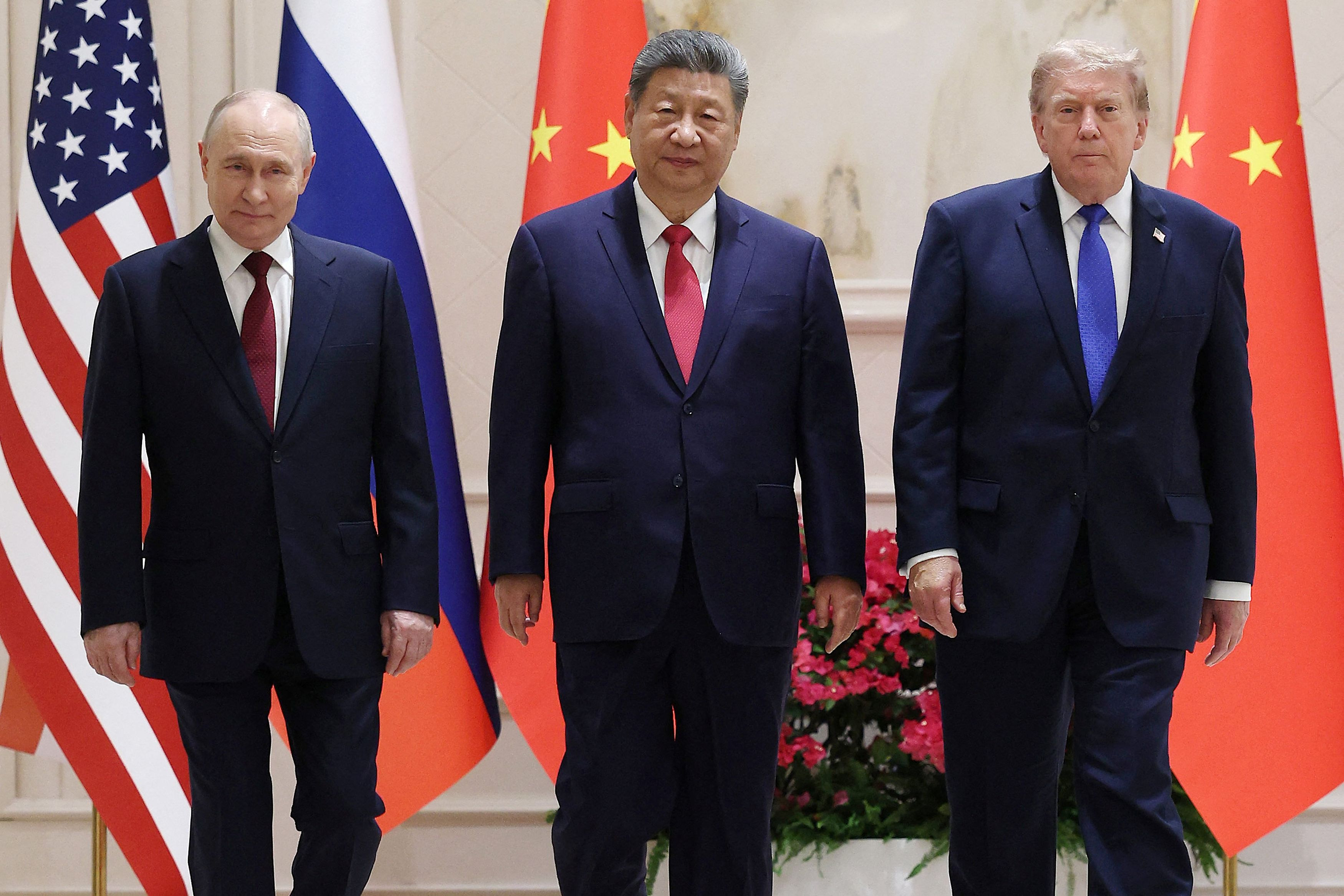
SHENZHEN, China—President Trump was meeting with Chinese leader Xi Jinping and Russian President Vladimir Putin in this southern Chinese city on Thursday, in an unprecedented show of unity among the stewards of the world’s three largest nuclear arsenals.
The first-ever gathering of the American, Chinese and Russian leaders is a further sign of the end of a unipolar world order dominated by the U.S.—and suggests that what might replace it is a more uncertain, and unsettled, reality.
For all the camaraderie on display, the three remain divided by their competing ambitions and sharply conflicting visions of what a new world order should look like.
Russia and the U.S. are bogged down in wars, while Beijing faces mounting economic problems and is deeply reluctant to take on the kind of global leadership role historically played by the U.S.
What the three leaders do share is a desire to be able to operate without constraints in their respective spheres.
Putin wants Washington to stay out of his way in Ukraine. Xi wants the U.S. to accept his claim that self-ruled Taiwan belongs to China. And Trump has made pushing Chinese and Russian influence out of the Western Hemisphere a central element of his so-called “Donroe Doctrine” to reassert U.S. dominance in the region.
As Trump met with Xi ahead of the trilateral, he framed his “very special relationship” with the Chinese leader as the cornerstone of U.S.-China stability.
There was little advance indication that progress could be made on the major issues the three leaders bring to the table: the wars in Ukraine and Iran and the proliferation of nuclear weapons .
But for the three men in the spotlight, solving problems was almost beside the point.
Going into the meeting, Trump embraced the historic gathering to promote an image of himself as a global peacemaker alongside two autocrats whom he has long admired.
“All my life I read you’d never want to have Russia and China team up. That was like 101 in politics or in warfare,” Trump said in a Fox News interview before the meeting. “They both like Trump. Now, what happens after me? That I can’t tell you.”
He left Washington with his party reeling from its midterm defeats, eager to use his final two years in office to cement his legacy on the world stage. “We have a chance to accomplish a lot,” he said as he departed for Asia.
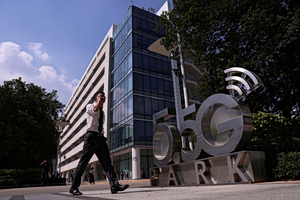
Trump headed first to a meeting of Southeast Asian leaders in Manila and then to Shenzhen for the annual APEC gathering of Asia-Pacific leaders, hosted this year by China.
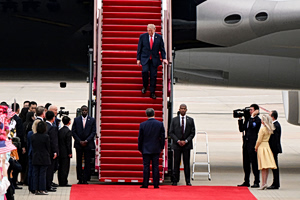
When Trump landed Wednesday in Shenzhen, Xi welcomed him with the pomp Trump relishes, personally greeting him on the tarmac, a first by a Chinese president, and arranging a colorful military flyover—just as Trump did for Xi on his arrival in the U.S. in September.
Trump offered little indication of what he hoped to accomplish with Xi and Putin in Shenzhen, beyond opening talks on nuclear arms control. U.S. officials played down any prospects of a breakthrough.
Trump acknowledged in the Fox News interview that reaching an agreement on reducing nuclear arsenals would be challenging.
“When they look at me and they say, ‘OK we’ll do it, but will you reduce your nuclear weapons by 2,000 weapons?’…It’s a hard thing to do,” Trump said. “For me, it’s a hard thing. And it’s probably hard for them to do also.”
The New Strategic Arms Reduction Treaty , or New START, the last treaty limiting Washington and Moscow’s strategic nuclear arsenals, expired earlier this year. Trump has pushed for a broader agreement that would include China, whose rapid rise as a nuclear power brings new complications to any denuclearization effort.
Trump had also repeatedly floated the prospect that his trip to Asia would include a meeting with North Korean leader Kim Jong Un , who is building his own nuclear arsenal. By the time the trilateral meeting began there was no sign that a Trump-Kim session would materialize.
For Putin, the gathering marked a remarkable diplomatic comeback nearly five years after his invasion of Ukraine made him an international pariah.
The Russian leader first proposed a trilateral summit alongside the APEC meetings as a venue to discuss ending the Ukraine war. In the end, Putin’s place at the sit-down with the leaders of the world’s two largest economies underscored the limits of Western efforts to isolate him.
“He’s my friend,” Trump said after greeting Putin for a two-way meeting earlier in the day. “We knew each other for a long time, and I think a lot of wonderful things can come out of this.”
The Trump-Putin meeting focused primarily on Ukraine, according to the Kremlin.
Xi, while playing host, has in some ways been the reluctant party among the three. Beijing has long said that it doesn’t belong in arms-control talks, saying its arsenal is dwarfed by those of Washington and Moscow.
But Xi benefits just by being there. The meeting places the Chinese leader on an equal footing, for the third time this year, with the U.S. president, while standing alongside a close partner in Putin over whom he holds an overwhelming advantage.
“What Xi gains from this trilateral meeting is the chance to look like the pivot player in international politics, convening this would-be ‘G3’ on Chinese soil and sitting alongside his closest partner on the world stage, Putin, to negotiate with a remarkably friendly American president,” said Julian Gewirtz, a China-focused official in the Biden-era National Security Council.
“As long as you and I are in charge of things, we’ll never have a problem,” Trump said as he met with Xi. “We’re never gonna have a problem.”
Write to Vera Bergengruen at vera.bergengruen@wsj.com , Jonathan Cheng at Jonathan.Cheng@wsj.com and Marianne LeVine at marianne.levine@wsj.com