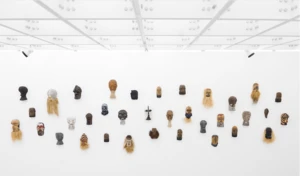
Olga Migliaressi-Phoca’s BANG BANG turns the familiar language of popular culture into something harder to ignore, using altered logos, slogans, lyrics, mirrors, neon and sound to examine violence, consumerism, apathy, freedom and collective memory.
The exhibition, the artist’s second solo show at The Breeder, runs through Sept. 9 at the Athens gallery. Spanning its facade and two main floors, BANG BANG explores what happens when play becomes serious, spectacle acquires consequences and innocence gives way to impact.
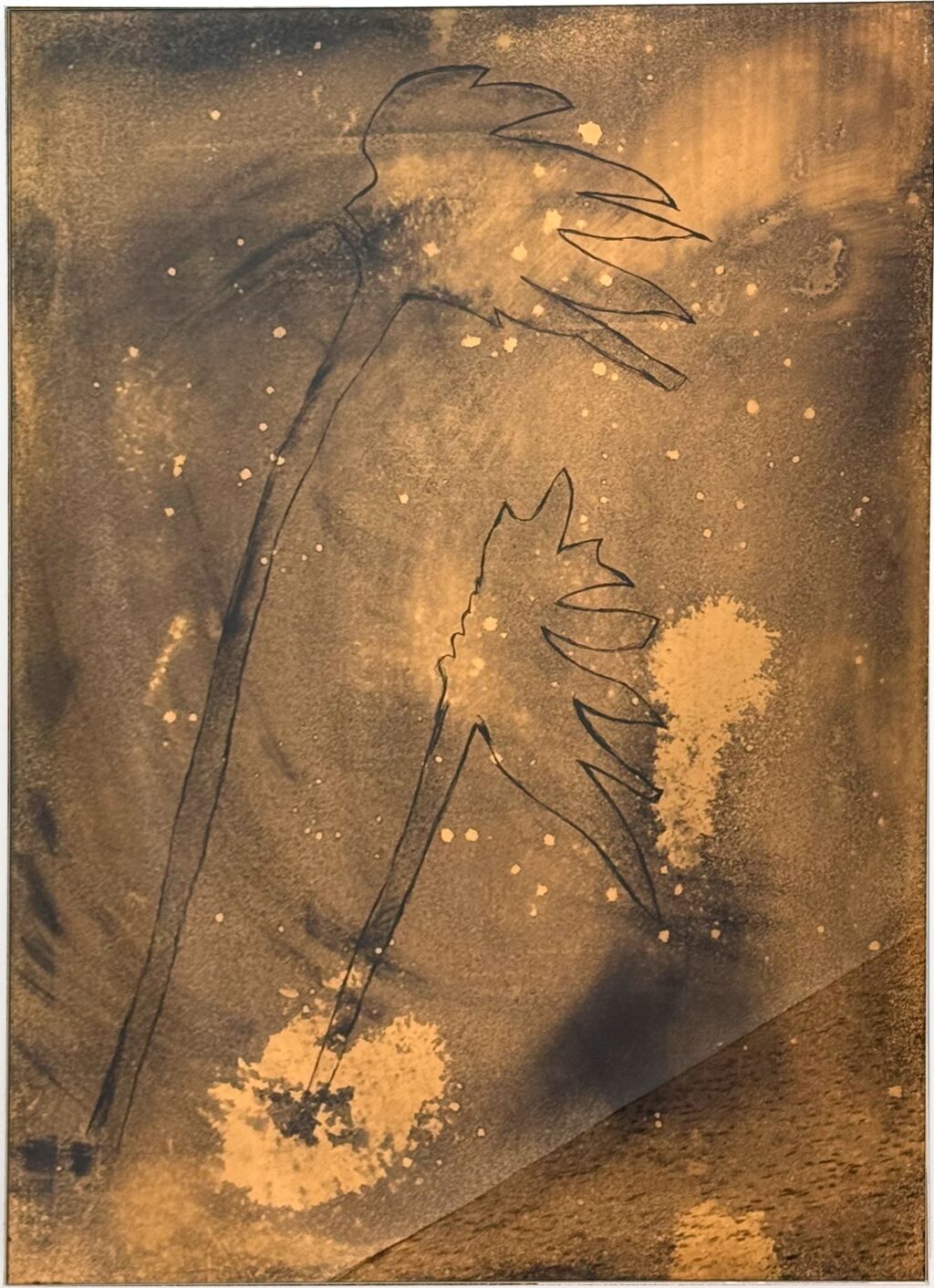
Olga Migliaressi – Phoca, BLOWING IN THE WIND (Harmattan) East wind – 41mph, 2026, bleached & scratched mirror, epoxy paint, aluminum frame, 190 x 140 x 3 cm.
At the center of the exhibition is a concern with proximity: the unsettling coexistence of radically different realities unfolding at the same time. Migliaressi-Phoca uses recognizable symbols and references as entry points, subtly altering them until their meanings shift.
On the corner of The Breeder’s facade, The Breeder Skin, HELL transforms the logic of commercial branding. As the sign’s light moves from one glow to another, “SELL” collapses into “HELL,” turning a familiar visual language into something ominous. Positioned above the entrance, the work resembles a false sun—radiant, seductive and omnipresent—while suggesting how quickly the familiar can become disturbing.
Inside, two large-scale mirror works, WAR – GIVEASHIT and ZOO – GIVEASHIT, take over the space. By replacing the Givenchy logo with the phrase “GIVEASHIT,” Migliaressi-Phoca turns the language of luxury into a demand for awareness. The mirrors initially evoke branding and self-recognition before pointing toward realities beneath the surface, including war and a society shaped by spectacle, observation and social pressure.
Neon works throughout the exhibition function as signals in the dark. Their red glow recalls warning systems while also suggesting embers, warmth and persistence. The works move between urgency and tenderness, evoking both alarm and fragile hope.

A continuous sound piece titled BANG BANG runs through the exhibition, creating a persistent sense of pressure. The work transforms the familiar Netflix opening sound into a series of percussive impacts, shifting an audio cue associated with comfort into something resembling bombardment.
The exhibition reaches the basement with FUCK WARS, a mirrored brass plaque whose blunt statement becomes a threshold. As visitors see their reflections absorbed into the work, their presence becomes part of the declaration. Drawing on the visual language of cinematic spectacle and architectural signage, the piece further blurs the line between fiction and reality.
Together, the works destabilize rather than simply reject or celebrate popular culture. Migliaressi-Phoca takes its immediacy, seduction and familiarity and alters what viewers already know, exposing what she presents as a fragile boundary between image and reality, consumption and consequence, and spectatorship and responsibility.