 Μake us preferred on Google
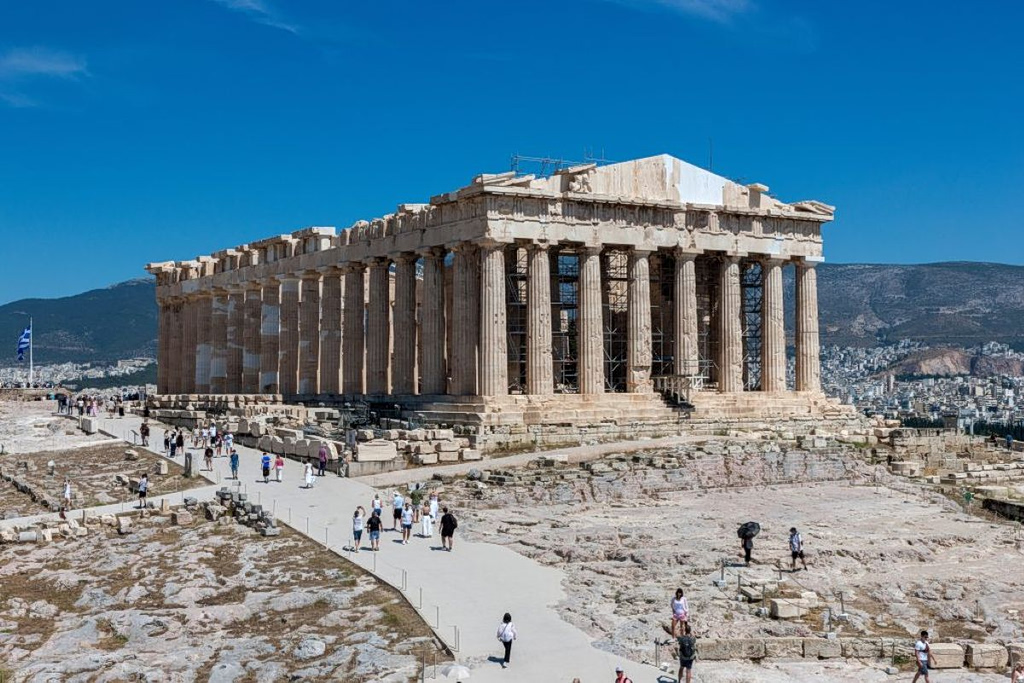
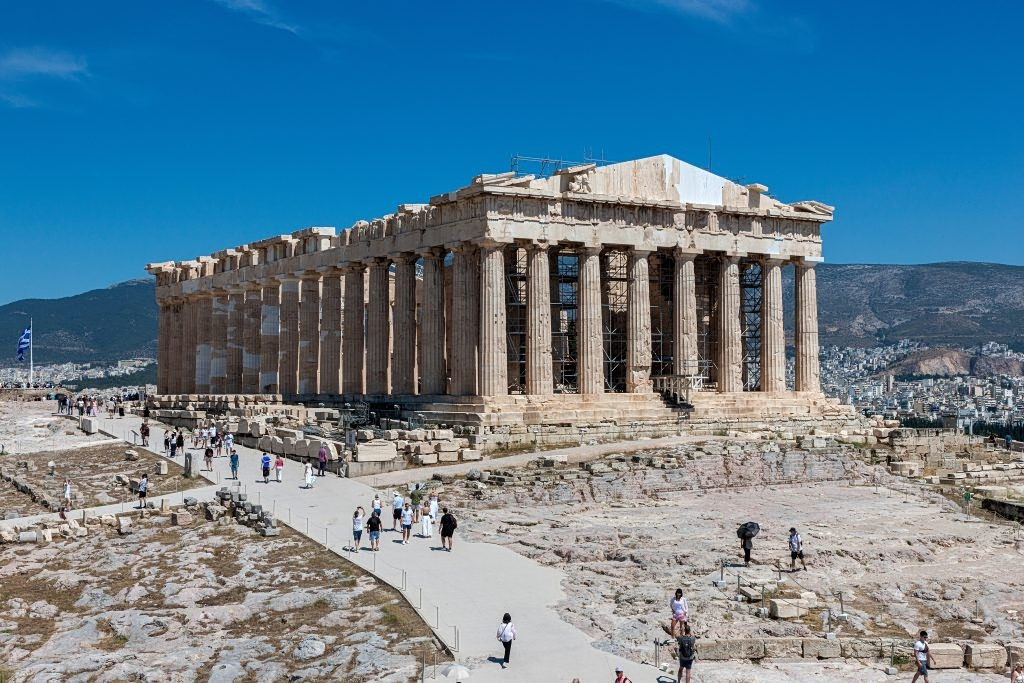
 The Parthenon will greet the summer solstice this weekend with a silhouette closer to its original form than at any time in more than two centuries, following the completion of a major restoration project on the monument’s western pediment.
As the northern hemisphere marks the longest day of the year on Sunday and the start of astronomical summer, sunlight will illuminate newly installed Pentelic marble sections that have restored part of the temple’s western façade, eliminating a prominent gap that had been visible for generations.
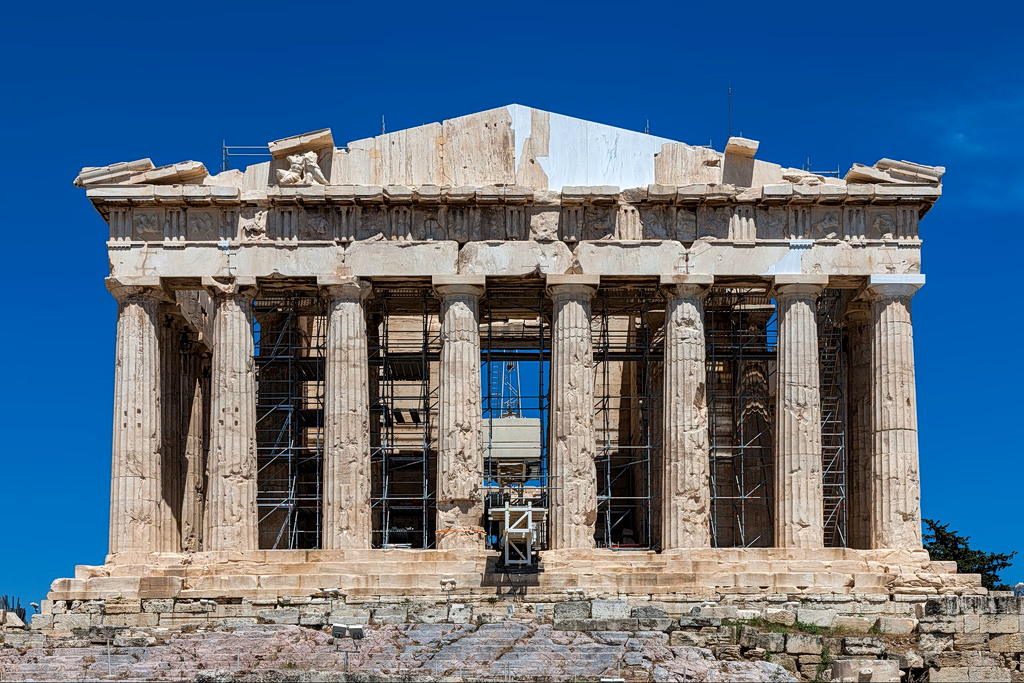
The intervention, one of the most technically demanding undertaken during the Acropolis restoration program, involved the placement of two massive marble orthostats at the top of the western pediment. The new elements complete the pediment’s tympanum, restoring the monument’s geometry and allowing visitors to better appreciate its original proportions and height.
Restoration specialists described the operation as exceptionally complex. The marble members, measuring 3.43 meters (11.3 feet) in height and weighing up to 7.5 metric tons, had to be transported and installed with extreme precision at one of the most difficult points of the temple. Special lifting adaptations were required because of the narrow base on which the blocks were positioned.
The gleaming white Pentelic marble already reflects the distinctive Attic light, offering a view of the monument that few modern visitors have ever witnessed.
The work extends beyond the visible reconstruction. Engineers and conservators have completed an intricate structural reinforcement system behind the pediment, installing titanium connectors in locations broadly corresponding to those used by the ancient builders. The largely unseen intervention is intended to ensure the monument’s stability and durability for future generations.
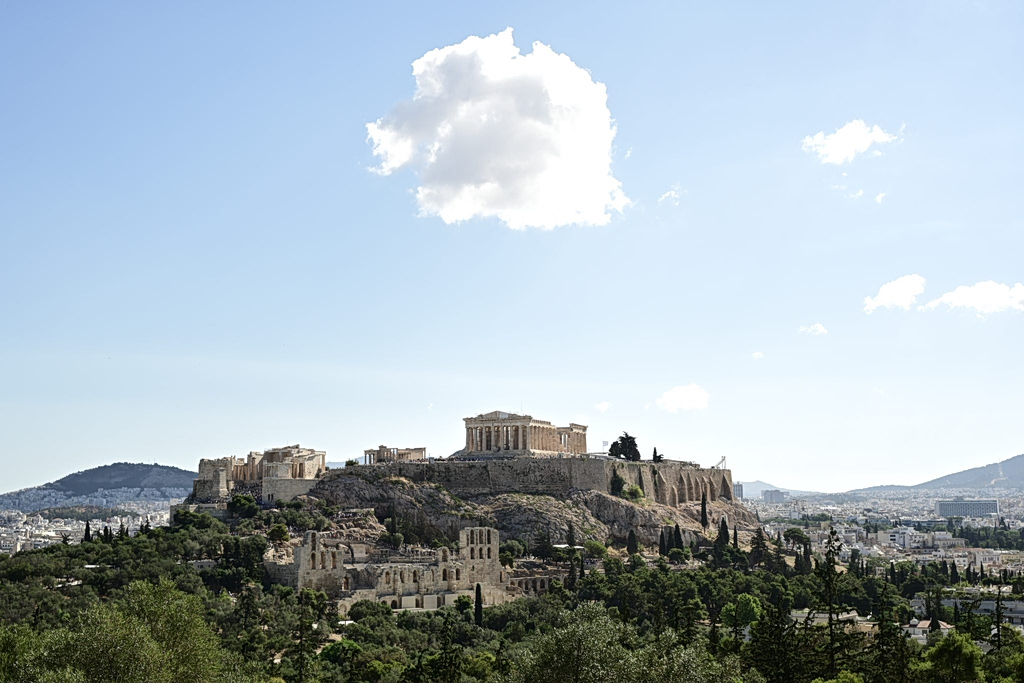
The restoration comes amid renewed international attention on the Acropolis and the Parthenon. Over the past year, discussions over the reunification of the Parthenon Sculptures have intensified, while Greek authorities have continued long-term conservation projects aimed at preserving the UNESCO World Heritage site and improving the presentation of its monuments to visitors.
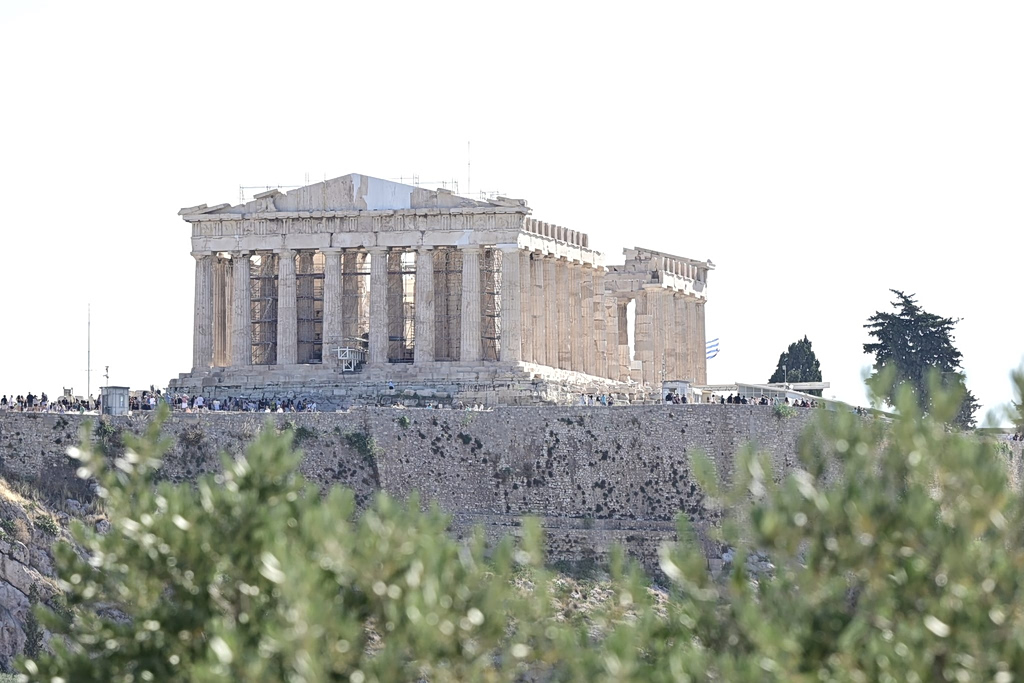
The western pediment originally depicted the mythical contest between Athena and Poseidon for patronage of the city of Athens. As the sun sets on the day of the summer solstice, its light will once again fall on a façade that more closely resembles the appearance seen by ancient Athenians some 2,500 years ago.
International media coverage of the 2026 summer solstice has focused on celebrations at ancient monuments across Europe and the wider world, including sites aligned with seasonal solar cycles. Against that backdrop, the Acropolis enters the occasion with a newly restored section of the Parthenon that reconnects one of the world’s most recognizable monuments with a lost element of its architectural history.