 Μake us preferred on Google
 A hospital technician was seriously injured in a workplace accident at Chalkida General Hospital in Greece after the flowmeter attached to a large portable oxygen cylinder exploded while maintenance work was being carried out inside a patient ward.
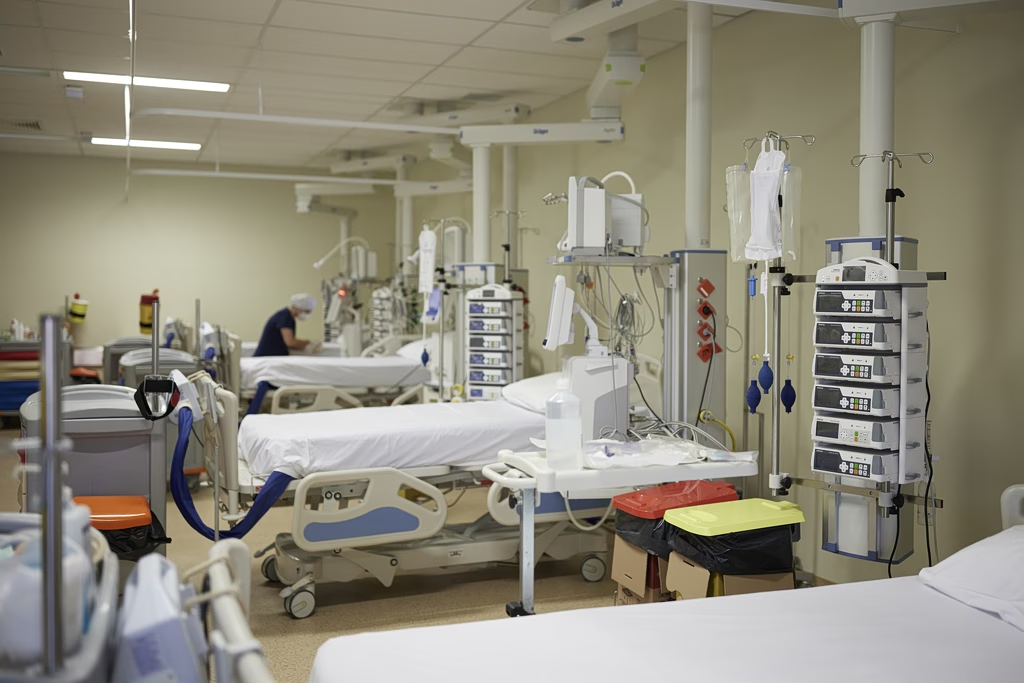
The explosion occurred in a room where five patients were being treated, next to an additional bed where the oxygen cylinder had been placed. The technician suffered severe facial injuries.
Following the incident, the hospital’s Employees’ Association filed an official complaint, calling for a full investigation into the causes of the accident, the assignment of responsibility where appropriate, and immediate measures to improve safety for both staff and patients.
Staff Say They Had Repeatedly Warned of Risks
In its statement, the association said it had repeatedly warned hospital management—both in writing and publicly—about the risks posed by placing additional beds in wards without the necessary infrastructure and by using large portable oxygen cylinders next to hospitalized patients.
NEWSLETTER TABLE TALK
Never miss a story.
Subscribe now.
The most important news & topics every week in your inbox.
According to the association, those warnings had not been acted upon.
The group stressed that the circumstances surrounding the accident must be fully investigated and that accountability should be established wherever responsibility is found, emphasizing that the safety of employees and patients “cannot be negotiable.”
Portable Oxygen Cylinders Removed
The Employees’ Association said that, following its complaint, portable oxygen cylinders were removed from hospital wards.
It added that verbal instructions had also been issued directing staff to use additional beds only for patients who do not require oxygen therapy.
However, the association argued that the measure does not resolve the underlying problem, as extra beds remain in spaces that were not designed to accommodate them. It also questioned the legality of verbal instructions and the absence of clearly defined clinical criteria for determining which patients can be placed in those beds.
Union Raises Further Safety Concerns
The association warned that patients’ conditions can change rapidly and questioned what would happen if someone placed in an additional bed suddenly required oxygen therapy or closer medical monitoring.
It also expressed concern that already understaffed and overworked nurses could once again be forced to search for available beds and transfer patients within overcrowded wards, increasing both their workload and safety risks.
According to the association, the accident demonstrated that temporary solutions and improvised measures cannot replace proper scientific planning, compliance with health and safety regulations, and adequate staffing in public hospitals.
The union called for the immediate removal of all additional beds from patient wards, the written withdrawal of any verbal instructions affecting safe patient care, a full investigation into the accident and any resulting responsibilities, and reinforcement of the hospital with the permanent staff needed to meet its operational requirements.
“The health and safety of employees and patients are not a matter of management or verbal orders,” the association said, adding that it would continue pressing for the full restoration of safe operating conditions at the hospital.