 Μake us preferred on Google
One of the most striking archaeological discoveries made in Greece in recent decades has finally found a permanent home, bringing to a close a decade-long effort to protect and display the remains of 79 men executed more than 2,700 years ago, the so-called “Phaleron Captives”.
The men were buried with their hands bound, either behind their backs or to one another, in the second half of the seventh century BC. Their remains were discovered in 2016 during excavation work for the Stavros Niarchos Foundation Cultural Center (SNFCC), in the area of the ancient Phaleron (modern-day Faliro) necropolis.
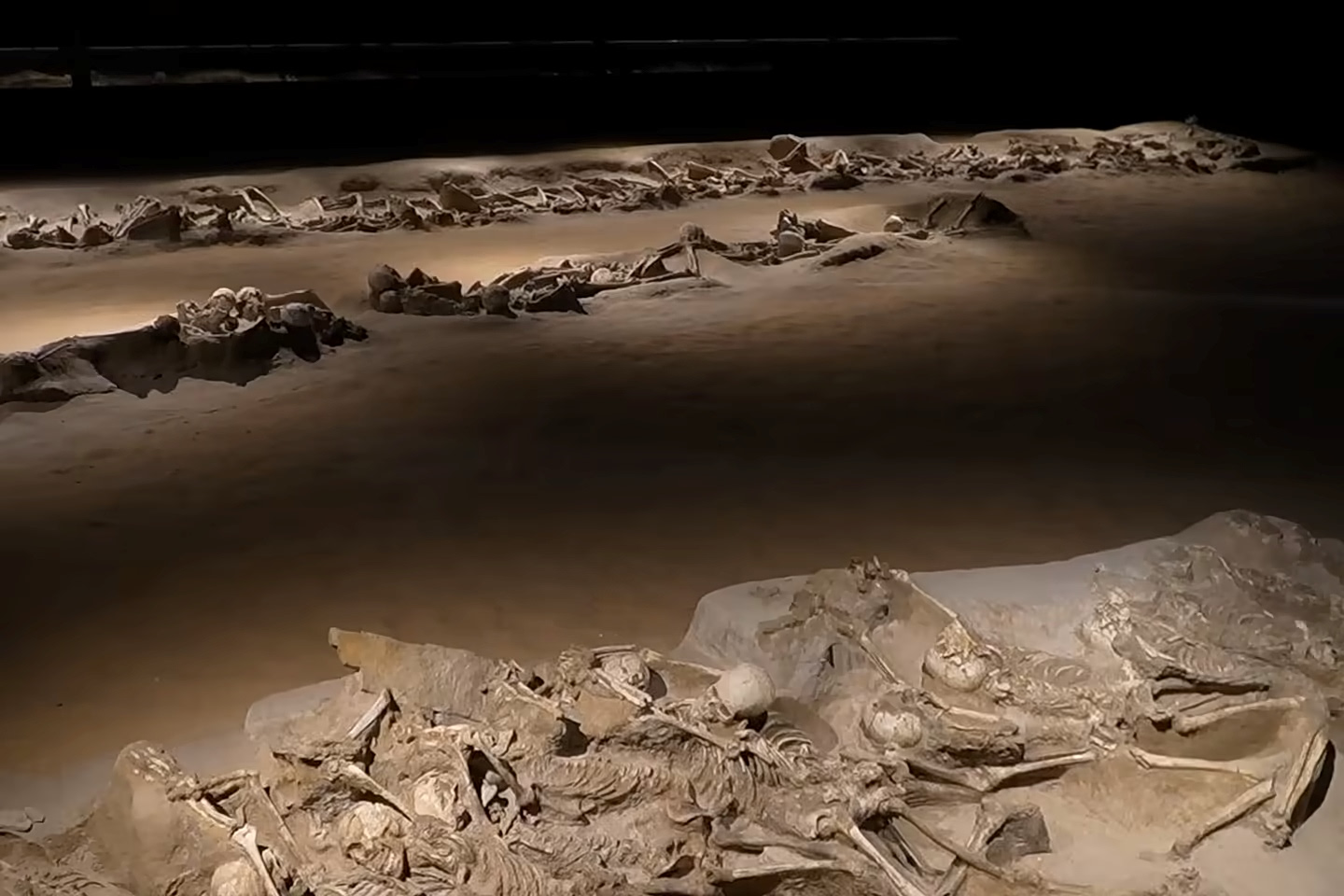
The burial site has now been incorporated into a purpose-built underground museum on the Esplanade of the cultural center. A large glass wall allows visitors to view the remains, which have been returned to the place where they were originally buried and preserved in their excavated arrangement.
The discovery comprises three groups of skeletons laid out in parallel rows. The men bore signs of violent deaths, including fatal blows to the head, while many were still wearing their iron restraints. Archaeological evidence dates the mass burial to a period of political turmoil in Athens during the latter half of the seventh century BC, although the precise circumstances of the executions remain uncertain.
The Faliro Delta was the site of an extensive ancient cemetery, in use from the eighth to the fourth centuries BC. Excavations carried out during construction of the SNFCC brought to light thousands of burials, among them the unusual mass grave that attracted international attention. The captives were initially reported in archaeological accounts as numbering 78 or 80, but the completed exhibition and the latest official and media reports identify 79 individuals.
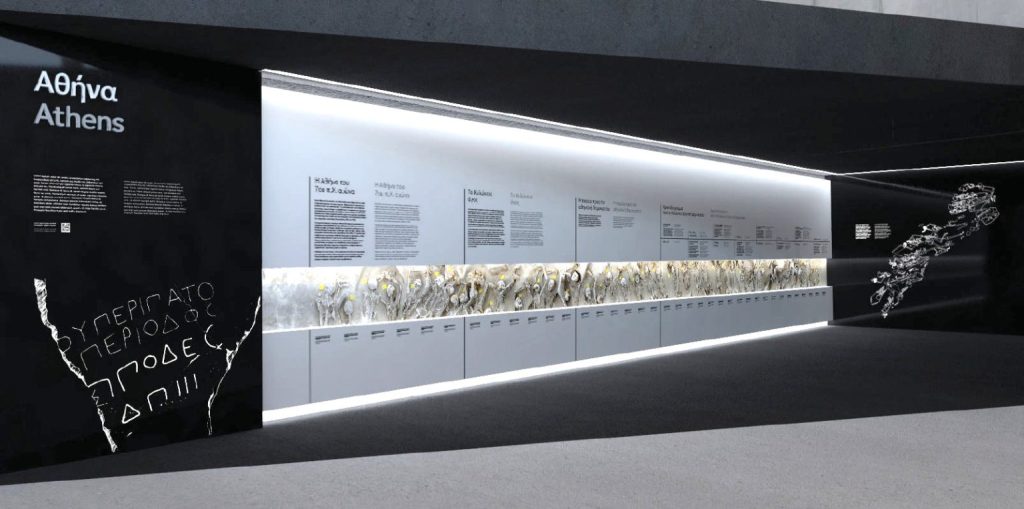
The new exhibition has been designed as a journey through the history of the area and the circumstances surrounding the discovery. Visitors follow a spiral route that moves from light into darkness and back into the light, accompanied by historical depictions of the landscape, interactive displays and a large model illustrating the urban development of ancient Athens.
The route culminates in a view of the skeletons themselves, visible through the glass wall in a carefully controlled setting of sand, stone and subdued lighting. The arrangement allows visitors to see the remains at relatively close range while protecting them from environmental conditions that could cause further deterioration.
The return to their original location was far from straightforward. Although the initial plan, adopted in 2016, envisaged preserving the remains in situ and building a protective structure around them, problems with the condition of the ground threatened their preservation. In 2020, the culture ministry approved their temporary removal so that the underlying soil could be treated and a permanent protective structure constructed.
The removal and transfer were completed in March 2023. The skeletal remains were secured in specially designed structures and moved in carefully planned stages before being returned to the original burial location. The process required particularly delicate handling to preserve the integrity of the archaeological material and maintain appropriate environmental conditions.
The completion of the project, which took 10 years from discovery to public presentation, was marked by an official ceremony on Wednesday attended by Culture Minister Lina Mendoni. She described the handover as more than the opening of another archaeological monument, saying it restored the 79 men to collective historical memory and gave their burial place the protection and dignity it deserved.
Their identities and individual stories have been lost over the centuries. Their deaths, however, offer a rare archaeological record of violence and political conflict in early Athens. Some scholars have considered a possible connection with the failed attempt by Cylon to seize power around 632 BC and the events known as the Cylonian affair, but no definitive identification has been established.
The exhibition opens to the public on Thursday, offering visitors an opportunity to encounter the remains in the place where they were laid to rest more than 27 centuries ago. The site will be open on Mondays and from Wednesday to Sunday, remaining closed on Tuesdays.