 Μake us preferred on Google
 On May 9, Metallica returns to Athens, bringing with them the sound of a band that reshaped heavy metal and a rich history of legendary concerts in Greece, full of intensity, anticipation, excess, noise, and memories.
For Greek fans, Metallica has never been just another major foreign act passing through town on tour. Every one of their appearances here took on the character of an event in its own right.
From their first visit in 1993, when heavy metal was charging its way into Greece’s large stadiums, to the thrash metal “holy four” gathering at Malakasa in 2010, their legendary concerts left a lasting mark on the memories of those who were there, as well as on the newspaper pages that captured the musical experience, the city’s atmosphere, the social reactions, the aesthetic of a generation, and the way Greece looked at “hard rock” back then.
1993: “Fire” in Nea Smyrni
The first Greek date with Metallica was written on June 27, 1993, at the Panionios stadium. The country was still in a transitional cultural phase. Major foreign live shows were rare, heavy metal carried an almost “dangerous” reputation, and concerts of that scale were treated almost like high-risk social events.
Ta Nea, June 28, 1993, captured the scene in cinematic detail: the colors of the concert were black, black, black, and electric blue. The fans and the police, two strangers in the same city.
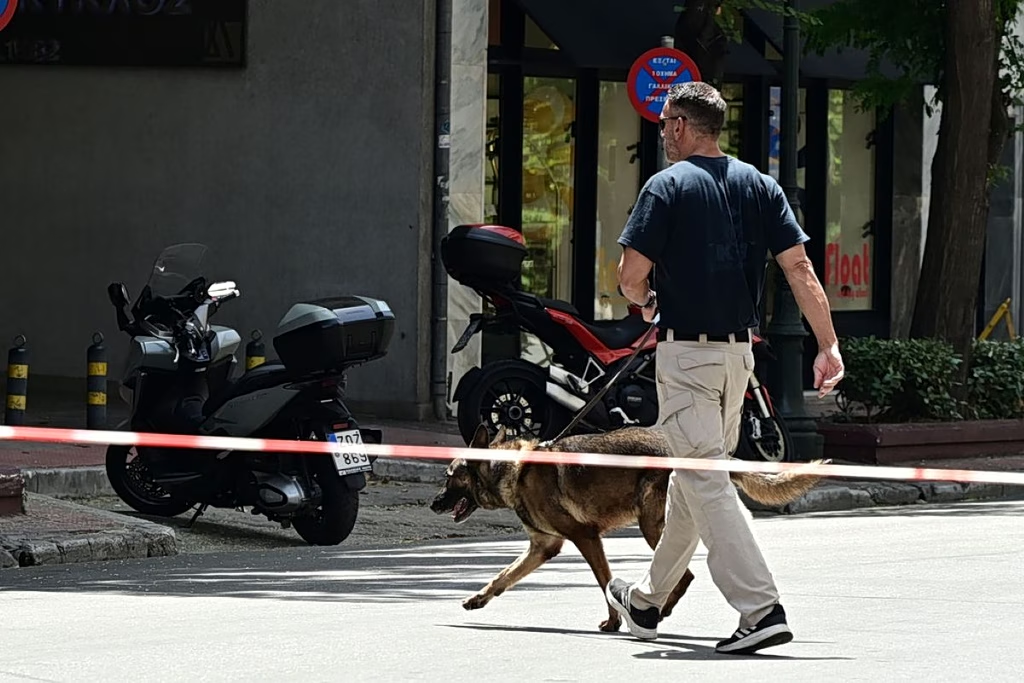
Nea Smyrni Under a Police Siege
Reporter Maria Markouli described a Nea Smyrni gripped by concert fever. From early afternoon, fans had flooded the stadium to secure spots close to the stage, while police presence was suffocating: Panionios and the surrounding blocks locked down, scuffles in the narrow streets, chases. The action unfolding at a distance from the show itself.
The image of the era comes through almost intact in the report’s details: black T-shirts with gothic symbols, young fans, soft drinks poured into open cups so bottles couldn’t be used as projectiles, photographers on a special security platform. Even the apartment buildings surrounding the stadium were turned into makeshift VIP sections. Prime spots, with drinks on the house. Ages: young. Young fans and a few seasoned rockers with a past. No officials. Far too rough for officials.
Pandemonium
When Metallica took the stage, the night took on nearly apocalyptic proportions. The “firebomb” known as Metallica triggered successive explosions of intensity and frenzy, dense waves of noise and powerful rock and roll. The report described 18,000 to 20,000 fans surrendering “body and soul to a bath of noise,” while in front of the stage the infamous “snake pit” formed, the primitive mosh pit of an era when a live show was more of a physical ordeal than a simple concert.
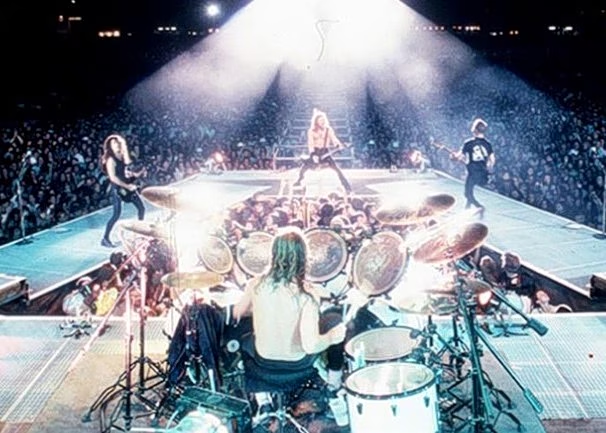
The band’s first encounter with the Greek crowd also left a strong impression on Metallica themselves. Bassist Jason Newsted told the crowd from the stage: “It took us ten years to come to Greece and we’re happy to be playing here. Thank you for coming.”
1999: The Return to Rizoupoli
Six years later, on June 12, 1999, Metallica returned to Athens for a concert at the “Georgios Kamaras” stadium in Rizoupoli, as part of The Garage Remains the Same tour. The Black Album had already transformed the band from a metal phenomenon into a global mainstream act, and Greece was living through the great concert boom of the late ’90s.
On the eve of the show, a piece in To Vima on June 11, 1999, described the night as “the hottest experience of the year,” noting that six years after the first unforgettable show in Greece, which had lasted three and a half hours — Metallica was coming back with the aim of shaking up the local crowd and making clear that they had not yet surrendered the throne of hard rock.
The article dwelled particularly on the band’s transformation after the Black Album, noting that Metallica was the heavy metal band that recognized exactly when it was time to change its sound as it matured, if it wanted to expand its audience beyond the kids who typically listened to heavy metal.
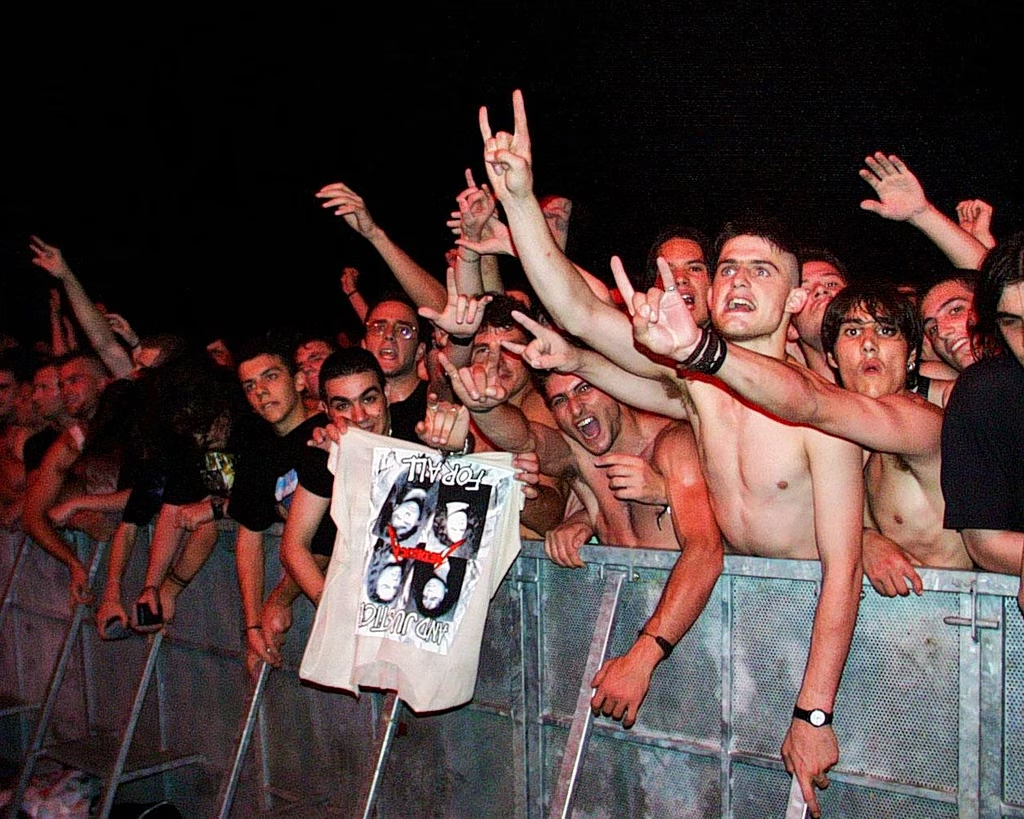
The sheer scale of the production was also noted: seven double-trailer trucks would carry their impressive audiovisual setup, comprising 200 speakers hung on all sides of a 40-foot-high stage, an equal number of robotic spotlights, with 95 foreign and 300 Greek technicians handling the preparation.
The setlist that night balanced covers from Garage Inc., classics, and ’90s hits: from “So What” and “Last Caress” to “Master of Puppets,” “One,” “Nothing Else Matters,” “Sad But True,” “Creeping Death,” “Enter Sandman,” and, in the final encore, “Battery.”
That concert marked Greece’s definitive entry onto the map of major European tours. Metallica was no longer arriving as a “dangerous” metal band, but as a global concert spectacle.
2007: Malakasa and “Sick of the Studio”
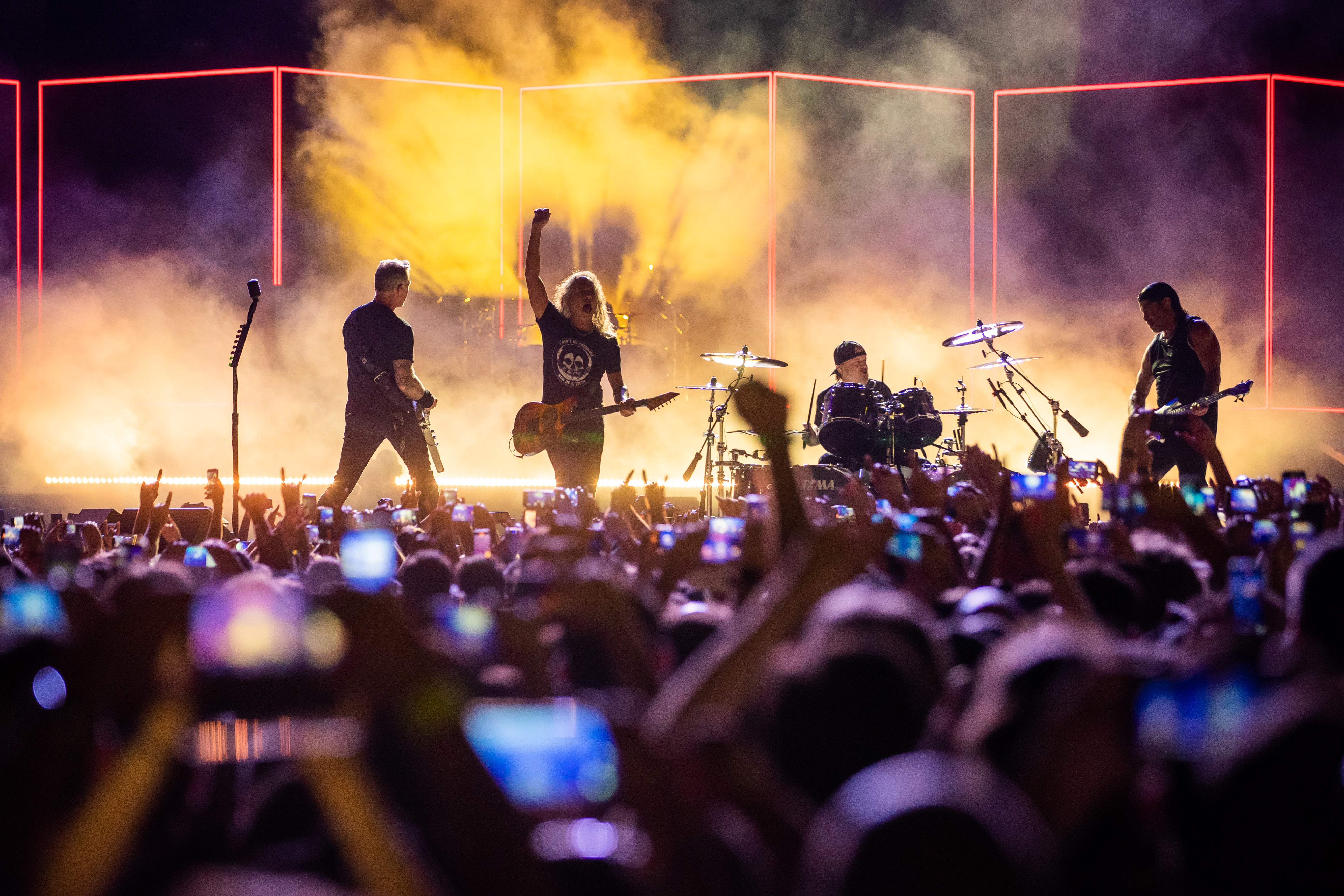
Metallica’s third appearance in Greece came on July 3, 2007, at Terra Vibe Park in Malakasa, as part of the Sick of the Studio ’07 run. By then, the band’s relationship with the Greek crowd had taken on the dimensions of a ritual.
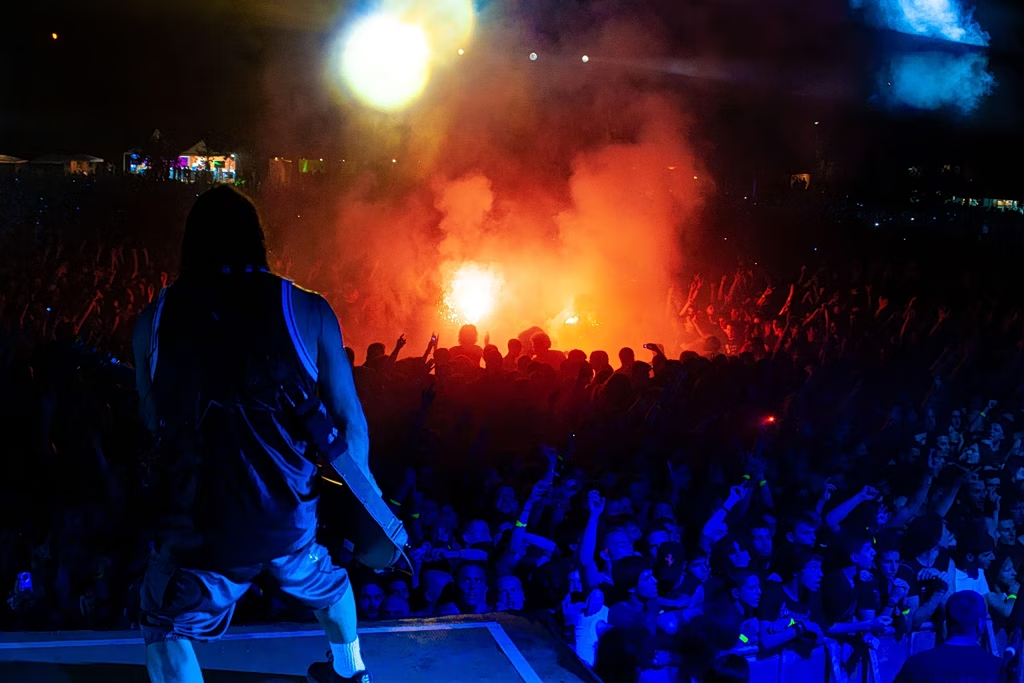
Metallica took the stage amid clouds of smoke, beneath a banner reading “Sick Of The Studio.” For two and a half hours, Malakasa became a massive metal eruption field for more than 25,000 spectators.
A Setlist Back to the Roots
The evening’s setlist had a strong back-to-basics feel: “Creeping Death,” “Fuel,” “Wherever I May Roam,” “For Whom the Bell Tolls,” “Welcome Home (Sanitarium),” “…And Justice for All,” “Disposable Heroes,” “Orion,” “Fade to Black,” “Master of Puppets,” “Battery,” “One,” “Enter Sandman,” “Whiplash,” and “Seek & Destroy.”
The show also featured a few small historic firsts for the Greek crowd: it was the first time “…And Justice for All” and “Orion” were played in Greece.
The crowd’s response was explosive. Rocking.gr described the 25,000-strong audience generating an intense atmosphere with mosh pits, stage diving, and objects hurled into the air.
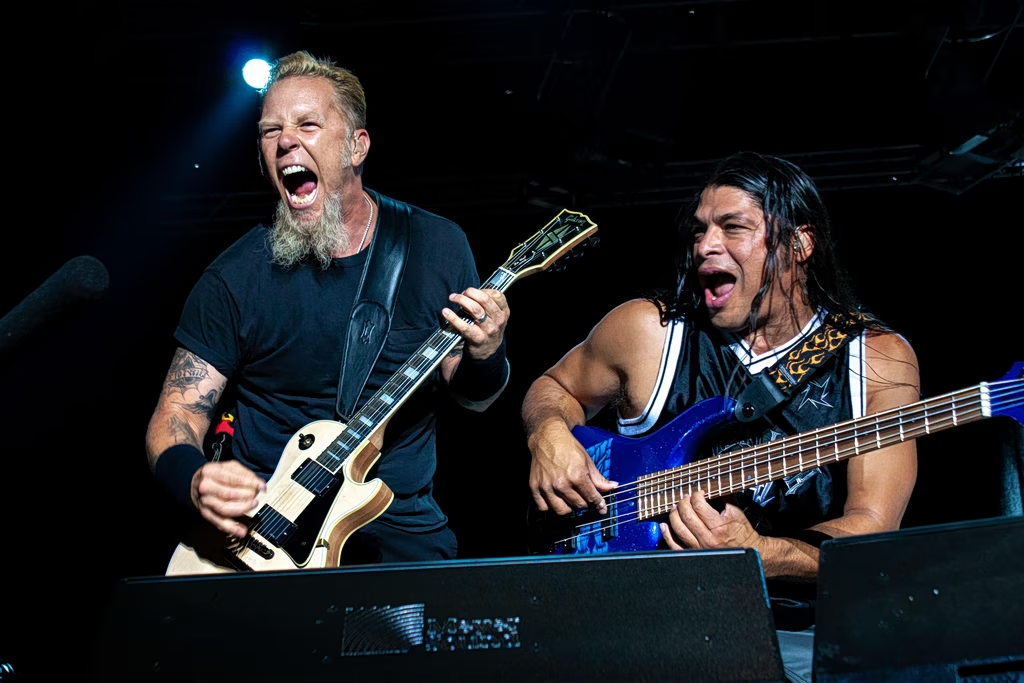
Even James Hetfield seemed stunned by the Greek crowd’s reaction, repeatedly saying from the stage “I don’t believe it,” while Lars Ulrich pledged the band would be back soon.
The concert did, however, leave its mark on the natural landscape of Malakasa, the ground after the show was torn up and destroyed, not a blade of grass left in sight.
2010: The Thrash Metal “Holy Four”
Three years later, on June 24, 2010, Metallica returned once more to Malakasa for the Sonisphere Festival, this time as part of the legendary “Big Four” tour alongside Slayer, Megadeth, and Anthrax. For fans of thrash metal, it was treated almost like a historic summit.
Writing in To Vima on February 19, 2010, Sakis Dimitrakopoulos described the band’s arrival as one of the biggest concert events of the year. He quoted Anthrax guitarist Scott Ian, who had said at the start of the tour: “The fans have wanted these four bands to play together since 1984. That’s 26 years of anticipation! I believe we won’t just meet expectations — we’ll exceed them. No other quartet of bands with this kind of influence has ever done this. Can you imagine the Beatles, the Stones, the Who, and Zeppelin appearing together? Or Sabbath, Priest, Maiden, and Motörhead? OK, maybe I’m overstating it, but that’s how huge I feel this is.”
Metallica’s set that night included 18 songs from seven different albums, with Greek premieres for “Ride the Lightning,” “Blackened,” “Breadfan,” and “Motorbreath.”
By that point, every Greek appearance they made also functioned as a small retrospective on the history of heavy metal itself.
Looking back, from the police cordon around Nea Smyrni and the armada of trucks at Rizoupoli, to the ground at Malakasa that couldn’t bear the weight of 25,000 fans, Metallica never passed through Greece quietly. Their legendary concerts stand as milestones in the Greek public’s relationship with the great international rock spectacle