
 Μake us preferred on Google
If it were not for Bulgaria and Lithuania, Greece would rank “first” in Europe. But hold the applause- because it would be for inflation.
Greece’s inflation rate came in at 5.7% in November, exceeding even Eurostat’s estimate of 5.6%. The country trails only Bulgaria and Lithuania.
This means that the Europe-wide problem of rising prices, which is reflected in the eurozone’s average inflation rate of 4%, and widely regarded as a genuine cost-of-living crisis contributing to the surge in social discontent we are witnessing, is even more severe in Greece.
And it is not simply the overall rise in inflation. It is also the increases in the prices of specific goods and services that account for a substantial share of household disposable income, particularly among lower-income households.
Consider that, on an annual basis, housing costs (rents, utility bills, etc.) have increased by 15.1%, while transportation costs have risen by 13.8%.
If we take 2020 as the base year, the cumulative increase in the Consumer Price Index has pushed it from 100 to 129.18. However, the corresponding increase for housing has taken the index from 100 to 145.37, for transportation from 100 to 140.1, and for food from 100 to 137.84.
In people’s everyday lives, these figures and statistics translate into unpaid bills, depleted savings, anxiety over which expenses can be covered and which cannot, fewer days of vacation, and postponing necessary home repairs to pay for children’s private tutoring.
They translate into wages that, even when they rise in nominal terms, remain stagnant or decline in purchasing power. They mean being trapped in poorly paid jobs and living with constant insecurity.
These are not natural phenomena. Nor are they the result of Greece lacking oil reserves, since the same is true of other countries.
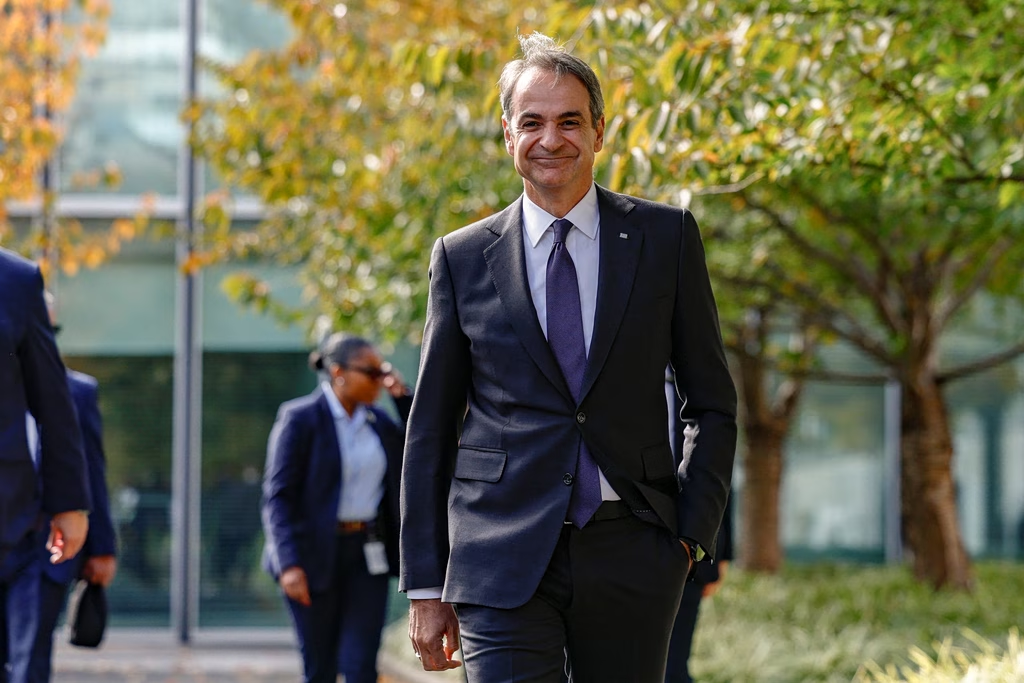
The fact that Greece has higher inflation- and therefore more pronounced price pressures- than the European average is the result of policy choices made by the government of Kyriakos Mitsotakis.
These include his refusal to consider reducing indirect taxes, particularly excise duties; his refusal to impose price caps on certain goods and services; and, of course, his unwillingness to restrict the profit margins of major companies operating in the energy sector.
In reality, the government has chosen to support the extraordinary profits of certain businesses, shifting the burden onto households. At the same time, it has prioritized large fiscal surpluses over social cohesion and improvements to public infrastructure, healthcare and education.
All of this explains the difficult circumstances households face today and the anger reflected in every opinion poll.
Meanwhile, it is becoming clear that all the measures and promises announced by the government – every announcement, every carefully placed leak, and every heavily promoted “relief measure” repeatedly unveiled by both Kyriakos Mitsotakis and his apparent heir, Kyriakos Pierrakakis- have amounted to little more than an exercise in futility when it comes to tackling the rising cost of living.
All of this reveals the real battleground on which today’s political confrontation is unfolding and on which the next elections will be fought.
The elections will not be decided by who best represents the political “center,” nor by who receives the most favorable assessments from the “markets.”
Instead, they will be decided by whether the economic and social decline experienced by the majority of society can be brought to an end.
And that means New Democracy and Kyriakos Mitsotakis will ultimately be called upon to pay the political price.