 Μake us preferred on Google
Wealthy international buyers are increasingly optimistic about Greece’s luxury property market, with more than half expecting prices to rise over the next year, according to a new survey by Greece Sotheby’s International Realty.
The second annual Voices of Affluence survey found that 53% of international respondents expect property prices in Greece to increase, while just 19% anticipate an improvement in their home countries’ real estate markets. Some 42% said their domestic markets were performing worse than a year earlier. The findings suggest growing confidence among affluent buyers considering Greece, particularly those from Britain, where expectations have improved sharply since last year.
Across all 249 respondents from 28 countries, 57% expect Greek luxury home prices to rise over the next 12 months, up from 44% in 2025. The share anticipating a decline fell to 14% from 20%, while 30% expect prices to remain stable.
The survey also points to substantial purchasing power and strong buying intentions. One in three respondents (33%) plans to purchase property in Greece within the next 12 months, rising to 50% over two years. More than half (56%) would finance their purchase entirely with their own funds, while just 5% would depend on a mortgage.
The research draws on responses from wealthy and ultrawealthy individuals selected from a database of approximately 14,300 contacts built by Greece Sotheby’s over the past decade. The relatively small sample reflects a highly specialized segment of the property market rather than the broader population of homebuyers.
British Buyers Lead the Rise in Confidence
The most striking change comes from British respondents, whose expectations for both the Greek economy and luxury property prices have improved considerably. Some 70% expect Greek luxury home prices to rise, compared with 44% in last year’s survey. Meanwhile, 56% anticipate an improvement in the Greek economy, up from 20%. The proportion who consider a purchase in Greece within the next 12 months highly likely or certain has climbed to 41%, from 24% in 2025.
British respondents account for 11% of the overall sample, making them the largest international group. Half have budgets exceeding €2 million, while 67% would buy without borrowing. Their preferred destinations include the Ionian Islands, the Athens Riviera and the Peloponnese. Relocation or establishing tax residency is their most frequently cited reason for purchasing, mentioned by 26%.
The shift comes roughly 18 months after Britain abolished its longstanding non-dom tax regime, which had offered favorable treatment of certain foreign income and gains to qualifying residents.
Where Wealthy Buyers Are Looking
The survey highlights differences between international and Greek buyers, both in their preferred locations and the types of property they seek.
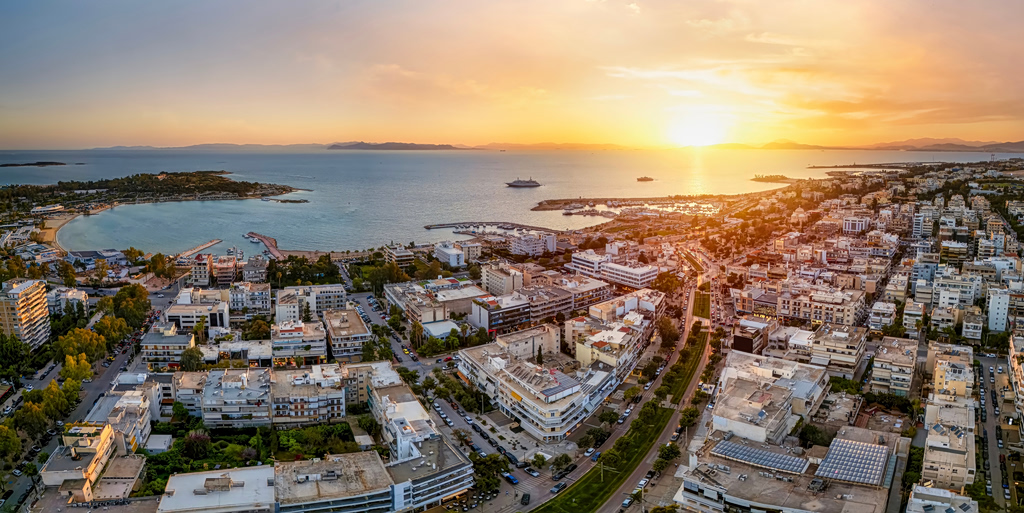
Among international respondents, the Ionian Islands are the leading destination, attracting 26% of interest, followed by the Cyclades at 20%, the Athens Riviera at 15% and the Peloponnese at 12%.
American interest, previously concentrated in the Athens Riviera and the Cyclades, has broadened to include the Peloponnese and the Ionian Islands.
Greek respondents remain more focused on the capital. Athens, including its central districts, northern suburbs and coastal Riviera, accounts for 56% of their preferences. The Cyclades come second, at 15%.
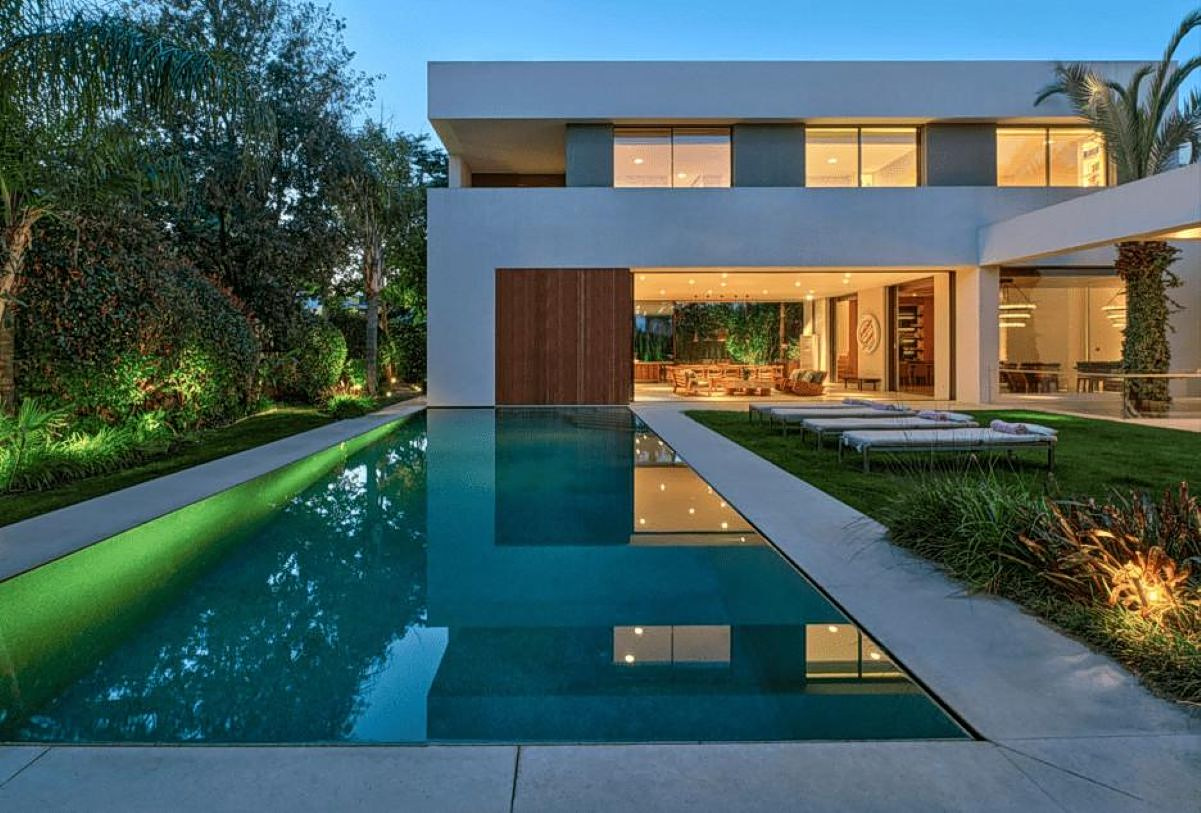
Property budgets are substantial across the sample. Some 56% of respondents are considering purchases between €1 million and €2 million, 33% between €2 million and €5 million, and 11% above €5 million. International respondents generally have larger budgets, with 54% prepared to spend more than €2 million. Nearly half, or 49%, are looking for villas.
Greek buyers show a different preference, with 39% interested in apartments or penthouses and 24% in land suitable for development.
Of the survey’s participants, 42% reside in Greece, up from 33% last year. International respondents account for the remaining 58%, primarily from Britain, the United States, Germany, Switzerland, Italy and Gulf countries. Australia and Canada also feature among the top 10 countries represented. Three in five respondents are older than 55, while 51% said they had bought or sold property in Greece during the previous five years.
Vacation Homes Draw Foreign Buyers
Lifestyle and weather considerations remain the strongest attractions for wealthy property buyers, cited by 66% of all respondents and 72% of international participants. Family or historical ties to Greece rank second at 31%, followed by expectations of property appreciation and considerations of safety and stability, each mentioned by 23%.
For international buyers, vacation homes remain the primary objective, accounting for 44% of intended purchases. Another 14% cite relocation or tax residency, including Greece’s preferential non-dom arrangements for qualifying foreign residents. Residency permits, including the Golden Visa program that grants residence rights to eligible non-EU property investors, motivate 18% of international respondents, while 14% cite tax considerations.
Greek buyers have different priorities. Rental income is the leading motivation, mentioned by 30%, followed by acquiring a family asset at 20% and purchasing a primary residence at 18%.
Interest in Greece does not necessarily mean buyers have ruled out other countries. Among international respondents, 63% are considering at least one alternative destination, compared with 52% last year. Italy is the most frequently mentioned competitor, at 23%, followed by France at 10%. Switzerland, Spain and the United Arab Emirates each attract 6%.
Greek respondents are more committed to the domestic market, with 66% considering properties exclusively in Greece.
High Prices and Bureaucracy Remain Obstacles
Despite stronger expectations for the market, wealthy buyers continue to identify significant barriers to purchasing property in Greece. High property prices and personal circumstances are the most frequently cited obstacles, each mentioned by 27% of respondents. The quality of available properties follows at 25%, geopolitical uncertainty at 22%, and legal procedures and bureaucracy at 19%. Taxation, which topped the list of concerns in the 2025 survey, is now mentioned by just 10% of respondents and 6% of international participants.
Financing costs appear to be a lesser concern, with interest rates cited by 12%, consistent with the large proportion of respondents who intend to buy without a mortgage.
Administrative delays, however, remain a major source of frustration. When asked what single change would make Greece a more attractive place to buy property, 47% of the 148 respondents who answered the open-ended question called for faster, simpler and more predictable procedures. Their concerns ranged from building permits and property transactions to greater legal certainty.
Another 16% wanted lower or simpler taxes and transaction costs, while 9% pointed to property availability, prices and infrastructure. Completing the national land registry and introducing a comprehensive digital property file were priorities for 8%. A further 7% called for greater consistency in the rules governing Golden Visas and residency, while 4% identified access to financing.
Confidence in the Greek Economy Improves
The more favorable outlook for luxury property is accompanied by stronger expectations for the Greek economy. Overall, 39% of respondents expect economic conditions to improve over the next 12 months, up from 27% in 2025. Another 41% anticipate stability. However, the share predicting a deterioration has also increased, reaching 20%, compared with 17% last year.
Greek respondents are notably more pessimistic, with 30% expecting economic conditions to worsen, compared with roughly one in eight international participants.
Views of the property market also vary by nationality. Some 61% of Greek respondents expect luxury housing prices to rise, compared with 70% of British participants. Among Americans, the share anticipating falling prices has dropped sharply, from 30% last year to 8%. International respondents are generally more optimistic about their own financial circumstances than about their home countries’ property markets. Nearly half, or 48%, reported an improvement in their personal finances over the previous year, while 59% expect further gains over the coming 12 months.
Sotheby’s: Buyers Want Faster Property Transactions
Savvas Savvaidis, president and CEO of Greece Sotheby’s International Realty, said the findings indicate a significant change in how affluent international buyers view the Greek market. “Greece has moved from discovery to conviction,” he said, adding that respondents who previously regarded the country as a promising destination now increasingly expect property prices to rise, even as conditions weaken in their domestic markets. Savvaidis described the change among British respondents as the clearest indication of that shift.
He also emphasized the importance of addressing the practical difficulties buyers encounter when purchasing property. According to Savvaidis, international buyers comparing Greece with Italy, France and Spain are calling for faster procedures, a completed national land registry and stable regulations. “These are matters of competitiveness, and they are within our control,” he said. With half of respondents planning to purchase within two years and most prospective buyers relying on their own funds, Savvaidis said the priority should be ensuring that Greece’s property transaction procedures can keep pace with buyer demand.
Source: OT.gr