 Μake us preferred on Google
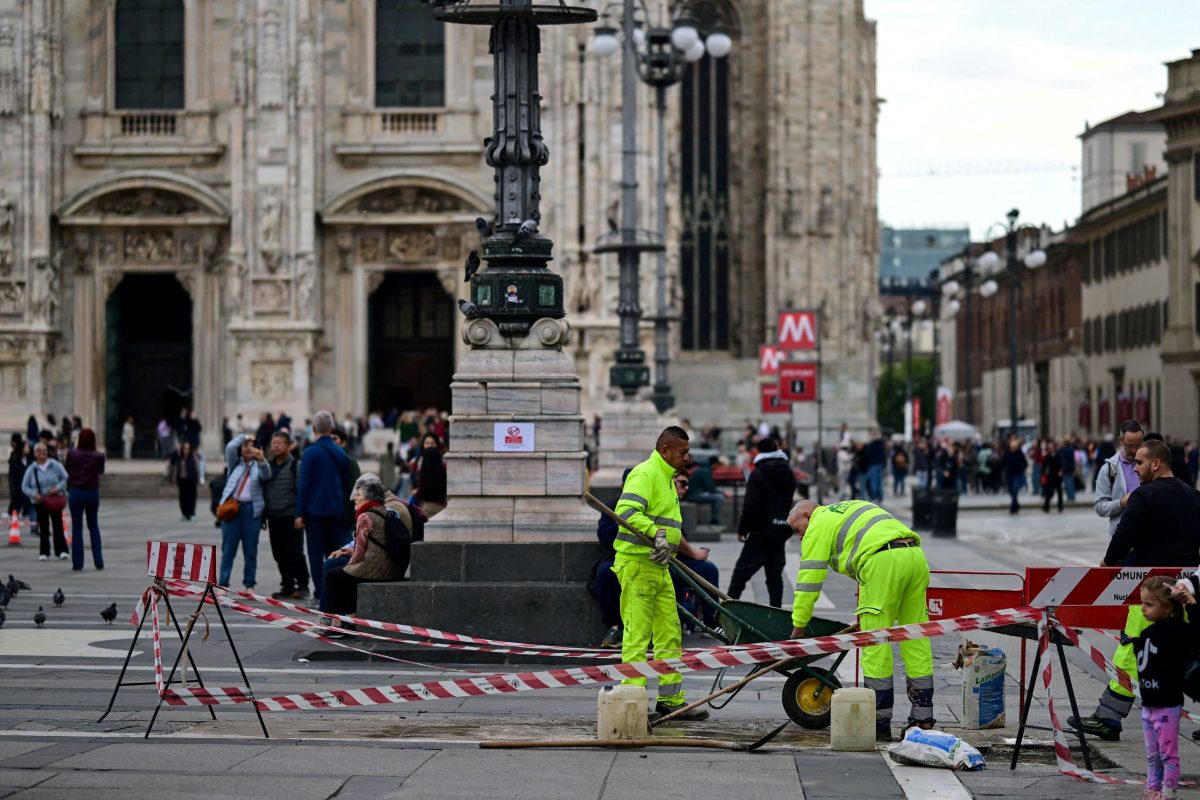
It started in France. Almost immediately, it spread to other European countries. Spill-over effects. In Italy, the protests first erupted violently in Milan, before gradually spreading to numerous cities across the country. Milan, Turin, Rome, Naples and others all found themselves caught up in a wave of mass demonstrations, centered on the rising cost of living and the dashed hopes of a generation coming of age in an increasingly hostile social environment.
At the heart of these protests are members of Gen Z. Young people who have either completed or are nearing the ed of their first, formative years of youth and who, as adults, are now confronted with the realities of everyday life. They are being called upon to adapt to a different, digital world, one that carries with it all the transformations European (but also global) societies have undergone as a result of consecutive crises. Economic, health, climate and energy-related. This environment of polychrisis has affected all age groups without exception, leaving a deeper mark on younger generations.
Youth in Europe’s squares and streets have expressed, and continue to express their feelings, not always and necessarily peacefully. They make their demands heard. They shout, vent their frustration and in some instances vandalise and loot property and businesses that they have come to regard as symbols of a dystopian era. Violence of course must always be condemned. Not all dreams come true. They were told that it was foolish to dream and that it was better to get angry and outraged. This was the message conveyed by dozens of anonymous accounts which, in Italy at least, successfully issues countless digital calls for mass gatherings across many cities of the country.
In this digital age, the role of social media and particularly the platforms that control the attention of Gen Z such as Tik Tok and Telegram is pivotal. Profiles operating under names such as “Italia in Piazza” mobilized hundreds of thousands of young people, who flooded squares of Italian and European cities. Activism in the framework of democracies now take place almost exclusively through social media. The recent victory and re-election of Luiz Inácio Lula da Silva in Brazil offered another illustration of this phenomenology with the Brazilian’s president WhatsApp group playing a crucial role in organizing and mobilizing voters ahead of the second round of voting.
Affordable housing. Decent wages. Equal opportunities. Tackling corruption and fighting inequality. Inclusiveness. Adequate responses to an increasingly acute climate crisis. An end to wars and a halt to the resulting social pressurs that armed conflicts place on Western societies. A hope for a better future, slowly fading away. As a Millennial belonging to the generation close in the age to Gen Z, I perhaps identify with the demands of my “younger” peers. The following are voices of young people, students, workers and representatives of an angry generation reflecting on what has just unfolded in cities across Italy and Europe.
“The protests in my city reflect a frustration that has been building for years. High rents, insecure jobs and limited opportunities in education make it difficult for young people to imagine a future. Many of us feel forced to leave and look for opportunities abroad, even when we would prefer to stay. Of course, the events in France may have sparked this mobilization, but the problems were already felt here. Media coverage often focuses on smashed shop windows and clashes, overlooking the thousands of students who protested peacefully. Our voices deserve to be heard, and institutions must recognize their responsibility to engage in a meaningful dialogue with us about our future and work towards concrete solutions to the challenges we face” says Omayma (26), a student in Turin.
“Turing is a city where the challenges posed by climate change and deindustrialization are lived daily by young people. Both the global and local dimensions of the political life are now more than ever perceived as being shaped solely by a never-ending sense of urgency. For younger generations, it seems that older generations and political elites are failing not only to represent their best interests, but also to provide an example of what it might mean to build a hopeful future. As a result, young people feel that their future is being negotiated away. However, the spikes in violence witnessed during certain incidents in recent days reveal an even deeper issue: the risk of growing sense of institutional hopelessness among young people. It seems that they are not only coming to feel that their interests and needs are being disregarded, but also that there is no legitimate institutional space in which their voice could be heard. Consequently, violence may come to be perceived as the only remaining means of expressions” adds Martina (33), a resident of Turin.
Marco (29) who lives in Köln (Germany) draws his inspiration from Plato’s Symposium.“Beauty is a generative principle. Beauty lies behind the desire to generate, for instance, behind biological reproduction or virtuous actions. I perceive a lack of beauty around me” he says. “Ugly things are winning. Beauty has been promised to us. Go to university, become enlightened. But obscurantism is what rules our current political jet set. Obscurantism poisons our societies. If you work hard, you will be rewarded. Beauty dies here. It’s the triumph of kitsch. Strength over justice. From time to time, I think that the world is way too fun and way too corrupt to be saved by my actions. But some days, I can’t turn a blind eye and indulge in leisure. Some days, I lose my elegance and diplomacy. Those days, I just wanna choose violence. Those days, I just put aside everything I learned, everything I keep polished about my sharp corners. I can’t stand this ugliness. Lately, the youth around me feel like waking up like this. ‘Rage, rage against the dying of the light’”.
Dimitris Tsaknis is the Director Ad Interim of Education for the ELGU Campus in Rome, Italy.