 Μake us preferred on Google
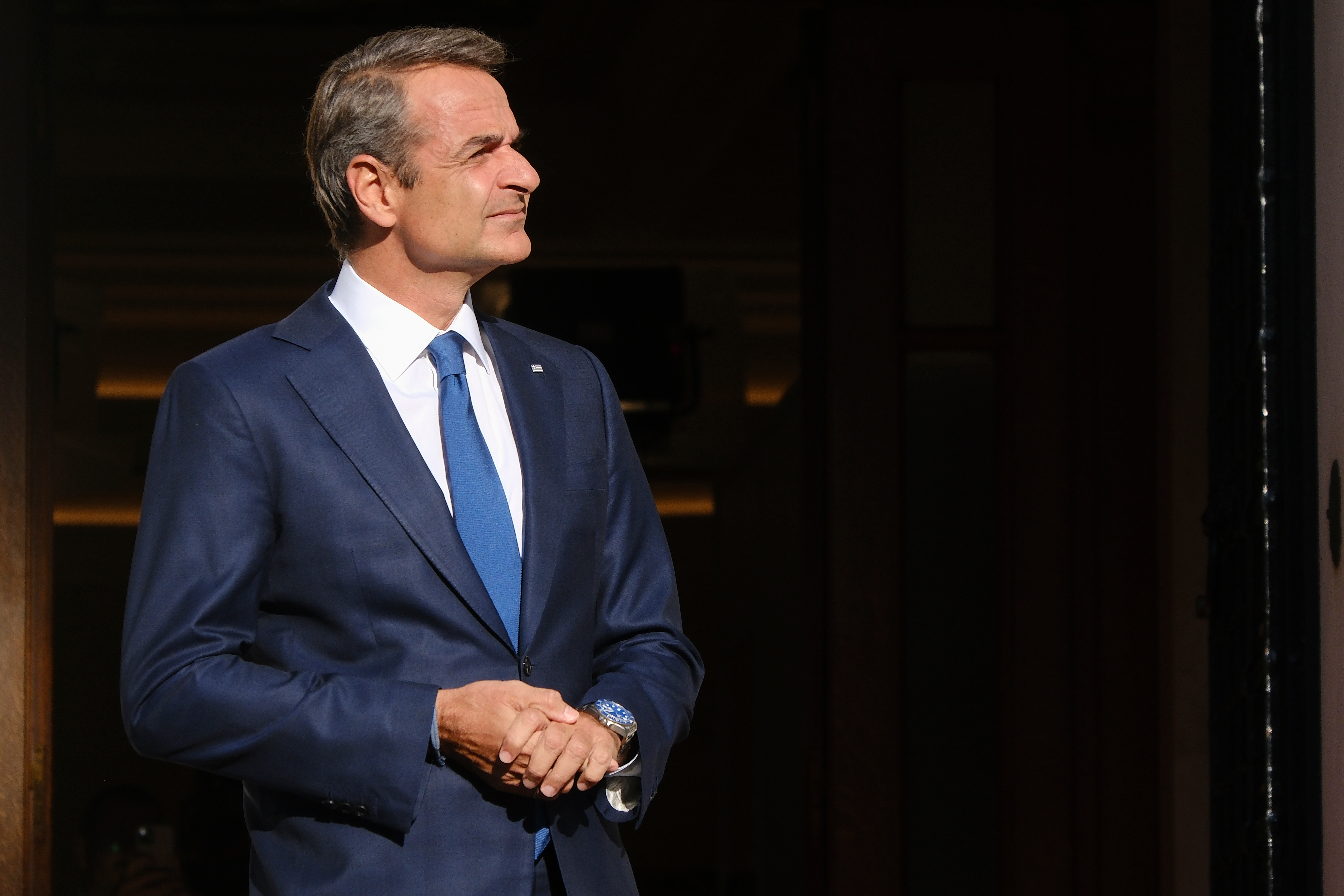
Greek Prime Minister Kyriakos Mitsotakis addressed relations with the United States and the Greece-Cyprus electricity interconnection project in his weekly review of government activity on Sunday, following renewed tensions with Turkey over maritime research permits and navigation warnings.
In a Facebook post, Mitsotakis also discussed the cost of living, measures to support borrowers, the work of Greece’s Organized Crime Division, known as the “Greek FBI,” and a series of government initiatives spanning investment, defense, health care and infrastructure.
Mitsotakis says Greek-U.S. ties transcend election cycles
Commenting on the recent U.S. midterm elections, Mitsotakis said the results had shifted the political balance in both chambers of Congress but would not alter the foundations of relations between Athens and Washington.
“Greek-American relations have strong foundations and transcend electoral cycles,” he said.
The prime minister welcomed the election or re-election of Greek Americans to Congress, as well as the participation of people with whom the Greek government has good relations in key congressional committees dealing with defense and foreign policy. He described their presence as important for Greece, particularly amid geopolitical instability in the region.
Greece and Cyprus authorize cable research work
Mitsotakis also addressed the Great Sea Interconnector (GSI), the planned electricity link between Crete and Cyprus.
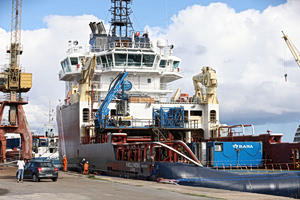
He said that on Friday, authorities issued a permit for research work and cable-laying activities, along with a related NAVTEX, marking steps toward the project’s implementation.
“Greece and Cyprus are the countries that authorize the research work for a project that has been designated as a European project of common interest and in which French companies are participating,” he said.
He stressed that interconnection projects such as the GSI should be understood as strategic investments that strengthen energy self-sufficiency, regional cooperation and stability, contributing to peace and security in the wider region.
Government extends price-reduction initiative
Turning to economic concerns, Mitsotakis said the cost of living had been a major issue for U.S. voters and remained a source of pressure for Greek households, despite improvements in several economic indicators.
The government will therefore extend its National Price Reduction Initiative through the end of the year. The scheme covers approximately 1,000 essential products, including food items commonly purchased by families.
Market inspections will also continue to ensure that announced price reductions are being implemented in practice, he said.
Mitsotakis also highlighted legislation passed by Parliament during the week, which includes 16 measures and two additional provisions aimed at borrowers.
From December 1, vulnerable borrowers and other eligible debtors who restructure their debts through Greece’s out-of-court settlement mechanism will be offered a fixed interest rate of 3% for the duration of their repayment plans. This replaces a variable rate that can reach 5.67%.
According to the prime minister, a borrower with a €100,000 debt repaid over 20 years could save up to €20,200 if the debt is secured, or €28,000 if it is unsecured.
The legislation also increases tenfold the maximum fine that the Bank of Greece can impose on loan servicers for serious violations, from €500,000 to €5 million.
Mitsotakis said the measures had received support beyond the governing majority. He added that his government had introduced at least 27 interventions in the banking system since 2019.
Among the measures he cited were the “Hercules” program, which helped reduce the share of nonperforming loans held by Greek banks from 48.5% in 2016 to 3.4% this year; the creation of the out-of-court debt settlement mechanism; protections for primary residences; and reductions in bank fees and ATM charges. He estimated that the latter changes provide consumers with annual savings of approximately €150 million.
Private debt in Greece now stands at 96.6% of gross domestic product, below the European average of 119.3%, he said.
Greek FBI reports more than 1,500 cases in two years
The prime minister also marked the second anniversary of the establishment of Greece’s Organized Crime Division, commonly referred to as the “Greek FBI.”
Over the past two years, the unit has handled more than 1,500 cases, brought charges against more than 5,400 people and dismantled 259 criminal groups, according to Mitsotakis.
The cases have involved activities ranging from fuel and cigarette smuggling to corruption networks operating in tax offices, urban planning departments and prisons.
He said the broader effort to combat organized crime and corruption had been underway since 2019, citing investigations into fraudulent prescriptions, fraud targeting the National Organization for Healthcare Services Provision (EOPYY) and the Social Security Fund (EFKA), illegal driving license issuance, bribery in public services and unauthorized occupation of beaches.
Some of the cases involved public officials, including police officers, he added.
“There are no areas beyond scrutiny, nor are there individuals exempt from oversight,” Mitsotakis said, insisting that the law must apply equally to everyone.
He also referred to investigations into illegal agricultural subsidy schemes, acknowledging that the transition to a new payment system had created difficulties for farmers, particularly when submitting applications.
Authorities are working to resolve technical problems and complete payments, he said. Approximately 40,000 beneficiaries are already receiving payments, advance payments are due by November 30, and final settlements are expected in December.
Farmers who have not yet submitted applications can use an extension running until Tuesday, November 10.
Government sets out 90 priorities for the next six months
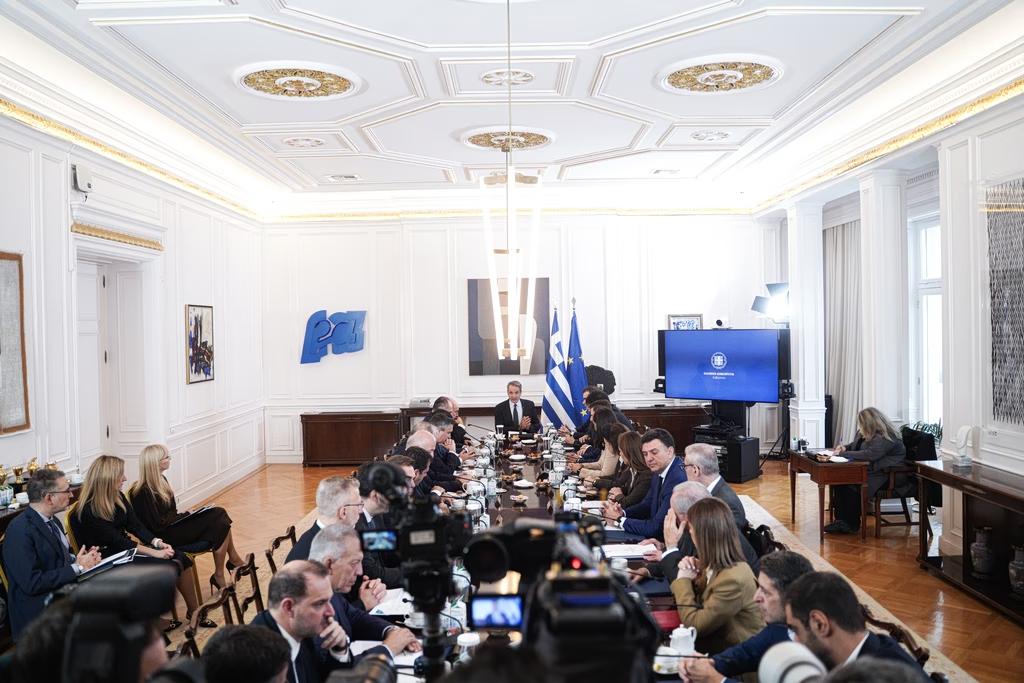
Mitsotakis said the Cabinet had presented 90 government priorities for the coming six months, including plans to raise the minimum wage toward €1,000 by early 2028, housing measures, improvements to health care and education, and the completion of major infrastructure projects.
He said the government had a defined plan and timetable, adding that it aimed to fulfill its commitments before voters assess its overall record.
Ten major investment projects are also moving forward under Greece’s Development Law, across Macedonia, Central Greece, Thessaly and Crete. Their combined value is €226.2 million, with state support exceeding €104 million and more than 400 new jobs expected.
The projects cover industries including cement, aluminum, food, pharmaceuticals and data processing.
The government is also simplifying investment procedures. Minor changes to an investment plan will no longer require separate approval, while clearer deadlines will be introduced. Long-term obligations for businesses will be reduced from six to three years for small companies and to five years for medium-sized and large businesses.
New rules for artificial intelligence in the workplace
Mitsotakis said a new bill presented by the Finance Ministry would establish rules for the use of artificial intelligence in the workplace.
For people working through digital platforms, the proposed legislation provides for greater transparency over the criteria used in decisions affecting them, mandatory human oversight of important decisions and safeguards for personal data. It also seeks to clarify their employment status.
The prime minister also outlined two changes to services provided by EOPYY, Greece’s public health care provider.
Since November 1, doctors, diagnostic laboratories and all contracted providers have been required to upload test results to a new digital repository. The system is intended to give patients and their doctors access to a consolidated record of medical tests.
Meanwhile, the new myEOPYYapp allows insured users to book appointments at EOPYY pharmacies, request home delivery of high-cost medication and submit documents for reimbursement through their mobile phones.
Funding and debt measures for municipalities
At a conference of the Central Union of Municipalities of Greece (KEDE) in Kalamata, Mitsotakis announced a package of six plus two initiatives to support local authorities.
The measures include €300 million for recycling projects and €240 million, to be made available within November, to settle overdue debts to energy providers.
The government will also increase the municipal accommodation tax from 0.75% to 1% and double annual state funding for the maintenance of school buildings.
An additional €200 million per year is planned for local road projects once the fuel market stabilizes, while €50 million will be allocated for battery installations so municipalities can use electricity generated by local renewable energy sources.
In cooperation with the Public Power Corporation (PPC), the government will also arrange the settlement of outstanding municipal debts of up to €60 million. Mitsotakis said it had also committed to introducing a special electricity tariff for municipalities once the current disruption in the energy market begins to ease.
During his visit to the Peloponnese, which began in Kalamata, the prime minister inspected work on the Kalamata-Methoni road, upgrades to the city’s airport and a new solar sludge-drying facility that uses solar energy to process waste.
In Megalopoli, a contract was signed for a new prison, while in Tripoli a new student residence for the University of the Peloponnese was inaugurated. The facility, housed in a former hotel, will accommodate 96 students, bringing the university’s total accommodation capacity to 426.
Greece expands military capabilities and journalist safety training
Mitsotakis announced that Greece would acquire three Embraer KC-390 aerial refueling aircraft from Portugal, with an option to purchase three more. He said this would mark the first time Greece has acquired aircraft dedicated to aerial refueling.
The aircraft will allow Greek fighter jets to refuel in flight. The Rafale and Mirage fleets are expected to benefit initially, followed by F-16s in about a year, increasing the range and duration of their missions.
The Hellenic Navy has also received two additional MH-60R Seahawk anti-submarine helicopters. The final two of the seven aircraft ordered are expected by the end of the year.
The prime minister also announced a new training and certification program for journalists covering wars and other high-risk assignments.
Developed with the support of the armed forces and in cooperation with the General Secretariat for Communication and Information, journalists’ associations and the Hellenic Red Cross, the initiative aims to ensure that reporters are better prepared before entering conflict zones.
The first training group will include 25 journalists from public media organizations. Training for journalists covering natural disasters will follow.
Historic religious artifacts return to Greece
Mitsotakis highlighted the restoration of a Byzantine church in Maximianoupoli, near Komotini in the northeastern region of Rhodope. A religious blessing ceremony was held there again after centuries, following restoration work funded with €1.5 million from the EU Recovery and Resilience Facility.
The church is now open to visitors. Plans are also underway to make use of Komotini’s Imaret and former ice factory, including an exhibition dedicated to the city’s history and communities.
The prime minister also announced the return to Serres of 48 valuable religious artifacts that had been removed in 1917 during the Bulgarian occupation of the area in World War I.
The objects came from the Monastery of St. John the Baptist, the Monastery of Panagia Eikosifoinissa and the Metropolis of Serres and Nigrita. They had been kept in Sofia since their removal.
Their return follows an interstate agreement between Greece and Bulgaria and fulfills a decades-long request by the local community. Mitsotakis said he would attend the ceremony in Serres on Sunday.
Private-sector initiatives
Concluding his review, Mitsotakis referred to two initiatives announced by private companies.
Eurobank will increase the salaries of female employees by 5% after the birth of their first child and by a further 10% after the birth of their second child, following their return from maternity leave. The bank will also maintain its one-time payments of €25,000 for the birth of a third child and €30,000 for a fourth.
Telekom, meanwhile, will double or triple internet speeds at approximately 700,000 fiber-optic connections at no additional cost, the prime minister said.