 Μake us preferred on Google
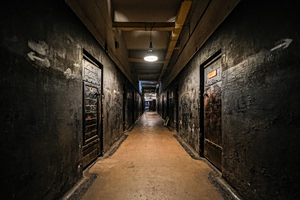
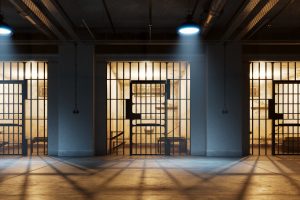
Greek prisons are bursting at the seams. Sentences are becoming harsher, time behind bars is increasing and the number of inmates is rising rapidly. Across facilities designed to hold 10,763 people, a total of 14,239 are currently incarcerated — 3,476 more than the available capacity, representing an overcrowding rate of 32.3%.
In less than two and a half years, from May 2024 to mid-October 2026, Greece’s prison population surged from 10,371 to 14,239, an increase of 37.3%. The pace of the rise is evident in the first two weeks of October alone, when 465 people entered prison and 389 were released. In just 15 days, the inmate population grew by 76. According to calculations by Kostas Kosmatos, Associate Professor of Criminology, Faculty of Law of Democritus University of Thrace, the trend translates into an additional 150 to 200 inmates every month.
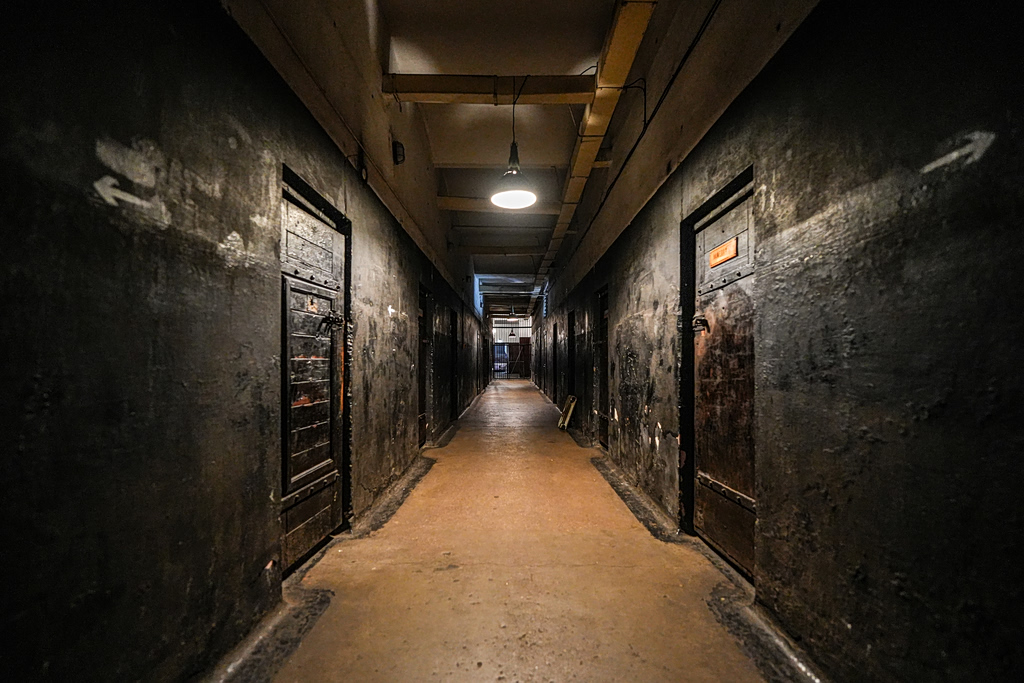
At several prisons, the number of inmates has more than doubled the facilities’ capacity. In Avlona, 482 people are being held in a facility designed for 217, an occupancy rate of 222.12%. The rate stands at 218.87% in Tripoli, 212.96% in Volos, 193.83% in Komotini, 183.93% in Kos and 181.82% in Ioannina. Conditions are also severely overcrowded at Korydallos, where 2,120 inmates share 1,222 places, bringing occupancy to 173.49%. Similar figures are recorded in Amfissa (172.22%), Alikarnassos (160.95%), Drama (151.67%), Patras (148.43%), Chios (142.68%) and Larissa (141.70%).
The situation has reached the point where prison administrations themselves are asking authorities to limit new transfers. Kosmatos says that, since September 2025, official notices have been sent to prosecutors regarding the prisons in Trikala and Larissa, where all available places have been filled. “The prisons themselves are officially declaring that they cannot accommodate any more inmates,” he says.
The “Penal Bubble” and a Legislative Storm
Behind the overcrowding are “specific and deliberate choices and legislative initiatives,” says Margarita Gasparinatou, president of the Greek Society for the Study of Crime and Social Control and an assistant professor at Panteion University. She describes a punitive approach that sidelines human dignity and promotes slogans such as “prison is prison” and “life sentences must mean life.”
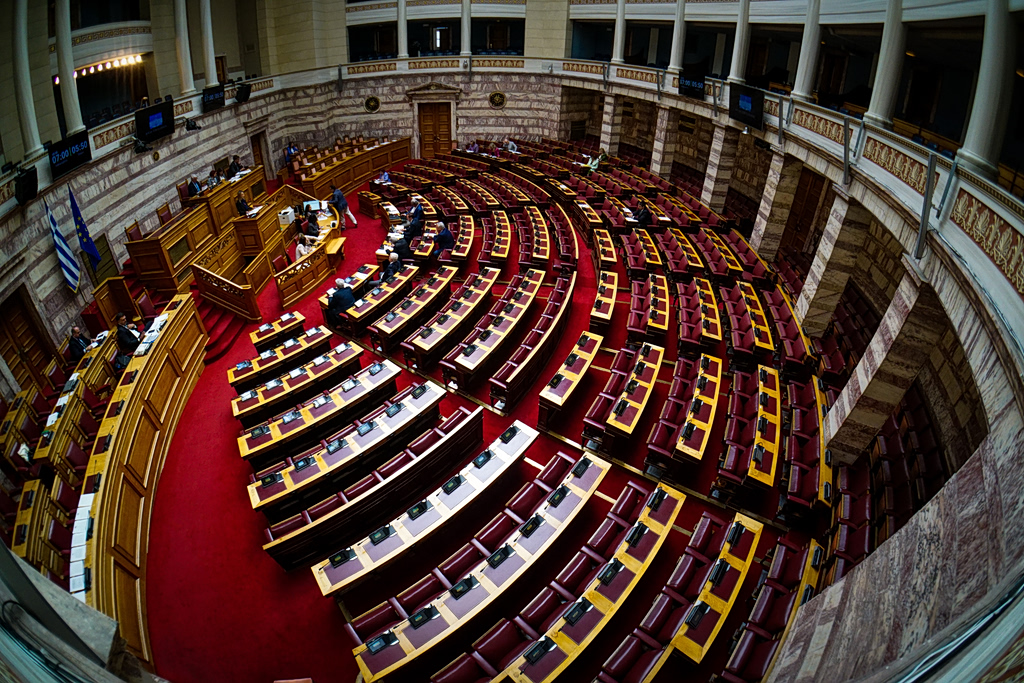
Ilias Anagnostopoulos, Chair of the Hellenic Criminal Bar Association and emeritus professor at the National and Kapodistrian University of Athens Law School, traces the causes of the crisis to criminal justice policy. He describes a “penal bubble” created by constant legislative changes and increasingly severe sentences. “The legislative response is almost always the same: the promise of a new felony,” he says.
This has been compounded by what he calls a “prosecution bubble,” as authorities frequently opt for the most serious charge from the outset. “Instead of talking about exposing someone to danger, we talk about homicide with conditional intent,” he says. The result is an overload of investigative authorities and delays in trials.
At the same time, successive amendments have created legal uncertainty, making it difficult even for judges to identify which provisions apply. “This approach reveals a profound lack of understanding of how a criminal justice system can operate effectively, both in addressing crime and in fulfilling its role of safeguarding rights,” he says.
The scale of the legislative changes is reflected in figures cited by Kosmatos. Since 2019, the Criminal Code has been amended through 18 laws, with 269 interventions affecting 169 articles — approximately 40% of the code. Of these, 105 articles were amended once, while 64 were changed between two and five times. Just three legislative interventions account for 197 changes, or approximately 73% of the total.
“Criminal legislation appears to have evolved into a kind of recurring hobby,” he says. The pace amounts to 38 amendments to articles every year, or almost one every 10 days.
The consequences are already visible in the prison population. From approximately 9,800 inmates in 2016, the number surged to 14,239 by mid-October 2026. The increase has been even more pronounced among people serving prison sentences, whose numbers rose from just 600 to 3,766.
Of those, 1,480 are behind bars for sentences of up to two years — punishments that, under the previous legal framework, could have been suspended or converted into alternative penalties. The number of juvenile inmates has also risen sharply, from approximately 30 to 122, with a further 20% increase in 2026.
And this is only the beginning, Kosmatos warns. The full impact of Law 5090/2024 has yet to emerge, as many cases are still being tried under older, more lenient provisions. The tougher rules primarily apply to offenses committed on or after May 1, 2024.
“The problem reflected in the figures so far is, in that sense, still limited compared with what is yet to come,” he warns.
“You see people being tried in a single-judge misdemeanor court and sent straight to prison,” he says, even when they receive sentences of one, two or three months.
Meanwhile, stricter application of conditional release — the possibility of leaving prison before completing a sentence, subject to certain conditions — is keeping inmates behind bars for longer. Kosmatos explains that some prisoners end up filing a second, third or even fifth application before being released, effectively serving almost their entire sentence.
More admissions, fewer releases and increasingly overcrowded facilities have become the pattern.
“Let them spend at least a little time inside,” is the characteristic phrase Fytrakis says he hears in courtrooms. It is hardly far removed from the “Everyone inside” remark made by Justice Minister Giorgos Floridis at a recent Cabinet meeting.
Kosmatos describes this as a practice that would have been “unthinkable a few years ago,” carrying a heavy social stigma even for people serving sentences of only a few months.
Court Rulings, 1,250 Appeals and a “Divorce” With Strasbourg
Greece continues to face convictions by the European Court of Human Rights (ECHR) over prison conditions. According to Ioannis Ktistakis, an ECHR section president and associate professor at the Democritus University of Thrace Law School, at least 17 judgments against Greece were recorded in 2026. Meanwhile, approximately 1,250 applications — 53% of all pending cases against Greece before the Strasbourg-based court — concern detention conditions.
“These figures do not simply describe an increased judicial workload. They reflect a problem that is persistent and structural in nature,” he says.
Linos-Alexander Sicilianos, a former ECHR president and professor of international law at the National and Kapodistrian University of Athens, points to the standards applied by the Strasbourg court.
In a 2016 ruling, the court found that personal space of less than three square meters in a shared cell creates a strong presumption of a violation of Article 3 of the European Convention on Human Rights, which prohibits inhuman or degrading treatment. Even when the available space is between three and four square meters, the court examines factors including lighting, ventilation, hygiene, privacy and access to outdoor exercise.
Greece’s relationship with Strasbourg reflects a “divorce” between the country’s prison policy and the principles of the Council of Europe, says Nikos Koulouris, professor of social policy at the Democritus University of Thrace and a member of the board of the Hellenic Society for the Study of Crime and Social Control.
Warnings about a “prison explosion” were already being made in 1990. Thirty-six years later, Greece remains under European supervision. Since 2011, the Council of Europe’s Committee for the Prevention of Torture has been denouncing the “mere warehousing of prisoners.”
“Many inmates are left to languish,” Koulouris says, referring to the committee’s characteristic description of conditions.
The “divorce” also carries a financial cost, Fytrakis points out. Beyond the court judgments, there have been dozens of friendly settlements involving compensation payments, as well as more than 50 refusals by foreign judicial authorities to extradite individuals to Greece because of its prison conditions.
“The total cost reaches 2.5 million euros,” he says.
The Prisons of 2030 Are Already Filling Up
The government’s response to overcrowding is to build more prisons.
The 2025-2030 Action Plan provides for eight new correctional facilities, adding 6,800 places, while five older prisons — Korydallos, Alikarnassos, Neapoli, Chalkida and Ioannina — are to be closed. The country’s total prison capacity is expected to reach 14,500 places.
The problem is that Greece already has 14,239 inmates.
Kosmatos warns that if the prison population continues to grow by approximately 2,000 people a year, the new facilities will be insufficient before they are even completed.
“They would have to tell us that they are planning to build another 30 prisons, with a total capacity of 30,000 people,” he says, illustrating how an expanding reliance on incarceration would require an ever-growing number of prisons, with no end in sight.
“The more prisons we build, the more we fill them,” says Andreas Pottakis, Greece’s Ombudsman, describing the government’s plan as “unbalanced and excessively focused on construction.”
He also points to an institutional contradiction that emerged after responsibility for prison administration was transferred to the Ministry of Citizen Protection in 2019.
“One minister makes the laws — and does so at a rapid pace,” while “a different minister is left to deal with the consequences,” he says.
The way forward, he argues, lies in reassessing the sentencing system, reducing time spent in prison and expanding the use of community service and electronic monitoring. These are also among the approaches advocated by the Council of Europe’s Committee for the Prevention of Torture in its March 2026 report.